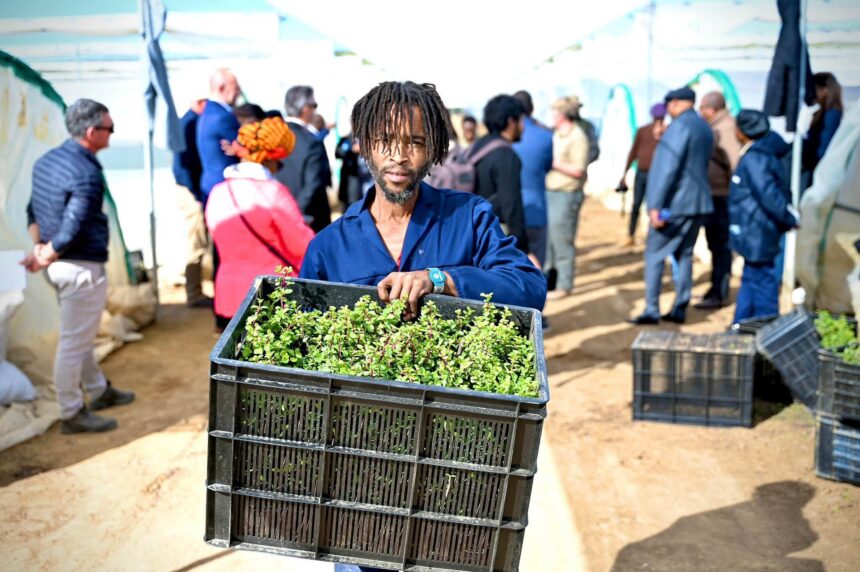
The transformation of degraded land into thriving environmental assets is creating new opportunities for communities in the Eastern Cape through the Spekboom Restoration Project in Jansenville. The large-scale initiative has successfully created 1,000 jobs while restoring previously unused and damaged land, demonstrating how environmental conservation and economic development can work together. The project reflects a growing commitment to sustainable development by combining ecological restoration with meaningful employment opportunities for local residents. By investing in indigenous vegetation and land rehabilitation, the initiative is helping to improve both the natural environment and the livelihoods of people living in the area. The project has become a strong example of how green initiatives can contribute to long-term economic growth while protecting South Africa’s valuable natural resources.
The significance of the restoration project was highlighted during a site visit by Eastern Cape Premier Oscar Mabuyane, who was accompanied by Agriculture MEC Nonceba Kontsiwe and Economic Development, Environmental Affairs and Tourism MEC Nonkqubela Pieters. Their visit provided an opportunity to assess the progress of the initiative and observe the positive impact it is having on both the environment and the local economy. Government leaders engaged with project teams to better understand the work being carried out and the benefits already being experienced by surrounding communities. The visit also reinforced the provincial government’s support for programmes that create employment while addressing environmental challenges. Such engagements allow decision makers to evaluate successful projects that can potentially be expanded to other areas facing similar conditions.
At the heart of the initiative is the planting and restoration of spekboom, an indigenous succulent that naturally grows across parts of the Eastern Cape. Spekboom is widely recognised for its exceptional environmental value because it is highly effective at absorbing carbon dioxide from the atmosphere while thriving in dry conditions. The plant requires relatively little water, making it well suited to areas affected by drought and climate change. Its ability to regenerate degraded landscapes also helps restore biodiversity and improve the overall health of natural ecosystems. By focusing on an indigenous species that is already adapted to local conditions, the project increases the likelihood of long-term environmental success.
The restoration of degraded land offers benefits that extend well beyond planting vegetation. Healthy landscapes reduce soil erosion, improve water retention and create habitats for wildlife and beneficial insects. As vegetation returns, grazing conditions for livestock may also improve, supporting agricultural activities that are important to rural economies. Restored ecosystems become more resilient to changing weather patterns and help reduce the long-term effects of environmental degradation. These improvements contribute to healthier natural resources that can support future generations while strengthening the sustainability of surrounding communities.
One of the most significant achievements of the Spekboom Restoration Project has been the creation of 1,000 employment opportunities for people in Jansenville. In many rural areas where unemployment remains a major challenge, projects that combine conservation with job creation provide much-needed economic relief for households. Employment generated through restoration activities allows workers to earn stable incomes while developing practical skills related to environmental management, land rehabilitation and conservation. These opportunities also stimulate local economic activity as workers spend their earnings within their communities, supporting small businesses and local services. The project demonstrates that environmental programmes can become important drivers of inclusive economic development.
The employment opportunities created through the initiative also contribute to skills development that may benefit workers beyond the lifespan of the project itself. Participants gain valuable experience in nursery operations, planting techniques, land management, environmental monitoring and ecosystem restoration. These practical skills increase future employment prospects within agriculture, conservation and environmental management sectors. Training and hands-on experience also help build local capacity for future restoration projects across the province. Investing in people alongside environmental restoration strengthens both communities and the workforce needed to support South Africa’s growing green economy.
The project highlights the increasing importance of nature-based solutions in addressing multiple development challenges at the same time. Rather than treating environmental protection and economic growth as separate priorities, the initiative demonstrates that they can reinforce one another through carefully planned investment. Restoring indigenous vegetation contributes to climate resilience while creating employment and supporting rural development. Such integrated approaches are becoming increasingly valuable as governments seek sustainable ways to address unemployment, environmental degradation and climate-related risks. The Jansenville project offers a practical example of how conservation can generate measurable social and economic benefits.
Spekboom has attracted growing attention because of its remarkable ability to capture and store carbon, making it an important species in climate change mitigation efforts. Large-scale restoration projects involving spekboom have the potential to improve carbon storage while rehabilitating landscapes that have suffered from overgrazing or other forms of degradation. The plant’s resilience makes it particularly suitable for the Eastern Cape, where environmental conditions often present significant challenges for other vegetation. Its widespread use in restoration initiatives contributes to healthier ecosystems while supporting South Africa’s broader environmental objectives. Continued investment in indigenous plant restoration strengthens efforts to protect biodiversity while improving the condition of degraded land.
The collaboration between different government departments has also been an important factor in the success of the initiative. By bringing together expertise from agriculture, environmental affairs and economic development, the project benefits from a coordinated approach that addresses multiple priorities simultaneously. Such cooperation improves planning, resource allocation and long-term sustainability while ensuring that environmental restoration contributes directly to community development. Partnerships across government departments also strengthen accountability and encourage more efficient implementation of large-scale projects. This collaborative model provides a valuable framework for future initiatives that seek to balance economic progress with environmental responsibility.
The Spekboom Restoration Project in Jansenville stands as a powerful example of how environmental restoration can create lasting economic and social benefits. By transforming degraded land into productive ecosystems, the initiative has created 1,000 jobs while improving the health of the natural environment and supporting sustainable rural development. The involvement of Premier Oscar Mabuyane, Agriculture MEC Nonceba Kontsiwe and Economic Development, Environmental Affairs and Tourism MEC Nonkqubela Pieters highlights the importance of continued government support for projects that deliver measurable results. As more communities explore nature-based solutions to address unemployment and environmental degradation, the Jansenville project provides an inspiring model for future development. Its success demonstrates that restoring indigenous landscapes can protect the environment, strengthen local economies and create meaningful opportunities for people across the Eastern Cape.
Join 'Farmers Mag' WhatsApp Channel
Get the latest Farming news and tips delivered straight to your WhatsApp
CLICK HERE TO JOIN