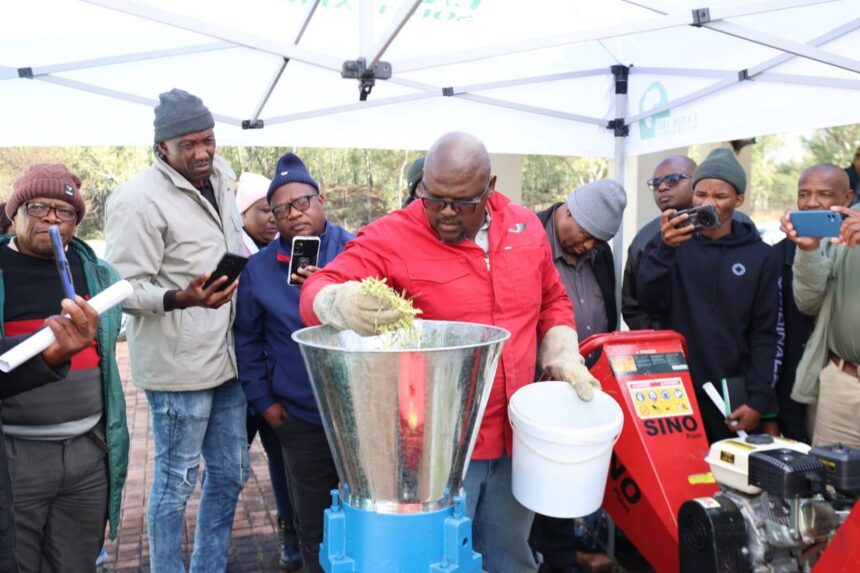
Dr Thamisanqa Mpanza from the Agricultural Research Council has demonstrated a practical approach that helps farmers deal with invasive and encroaching tree species by converting them into livestock feed. The demonstration focused on Sekelbos, also known as Moselesele, and Prosopis, known locally as Mokofi. These species are widely spread in parts of South Africa and create serious rangeland problems for livestock farmers. The session showed farmers and researchers how to manage these plants in a way that supports both veld restoration and feed production. The goal was to give farmers a usable solution that reduces bush encroachment while improving feed availability during dry seasons.
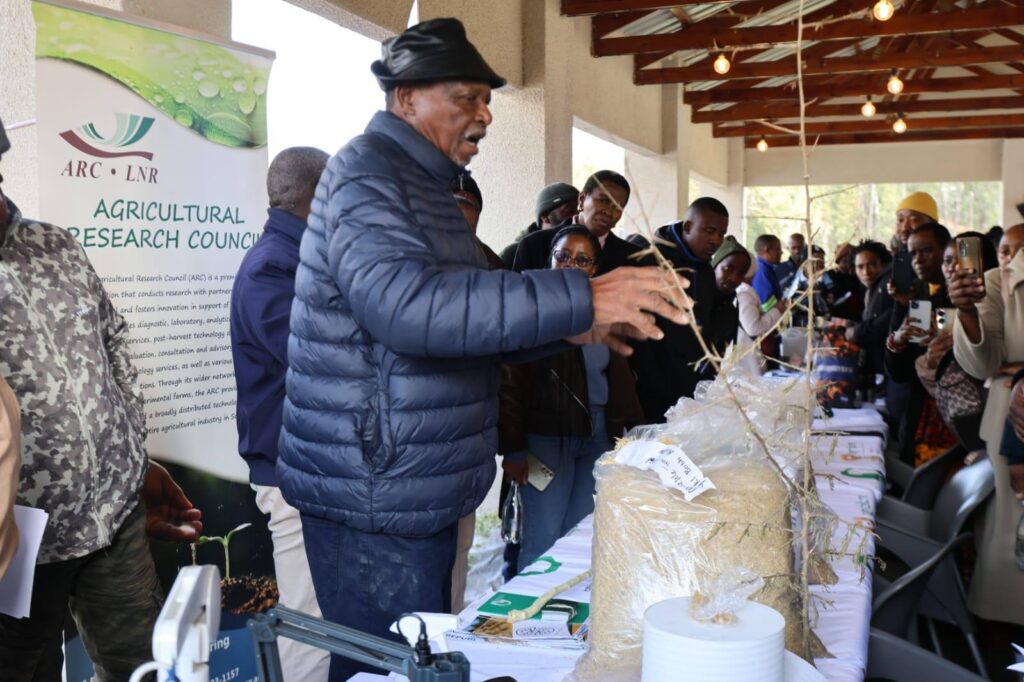
Sekelbos is a major challenge in the North West Province and areas around Rustenburg where it spreads aggressively across grazing land. It reduces grass cover by competing for water, nutrients and sunlight, which leads to lower grazing capacity for cattle and small stock. As the density of Sekelbos increases, animals have less access to nutritious pasture, which affects weight gain and overall herd performance. Farmers often rely on removing it to restore grazing land, but the wood is dense and difficult to manage at scale. It is commonly used for firewood and charcoal, but the ARC demonstration showed that it can also be processed into a feed resource that supports livestock nutrition when managed correctly.
Prosopis is an even more aggressive invasive species that spreads rapidly in arid and semi-arid areas. It has become a serious problem in parts of the North West Province and other dry regions where water resources are already limited. The tree grows quickly, forms dense thickets and pushes out indigenous vegetation that livestock depend on for grazing. Its deep roots allow it to survive drought conditions, which makes long-term control difficult for farmers. The demonstration highlighted that although Prosopis is harmful to rangelands, its biomass can be harvested and processed into supplementary livestock feed, especially when natural grazing is scarce.
The practical component of the demonstration focused on how farmers can collect, process and prepare both Sekelbos and Prosopis for livestock use. Dr Mpanza explained that the material must be mechanically reduced into smaller particles to make it usable for feeding systems. Processing methods improve digestibility and allow the plant material to be mixed with other feed sources to balance nutrition. Farmers were shown that this feed works best as a supplement rather than a full replacement for conventional rations. The approach also helps clear encroached land, which improves grass regrowth and restores grazing areas over time.
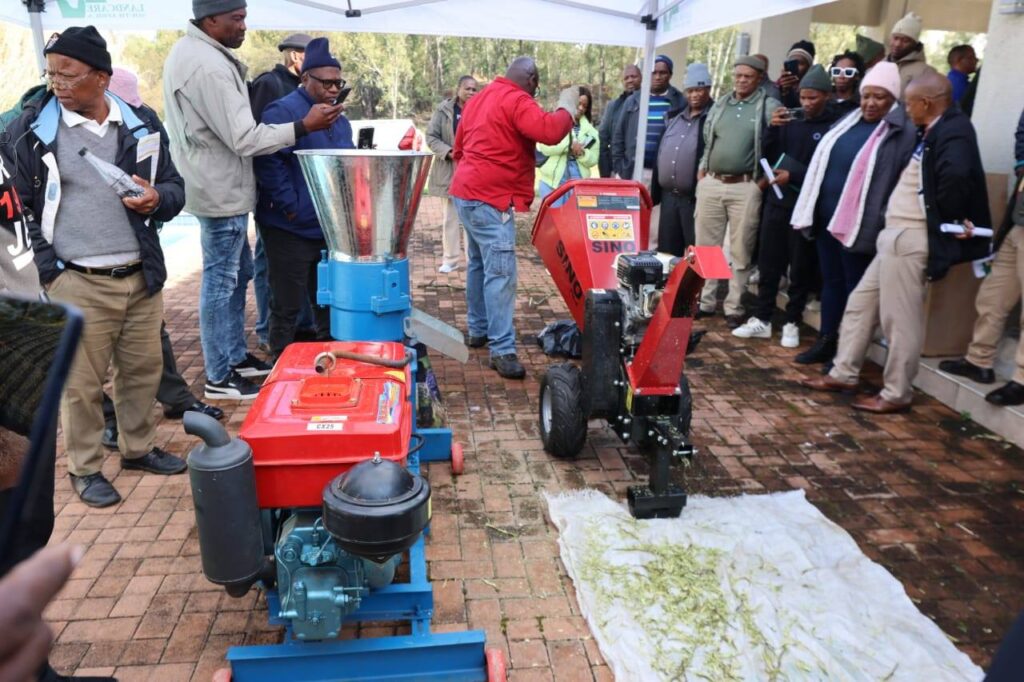
The demonstration also stressed the importance of combining bush control with livestock management planning. Farmers were encouraged to treat invasive woody plants as both a problem and a resource when managed properly. Using harvested material for feed reduces waste and creates value from land that is already affected by encroachment. It also supports livestock survival during drought periods when grazing quality drops sharply. The Agricultural Research Council highlighted that wider adoption of this approach could improve rangeland productivity and strengthen resilience in farming systems affected by climate stress.
Join 'Farmers Mag' WhatsApp Channel
Get the latest Farming news and tips delivered straight to your WhatsApp
CLICK HERE TO JOIN