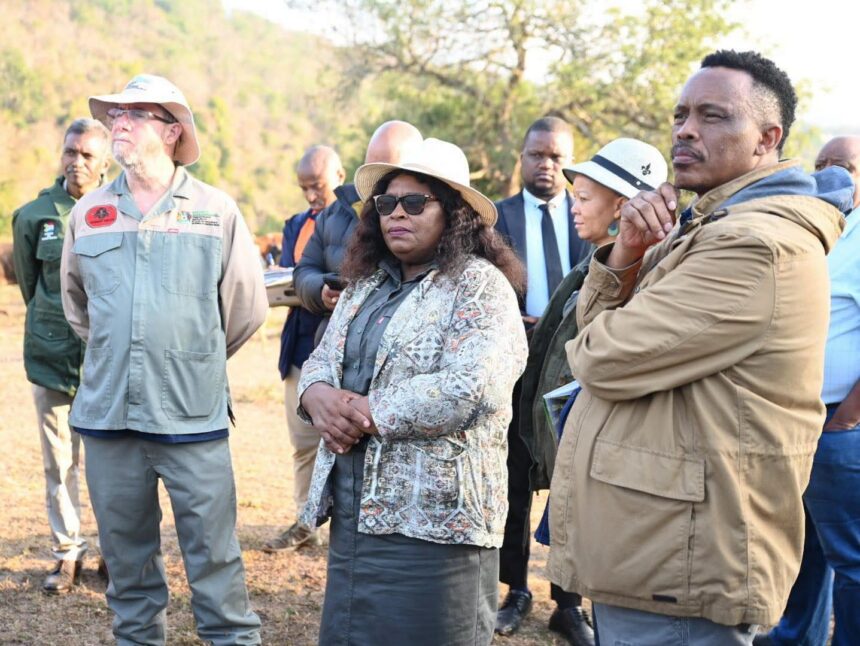
The KwaZulu-Natal Department of Agriculture and Rural Development is strengthening livestock health protection through continued support for the province’s 2 286 dip tanks and an ongoing mass vaccination campaign against Foot-and-Mouth Disease (FMD). MEC for Agriculture and Rural Development, Mrs Thembeni kaMadlopha-Mthethwa, highlighted the importance of maintaining a reliable supply of dipping chemicals while monitoring the effectiveness of livestock health programmes in the King Cetshwayo and iLembe districts. Dip tanks remain a vital resource for rural farmers because they provide an affordable and practical method of controlling external parasites that threaten animal health and productivity. The MEC’s visit focused on assessing the functionality of dip tanks and engaging directly with farmers about the challenges they face in maintaining healthy livestock. These efforts form part of a broader provincial commitment to protecting farmers’ livelihoods, improving animal health and reducing the spread of livestock diseases.
Regular dipping plays an important role in preventing parasite infestations and protecting cattle, sheep and goats from harmful external parasites such as ticks, lice, mites and flies. According to MEC kaMadlopha-Mthethwa, the continuous provision of acaricides, commonly known as dipping chemicals, is essential in ensuring that farmers can maintain effective livestock management practices. She explained that one of her key priorities since being appointed MEC was ensuring that dip tanks across the province remain stocked with the necessary chemicals. Effective dipping programmes help reduce the impact of tick-borne diseases, which can cause serious health problems in livestock and negatively affect agricultural productivity. By supporting communal farmers with access to dipping facilities and chemicals, the department is helping strengthen rural livestock production and improve food security.
The importance of dip tanks has become even more significant as KwaZulu-Natal continues its efforts to control Foot-and-Mouth Disease through a large-scale vaccination campaign. The King Cetshwayo and iLembe districts are currently participating in a mass vaccination drive aimed at inoculating nearly 200 000 animals against the disease. Foot-and-Mouth Disease can have serious economic consequences for farmers because it affects animal movement, productivity and market access. Preventing outbreaks requires a combination of vaccination, strict biosecurity measures and effective livestock management practices. The department’s approach combines disease prevention strategies with ongoing farmer support to ensure that communities are better prepared to protect their animals.
During engagements with farmers, MEC kaMadlopha-Mthethwa identified several challenges affecting the operation of some dip tanks, particularly water availability during dry seasons. Farmers raised concerns about shortages of water required to operate dipping facilities effectively, especially in areas experiencing prolonged dry conditions. The MEC also noted that some dip tanks are larger than the standard average capacity of approximately 17 500 litres, creating additional requirements for dipping chemicals and water management. She explained that the department would investigate possible solutions, including assessing whether boreholes could be provided in areas where underground water resources are available. Addressing these infrastructure challenges will help ensure that dip tanks continue functioning effectively throughout the year.
The MEC explained that some challenges faced by farmers are not related to a shortage of dipping chemicals but rather the size and capacity of certain dip tanks. Larger facilities may require adjustments in the allocation of dipping chemicals to ensure that farmers can maintain effective parasite control. The department will assess these cases individually and consider ways to improve support based on the specific needs of farming communities. Farmers also expressed appreciation for the department’s efforts and indicated that they were satisfied with the support being provided. These discussions demonstrate the value of direct engagement between government officials and farmers in identifying practical solutions to agricultural challenges.
Alongside livestock parasite control efforts, the province’s Foot-and-Mouth Disease vaccination campaign has continued to make significant progress. As of 26 July 2026, vaccination teams had inoculated 53 974 animals within a five-day period across the King Cetshwayo and iLembe districts. King Cetshwayo District recorded the highest number of vaccinations, with 39 445 animals vaccinated, while iLembe District recorded 14 529 vaccinations. The progress reflects the dedication of veterinary teams, agricultural officials and farmers who are working together to protect livestock from disease. Continued vaccination efforts remain a critical part of KwaZulu-Natal’s strategy to reduce the risk of FMD outbreaks and protect the agricultural economy.
Vaccinations in iLembe and King Cetshwayo districts will continue until 5 August 2026 as part of the first phase of the provincial vaccination programme. Following this phase, only Amajuba and uMzinyathi districts will remain to complete the planned vaccination activities. The phased approach allows veterinary teams to manage resources effectively while ensuring that targeted areas receive the necessary attention. Coordinated vaccination campaigns also provide an opportunity to strengthen relationships between government officials and livestock owners. Farmer participation remains essential because successful disease control depends on widespread cooperation and compliance with veterinary recommendations.
The combination of dip tank support, parasite control and disease vaccination demonstrates the department’s commitment to improving livestock health across KwaZulu-Natal. Healthy animals are central to the success of rural farming communities because livestock often serve as a source of income, food and economic stability for many households. Maintaining functional dip tanks and expanding vaccination coverage helps farmers reduce losses and improve the resilience of their operations. These programmes also contribute to wider agricultural development by supporting sustainable livestock production and protecting provincial food systems. Continued investment in animal health services remains a priority for strengthening the province’s farming sector.
MEC kaMadlopha-Mthethwa’s monitoring visits highlight the importance of understanding farmers’ experiences and responding to challenges at community level. By engaging directly with livestock owners, the department can identify gaps in infrastructure, improve service delivery and ensure that support reaches areas where it is most needed. The continued supply of dipping chemicals and progress in the Foot-and-Mouth Disease vaccination campaign show the impact of coordinated efforts between government and farming communities. As KwaZulu-Natal continues implementing these programmes, farmers will be better equipped to protect their livestock against diseases and parasites. These initiatives represent an important step toward building a healthier, more productive and more resilient livestock sector in the province.
Join 'Farmers Mag' WhatsApp Channel
Get the latest Farming news and tips delivered straight to your WhatsApp
CLICK HERE TO JOIN