International Plant Health Day has become an important platform for raising awareness about the role of healthy crops in securing food production, protecting livelihoods and supporting sustainable agriculture systems. In Mankweng within the Capricorn South Agro Ecological Zone, farmers, researchers and government officials gathered to highlight the importance of plant health in modern farming. The event was hosted through a partnership between the University of Limpopo and the Limpopo Department of Agriculture and Rural Development. It focused on translating agricultural research into practical knowledge that small scale farmers can use to improve productivity. The commemoration also reinforced the importance of collaboration between academic institutions and government in strengthening rural agricultural systems.
International Plant Health Day is celebrated annually in May and is dedicated to increasing awareness about protecting plant health as a foundation for global food security. Healthy plants are essential for producing reliable food supplies, maintaining soil quality and supporting economic stability in farming communities. During the programme, Capricorn South Deputy Director Mr Mogano Mathule delivered opening remarks that emphasised the value of ongoing cooperation between UL and LDARD. He noted that this partnership continues to empower rural and small scale farmers through applied research and practical agricultural training. His message highlighted that knowledge sharing remains a key driver in improving farming outcomes across the region.
A major focus of the event was the direct relationship between plant health management and improved agricultural productivity. Mr Mathule encouraged farmers to take plant health seriously as a core part of their production systems. He explained that healthy crops consistently produce higher yields, better quality produce and more stable harvests. Early detection of pests and diseases was highlighted as one of the most effective ways to prevent major crop losses. Farmers were also advised to adopt routine field monitoring practices to identify problems before they spread across entire fields. This proactive approach is especially important for small scale farmers who may not have the resources to recover from large scale crop failures.
The programme included detailed presentations covering a wide range of topics related to sustainable crop production. These included pests and diseases that affect key crops, the impact of nematodes on yield reduction and the importance of maintaining soil health. Experts also discussed integrated pest and disease management strategies that combine biological, cultural and chemical control methods. Agroecological farming approaches were introduced as long term solutions for maintaining productivity while protecting the environment. These topics were designed to equip farmers with both scientific understanding and practical tools that can be applied directly on their farms.
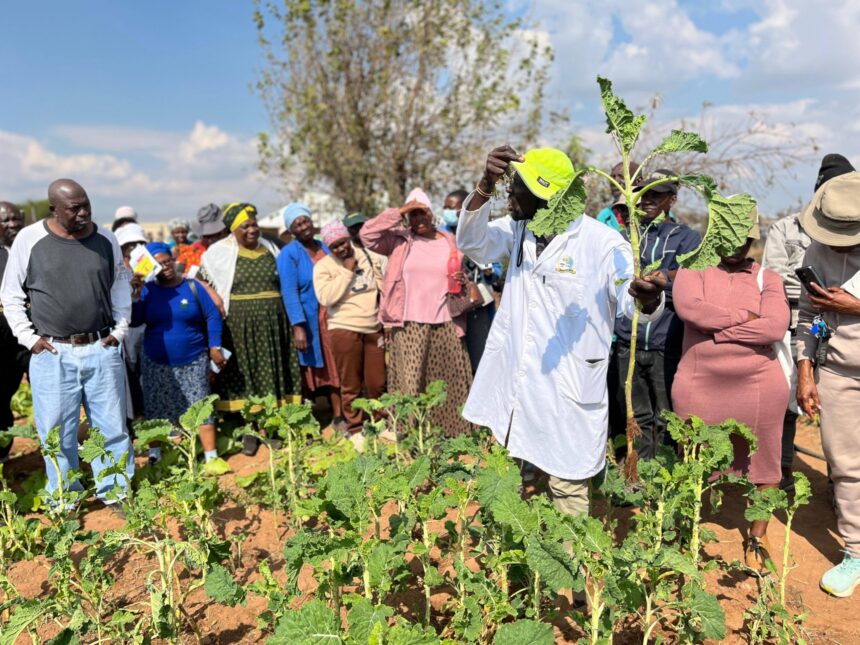
Field based learning formed a central part of the event, with farmers participating in vegetable field walks and hands on demonstrations. These activities allowed participants to observe real crop conditions and learn how to identify symptoms of common plant diseases and pest infestations. Farmers were shown how to perform simple diagnostics in the field, which can help them make quicker decisions about treatment and prevention. The demonstrations also focused on preventative measures that reduce the likelihood of widespread crop damage. This practical training approach ensures that farmers are not only receiving information but also building real skills that improve day to day farming practices.
An important innovation showcased during the event was the introduction of climate smart farming methods, including vertical farming using aeroponics systems. These systems allow crops to grow without soil, using nutrient rich mist environments that reduce water consumption and increase production efficiency. This approach is particularly relevant in areas facing water scarcity and limited arable land. Farmers were introduced to how such systems can be used to grow vegetables in controlled environments while maintaining high productivity levels. The demonstration highlighted the growing role of technology in transforming traditional farming into more sustainable and efficient production systems.
The partnership between the University of Limpopo and the Limpopo Department of Agriculture and Rural Development continues to play a critical role in supporting agricultural development in the region. By combining academic research with government extension services, the collaboration ensures that scientific knowledge reaches farmers in practical and accessible ways. This approach strengthens rural farming communities by improving their ability to manage risks and increase productivity. It also supports long term food security by promoting sustainable farming practices that protect natural resources. As climate pressures and agricultural challenges continue to grow, initiatives like International Plant Health Day remain essential in building resilient farming systems and empowering farmers with the knowledge they need to succeed.
Join 'Farmers Mag' WhatsApp Channel
Get the latest Farming news and tips delivered straight to your WhatsApp
CLICK HERE TO JOIN