The upcoming Virtual Knowledge Forum: Linking Evidence, Policy, and Action: Online Knowledge Forum Series for Sustainable Food Systems, scheduled for 20 to 22 May 2026, will bring a strong focus on practical agricultural innovation and policy alignment across Africa. The forum is designed to connect research with real farming needs, especially in areas facing climate stress, water scarcity and rising food demand. It will gather policymakers, researchers, private sector actors and development partners in one online space to improve how agricultural evidence is used in decision making. The goal is to support food systems that are more productive, inclusive and resilient under changing environmental conditions. For farming audiences, the most important value lies in how research can be turned into workable on farm solutions.
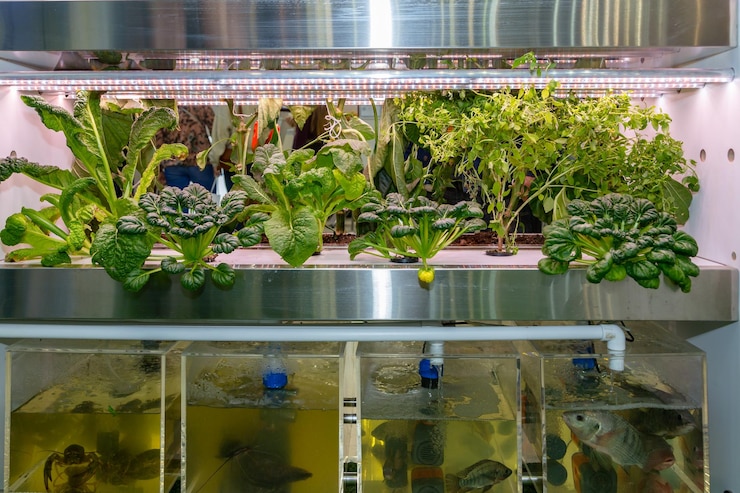
A key presentation will come from Dr Mary-Jane Thaela-Chimuka from the ARC Aquaculture and Biogas Centre of Excellence, who will present during Session 2. Her focus is expandable aquaponics systems, which combine fish farming and crop production in one integrated setup. In practical farming terms, this means fish waste is converted into nutrients that feed plants, while plants help clean and filter the water for the fish. The system reduces the need for chemical fertilisers and lowers water use compared to conventional irrigation farming. For farmers in drought prone or land limited areas, this approach can support year round production in controlled environments.
Expandable aquaponics systems are especially relevant for smallholder and emerging farmers who need efficient ways to produce food on limited land. A basic setup usually includes fish tanks, grow beds, water pumps and filtration components that keep the system balanced. Farmers can grow leafy vegetables such as spinach, lettuce and herbs alongside fish species like tilapia, depending on local conditions. The system can be scaled up gradually, starting small and expanding as knowledge and resources increase. This flexibility makes it suitable for both household food production and commercial farming operations. The focus is on producing more food with less water, less land and fewer external inputs.
The Virtual Knowledge Forum: Linking Evidence, Policy, and Action event itself is structured as a platform for turning agricultural research into policy ready solutions. Virtual Knowledge Forum: Linking Evidence, Policy, and Action will encourage direct exchange between experts who design systems and decision makers who shape agricultural programmes. This connection is important because many farming innovations do not reach widespread use due to weak policy support or limited awareness. By focusing on evidence based discussions, the forum aims to close that gap and speed up adoption of proven technologies. For agriculture sectors across Africa, this means better alignment between research institutions, government planning and private investment.
From a farming perspective, the value of this forum lies in its focus on practical systems that can be implemented on the ground. Aquaponics, for example, can help reduce input costs linked to fertilisers and irrigation water, which are major challenges for many farmers. It also offers a way to produce food closer to markets, reducing transport costs and post harvest losses. In areas with unreliable rainfall, controlled systems like aquaponics can improve food security and income stability. However, successful adoption depends on training, access to basic infrastructure and ongoing technical support. This is why collaboration between researchers, technicians and policymakers is essential for scaling these solutions.
The forum is expected to strengthen the link between scientific research and real agricultural practice across the continent. By showcasing systems such as expandable aquaponics, it highlights how innovation can be adapted to local farming conditions rather than remaining in research environments. The participation of experts like Dr Mary-Jane Thaela-Chimuka reinforces the importance of applied science in building resilient food systems. As discussions unfold during the three day programme, the focus will remain on practical outcomes that farmers, governments and industry can act on. The overall expectation is that the forum will support more effective agricultural policies and encourage wider adoption of climate smart farming systems that improve productivity and sustainability.
Join 'Farmers Mag' WhatsApp Channel
Get the latest Farming news and tips delivered straight to your WhatsApp
CLICK HERE TO JOIN