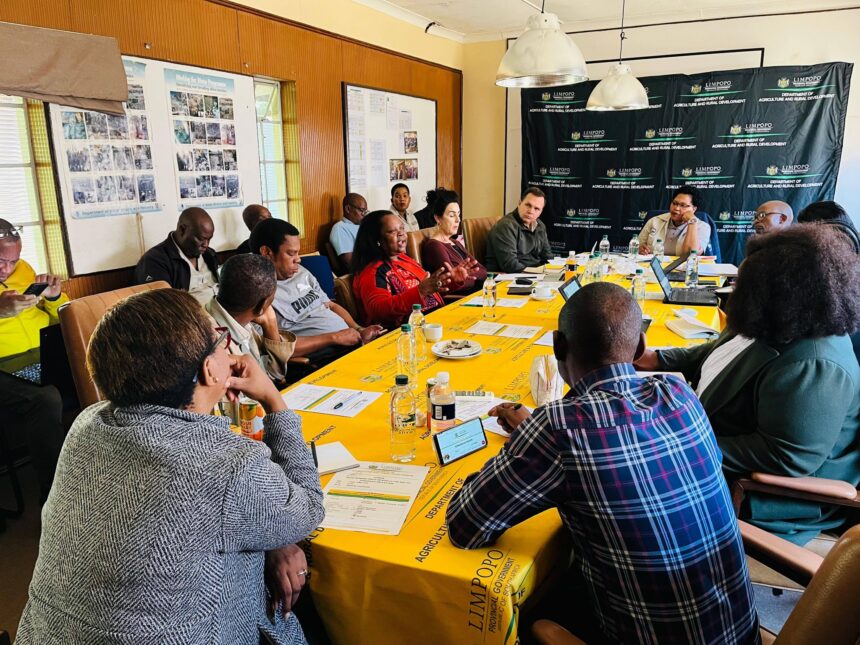
On 15 May, the Limpopo Department of Agriculture and Rural Development hosted a Provincial Economic Growth Advisory Council (PEGAC) oversight visit at the Zebediela Citrus Estate in the Capricorn District. The estate is regarded as one of the province’s key catalytic agricultural projects and remains central to efforts aimed at restoring productive farming activity in the region. The visit focused on evaluating progress made in the recovery and revitalisation of the once struggling estate through strategic partnerships. Led by Advisor to the Premier on Agriculture Tobias Fourie and hosted by PEGAC Champion and Head of Department Ms Mpho Mashamba, the delegation assessed how coordinated interventions are reshaping the future of the estate. The engagement formed part of ongoing government efforts to strengthen agricultural performance and unlock long-term economic value in Limpopo.
The oversight visit was designed to measure the impact of the partnership between the provincial government and the WhipHold investor group, which has played a key role in supporting the estate’s turnaround strategy. Officials examined how investment-driven collaboration is contributing to infrastructure development and improved agricultural productivity. The initiative aligns with the broader mandate of PEGAC, which focuses on providing informed strategic advice to the Premier on economic growth priorities. It also supports the Limpopo Development Plan, which emphasizes sustainable agriculture, job creation and poverty reduction as core pillars of provincial development. The engagement highlighted how structured partnerships between government and private investors can accelerate the rehabilitation of large-scale agricultural assets.
During the visit, the Head of Department expressed satisfaction with the visible progress achieved on the estate, noting several key developments that signal renewed operational capacity. These included newly erected fencing infrastructure, which improves security and operational management across the farm. The refurbishment of irrigation systems was also highlighted as a critical milestone, ensuring better water efficiency and supporting long-term crop production. Officials further observed the planting of white beans, which are being used as a soil restoration strategy to naturally improve nitrogen levels ahead of the establishment of new citrus orchards. These interventions demonstrate a practical approach to rebuilding soil health while preparing the estate for expanded production.
The delegation also evaluated the production potential of both citrus and macadamia farming enterprises within the estate. These two crops are viewed as high-value agricultural products with strong export potential and long-term commercial viability. Discussions focused on how best to optimise land use, improve yield performance and ensure that production systems remain sustainable over time. Stakeholders engaged on existing operational challenges, including infrastructure needs, market access and resource management constraints. Long-term sustainability planning was identified as a critical priority to ensure that the estate remains productive and economically viable for future generations.
A key part of the programme included detailed project overview presentations that provided insight into current operations and future development plans. These presentations allowed stakeholders to assess progress in a structured manner while identifying areas that require further support or intervention. Strategic discussions followed, focusing on investment opportunities, agricultural innovation and institutional coordination. A question and answer session created space for direct engagement between officials, investors and technical teams involved in the project. A guided tour of the estate further allowed the delegation to observe operational developments and technical advancements taking place on the ground.
The visit reaffirmed the government’s commitment to rebuilding Zebediela Citrus Estate into a fully productive agricultural hub capable of driving regional economic growth. It also highlighted the importance of restoring underperforming agricultural assets as a strategy for creating employment and supporting rural development. The collaboration between government structures and private investors continues to play a central role in transforming the estate into a modern and efficient farming operation. With visible improvements already underway, the project is positioning itself as a model for agricultural revitalisation within Limpopo. The continued focus on infrastructure development, soil restoration and production expansion signals strong potential for long-term success.
The PEGAC oversight engagement at Zebediela Citrus Estate reflects a broader provincial strategy aimed at strengthening agricultural development and economic transformation. By combining policy guidance, investment partnerships and technical support, Limpopo is working to ensure that strategic farming projects contribute meaningfully to economic growth and job creation. The progress observed at the estate demonstrates how targeted interventions can revive struggling agricultural assets and turn them into productive economic drivers. As implementation continues, the estate is expected to play a growing role in supporting citrus and macadamia production in the province. The visit ultimately reinforced a shared commitment to building a resilient agricultural sector that supports communities, strengthens food production and advances long-term economic stability.
Join 'Farmers Mag' WhatsApp Channel
Get the latest Farming news and tips delivered straight to your WhatsApp
CLICK HERE TO JOIN