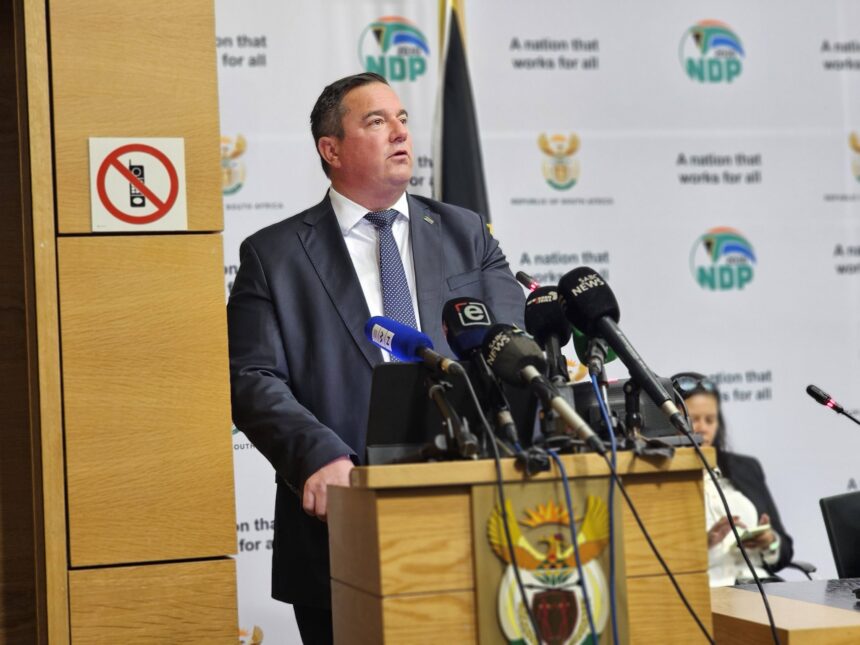
South Africa has reached a major milestone in global agriculture after officially overtaking Spain as the world’s largest citrus exporter by volume in 2025, with exports reaching 2.9 million tons. Minister of Agriculture John Steenhuisen has publicly congratulated farmers, farm workers, and all value-chain partners for their role in achieving this record-breaking performance. He described the achievement as a national success that reflects years of coordination, investment, and discipline across the agricultural sector. The development places South Africa in a leading position in global citrus trade and highlights the strength of its export systems. It also reflects the resilience of a sector that continues to grow under challenging global conditions.
John Steenhuisen praised the achievement and highlighted the quality standards that support South Africa’s competitiveness in international markets. He stated that surpassing a major producer like Spain is not a minor development but a significant global shift in trade performance. South African citrus is widely recognised for its consistent quality and strict compliance with international plant health requirements, which has helped secure strong demand in global markets. The 2.9 million tons exported in 2025 reflects both increased production capacity and efficient logistics networks that support large-scale distribution. This growth has also been driven by improved farming practices and stronger coordination across the agricultural value chain.
While celebrating the milestone, Steenhuisen also pointed out that global citrus production remains dominated by countries such as China, Brazil, and Spain, particularly in terms of domestic consumption. He explained that South Africa’s leadership is focused specifically on export volume rather than total production output. The shift in 2025 also came during a period where Spanish producers faced difficult climatic conditions that affected yield stability and export capacity. Despite this, Spain continues to play a major role in the global citrus industry, especially within the Northern Hemisphere supply cycle. South Africa’s position strengthens its role in balancing seasonal supply across global markets and ensuring year-round availability of citrus products.
Steenhuisen emphasised that South Africa and Spain serve complementary functions in the international citrus trade system. Spain primarily supplies markets during the Northern Hemisphere season, while South Africa ensures continuity during the Southern Hemisphere export window. This coordination supports stable supply chains and helps maintain consistent product availability for consumers worldwide. The Minister also highlighted the importance of infrastructure development and trade expansion to sustain this momentum. He called for stronger diplomatic engagement to open new markets while protecting and expanding existing export destinations. He further noted that continued growth will depend on efficient logistics, reliable transport systems, and reduced trade barriers.
The Citrus Growers Association played a central role in achieving this milestone, with the Minister acknowledging its strategic leadership during periods of volatility in global trade. The Citrus Growers Association has worked closely with producers to improve market access, support compliance standards, and strengthen industry coordination. Government support remains focused on expanding export opportunities and reducing the cost of trade through improved policy and infrastructure investment. Steenhuisen reaffirmed that agriculture remains a key driver of South Africa’s economic growth and job creation. He concluded that sustained collaboration between government, farmers, and industry stakeholders will be essential to maintaining this leadership position in global citrus exports.
Join 'Farmers Mag' WhatsApp Channel
Get the latest Farming news and tips delivered straight to your WhatsApp
CLICK HERE TO JOIN