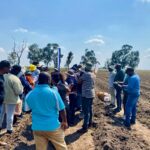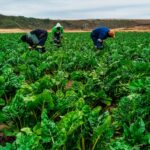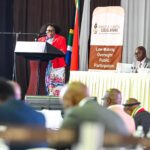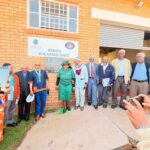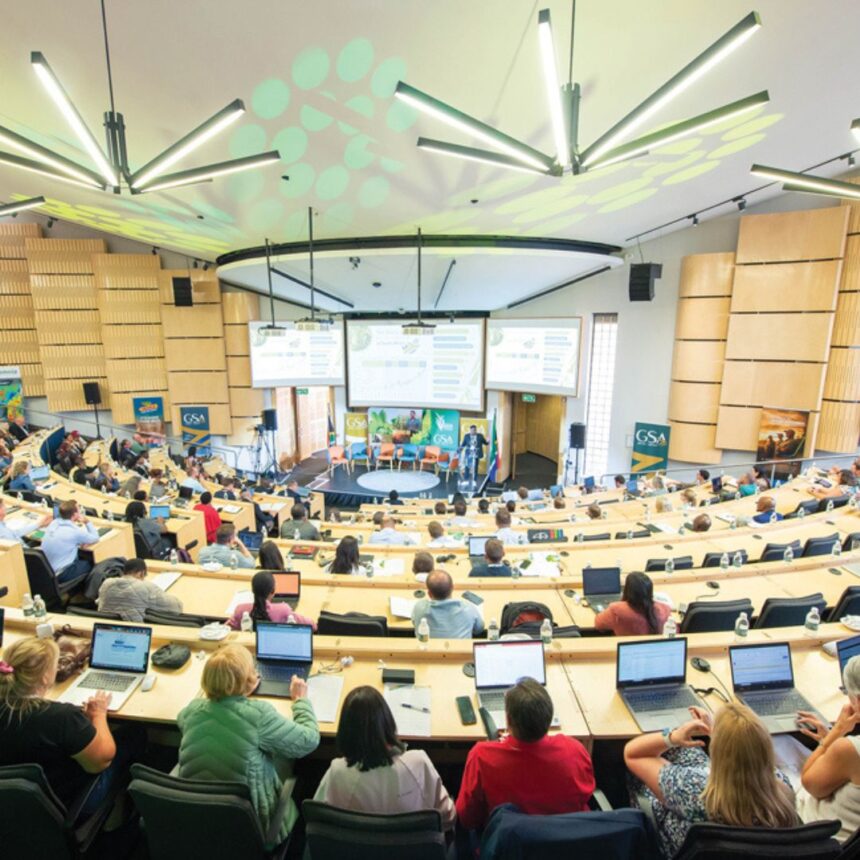
The 2026 annual meeting of the National Grain Research Platform (NGRP), hosted by Grain SA from 1 to 3 March at Future Africa, University of Pretoria, brought together the full grain value chain in one coordinated setting. Producers, researchers, policymakers, and industry leaders gathered to assess progress and set priorities for the future of South Africa’s grain sector. The event was not positioned as a standard conference but as a working platform focused on alignment and execution. Leaders repeatedly stressed that the industry already holds strong knowledge and innovation capacity. The main challenge now lies in how effectively these strengths are connected and implemented at ground level.
Opening the platform, Grain SA chairperson Richard Krige delivered a clear message about direction and accountability. He emphasised that the grain industry cannot rely on isolated excellence across different sectors if it wants sustainable growth. Instead, he called for stronger coordination between research, policy, and commercial production. He noted that every decision taken within the system ultimately affects the farm gate, where producers carry the financial and operational risk. His message reinforced the idea that collaboration must move beyond discussion and into measurable action that supports real industry outcomes.
Grain SA CEO Dr Tobias Doyer grounded the discussions in the everyday realities facing grain producers. He highlighted the ongoing pressure caused by a widening gap between rising input costs and slower growth in commodity prices. This imbalance continues to place strain on profitability and forces farmers to increase output simply to remain financially viable. He stressed that research is no longer optional but essential for survival in this environment. According to him, progress depends on integrated solutions that combine genetics, soil science, crop protection, and precision agriculture in practical ways. He also raised concern that while technology exists, adoption at farm level remains inconsistent, limiting its full impact.
From an economic standpoint, Prof Ferdi Meyer of the Bureau for Food and Agricultural Policy (BFAP) explained broader global trends affecting the industry. He pointed to the long-term decline in real commodity prices driven by global productivity gains and technological advancement. While South Africa has made progress in improving yields and closing the gap with international competitors, this has also intensified pressure on profit margins. He described this situation as a “technology treadmill,” where continuous innovation is required just to maintain competitiveness. In this environment, research plays a critical role not only in increasing production but also in sustaining long-term economic viability for producers.
The Department of Science, Technology and Innovation reinforced the importance of converting research into real-world application. Officials highlighted progress achieved through collaboration in areas such as crop improvement, climate resilience, and biosecurity. However, they also pointed out that the main barrier is no longer the lack of innovation but the uneven adoption of available technologies. Dr Kenny Tenza noted that many solutions already exist but are not consistently used across all farming operations. The department emphasised the need for accessible, affordable, and practical innovations, especially for smallholder and developing farmers, supported by digital tools that can expand reach and efficiency.
Policy discussions at the meeting focused on the need for stronger alignment between regulation, innovation, and implementation. The Department of Agriculture highlighted that South Africa’s agricultural sector has shown resilience and export growth, but future competitiveness depends on better integration of technology into policy frameworks. Key priorities include strengthening biosecurity systems, improving regulatory efficiency, and expanding participation across the value chain. Minister of Agriculture John Steenhuisen added that the sector is operating in an increasingly complex environment shaped by climate variability, pest risks, and global market volatility. He stated that integration is no longer optional but essential for long-term competitiveness.
A significant part of the discussion also focused on breeding technologies and the need for science-based regulatory systems. Stakeholders stressed that clear and enabling regulations are necessary to support investment and innovation in the sector. Without this, South Africa risks falling behind in global agricultural development. Communication challenges were also raised, particularly around public understanding of biotechnology and agricultural science. Concerns were expressed about misinformation affecting adoption rates and policy perception. The minister emphasised that stronger engagement between scientists, policymakers, and the public is required to build trust and support informed decision-making.
The issue of fairness within the grain value chain also emerged as an important theme. Producers highlighted the imbalance between the risks they carry and the returns distributed across the broader system. This concern reinforced the need for a more transparent and efficient value chain structure. At the same time, leaders stressed that coordination between stakeholders remains the most effective way to address systemic challenges. Prof Danie Vermeulen described the NGRP as a coordinating platform designed to reduce duplication and improve focus across the industry. He emphasised that success depends on structured collaboration rather than isolated efforts.
The NGRP 2026 annual meeting concluded with a strong and consistent message across all sessions. South Africa’s grain industry has the knowledge base, technical capacity, and innovation systems needed to succeed in a competitive global environment. The real challenge lies in ensuring that these strengths are fully integrated across research, policy, and industry operations. Stakeholders agreed that future progress will depend on how effectively ideas are implemented in practical farming contexts. The meeting reinforced that coordination, adoption, and execution will define the next phase of growth for the sector.
Join 'Farmers Mag' WhatsApp Channel
Get the latest Farming news and tips delivered straight to your WhatsApp
CLICK HERE TO JOIN