

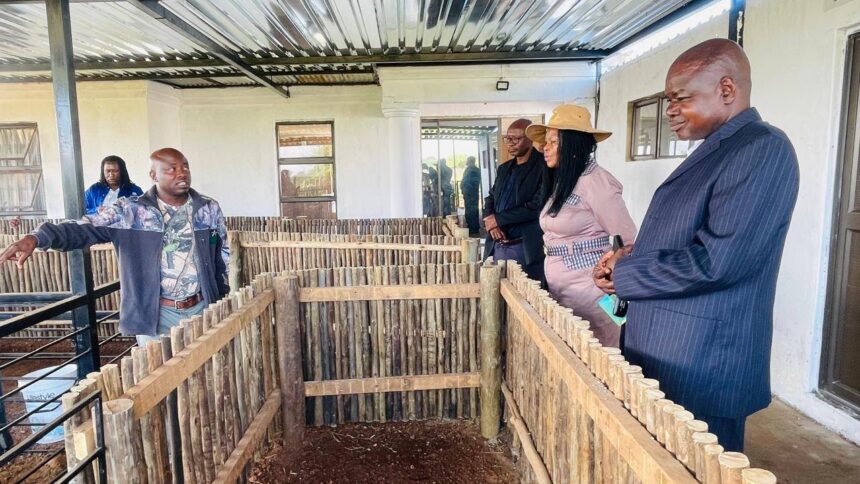
The official launch of the Mathuba Farming Academy in Vhembe has been described as a significant milestone for agricultural development and skills training in South Africa. MEC Nakedi Kekana led the launch event, celebrating the academy’s growth from a small backyard initiative into a recognised centre of excellence. The transformation reflects years of dedication by founder Mr Mudau Emmanuel, who envisioned a platform that could empower communities through practical agricultural training. The academy is now supported by departmental infrastructure and scientific partnerships that strengthen its training capacity. This development highlights the growing importance of structured agricultural education in addressing unemployment and rural underdevelopment. It also positions the academy as a key player in advancing modern livestock farming skills in the region.
During the launch, MEC Kekana emphasised the role of the Mathuba Farming Academy in driving economic liberation for rural communities. She highlighted how the institution is designed to equip young people and women with technical skills that are essential in today’s livestock sector. These skills include animal health management, breeding techniques, farm management, and the use of modern agricultural technologies. By focusing on practical training, the academy aims to prepare learners for real employment opportunities and entrepreneurship in agriculture. The MEC noted that empowering youth with these capabilities reduces dependency and creates pathways to self-sufficiency. This approach aligns with broader government efforts to strengthen rural economies through education and skills development.
The academy’s growth into a structured centre of excellence has been supported by partnerships that bring scientific expertise into its training programmes. These collaborations help ensure that students are exposed to modern farming methods that improve productivity and sustainability. Access to scientific knowledge also allows learners to understand animal nutrition, disease prevention, and efficient livestock production systems. This type of training is critical in a sector that is increasingly driven by technology and research-based practices. The integration of academic support with hands-on experience gives students a balanced understanding of agriculture. It also ensures that graduates are better prepared to meet industry demands and contribute meaningfully to the economy.
The vision behind the Mathuba Farming Academy reflects a broader shift in how agriculture is perceived in rural communities. Instead of being seen only as traditional or subsistence-based work, farming is increasingly recognised as a skilled and technology-driven profession. The academy plays a key role in changing mindsets by demonstrating that agriculture can offer sustainable careers and business opportunities. This shift is particularly important for young people who are seeking employment in a competitive job market. By presenting agriculture as a viable and modern career path, the academy helps attract new talent into the sector. It also supports long-term food security by developing a skilled generation of farmers.
Following the official launch, MEC Kekana extended her visit to Tshilwavhusiko Combined School in the same area. The purpose of the visit was to encourage learners to consider agriculture as a future career option. She spoke about agriculture as a high-tech field that combines science, technology, and business skills. Learners were encouraged to view farming not only as manual labour but as a profession that requires innovation and strategic thinking. The MEC also highlighted agriculture as a powerful tool in the fight against poverty and inequality. By exposing young learners to these ideas early, the government hopes to build interest in agricultural studies and careers.
The engagement with learners also formed part of a broader effort to strengthen agricultural education at grassroots level. Schools play a critical role in shaping perceptions about career choices, and early exposure to agriculture can influence long-term interest in the sector. By connecting formal education with institutions like the Mathuba Farming Academy, learners can see a clear pathway from school to skills training and employment. This creates a more structured development pipeline for future farmers, technicians, and agricultural entrepreneurs. It also helps address the skills gap that exists in many rural farming communities. Strengthening this link between education and practical training is essential for sustainable agricultural development.
The launch of the Mathuba Farming Academy represents a meaningful investment in human capital development within the agricultural sector. It demonstrates how community-driven initiatives can grow into structured institutions with national relevance when supported effectively. The academy is expected to play a long-term role in improving livestock production skills and supporting rural economic growth in Vhembe and beyond. With continued support from government and partners, it has the potential to expand its impact across other regions. The combination of training, scientific collaboration, and youth engagement positions it as a strong model for agricultural development. As the academy grows, it will continue contributing to skills development, job creation, and economic empowerment in South Africa’s rural communities.
Join 'Farmers Mag' WhatsApp Channel
Get the latest Farming news and tips delivered straight to your WhatsApp
CLICK HERE TO JOIN




