

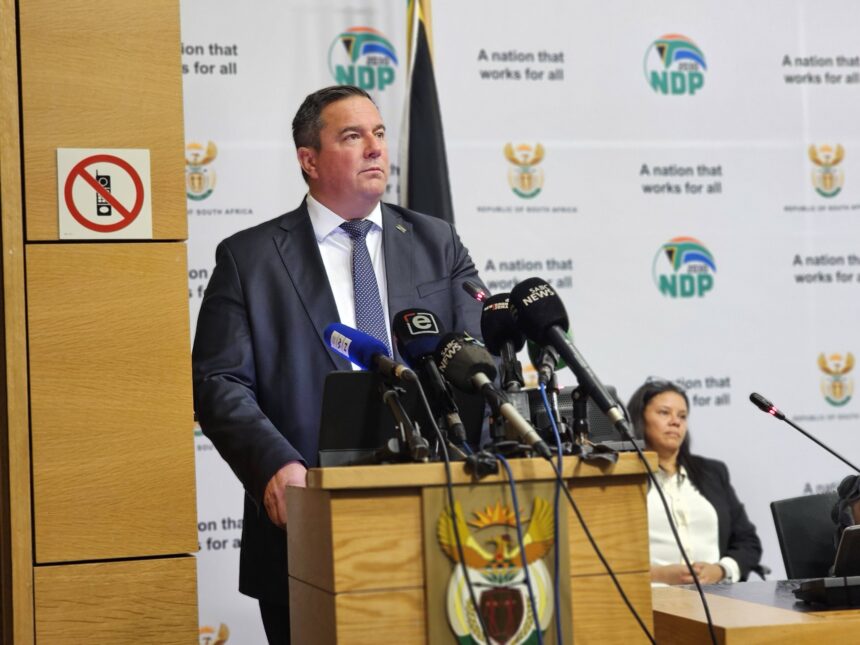
South Africa has taken a major step in protecting its livestock industry with the official publication of the Routine Vaccination Scheme for Foot-and-Mouth Disease (RVS-FMD) in the Government Gazette on Monday, 4 May 2026. The announcement was made during a media briefing by Minister of Agriculture John Steenhuisen, who confirmed that the programme is designed to strengthen national disease control efforts. Foot-and-mouth disease remains one of the most serious threats to livestock production in the country, affecting trade, productivity, and farmer livelihoods. The new vaccination scheme signals a more structured and proactive approach to managing outbreaks and reducing long-term risk. It also reflects government’s focus on safeguarding both commercial and emerging farming sectors.
Minister Steenhuisen emphasised the urgency of timely action in agriculture, noting that delays in disease response can have severe financial consequences for farmers. He stated that in farming, time is money and any delay increases exposure to preventable losses. This message highlights the practical reality faced by livestock producers who depend on fast and effective government intervention during disease threats. The publication of the RVS-FMD in the Government Gazette marks the transition from planning to implementation. It also provides a clear legal and operational framework for vaccination efforts across affected and high-risk areas.
The Routine Vaccination Scheme for Foot-and-Mouth Disease is expected to improve coordination between government veterinary services and private sector partners. While the state will roll out a fully funded national vaccination programme, commercial partners are also being enabled to act quickly to protect their herds. This dual approach strengthens the overall response capacity by combining public resources with private sector efficiency. It allows for faster vaccination coverage in areas where disease pressure is high or where outbreaks are more likely. The integration of multiple role players is intended to ensure that no part of the livestock system is left vulnerable.
Foot-and-mouth disease poses a significant risk to South Africa’s agricultural economy due to its highly contagious nature and impact on cloven-hoofed animals such as cattle, sheep, and goats. Outbreaks can lead to trade restrictions, movement bans, and heavy financial losses for farmers and exporters. The introduction of a structured vaccination programme aims to reduce the likelihood of widespread infection and contain outbreaks more effectively. By increasing immunity levels within livestock populations, the country can better protect its export markets and domestic food supply. This is particularly important for maintaining confidence among trading partners and strengthening agricultural competitiveness.
The government’s approach reflects a shift toward preventative disease management rather than reactive crisis control. Routine vaccination allows veterinary authorities to build long-term resilience within the livestock sector. It also reduces pressure on emergency response systems that are often stretched during outbreaks. Consistent immunisation programmes can help create buffer zones that limit disease spread between regions. This strategy supports both commercial farmers and small-scale producers who may lack the resources to respond independently to major outbreaks.
Farmers across the country are expected to benefit from improved access to vaccination services and clearer regulatory guidance. The publication of the scheme provides certainty on how vaccination programmes will be implemented and managed. It also helps reduce confusion around compliance requirements and movement controls during disease risk periods. Veterinary services will play a central role in coordinating rollout plans and monitoring effectiveness across different regions. This structured approach aims to ensure consistency in application and improve overall disease surveillance.
The livestock sector remains a key contributor to South Africa’s rural economy, supporting employment, food security, and export earnings. Strengthening animal health systems is therefore directly linked to broader economic stability. The introduction of the RVS-FMD supports long-term agricultural sustainability by reducing the impact of recurring disease outbreaks. It also aligns with global standards for livestock disease management, which are increasingly important for international trade access. Countries that demonstrate strong biosecurity systems are better positioned in competitive export markets.
The publication of the Routine Vaccination Scheme for Foot-and-Mouth Disease represents a significant milestone in South Africa’s agricultural policy framework. It combines government leadership with private sector participation to address one of the most persistent threats to livestock production. By prioritising prevention, coordination, and rapid response, the programme aims to reduce economic losses and improve sector resilience. The success of the initiative will depend on effective implementation, strong cooperation, and consistent monitoring across all levels of the livestock value chain. This development marks an important step toward a more secure and stable future for South Africa’s agricultural industry.
Join 'Farmers Mag' WhatsApp Channel
Get the latest Farming news and tips delivered straight to your WhatsApp
CLICK HERE TO JOIN




