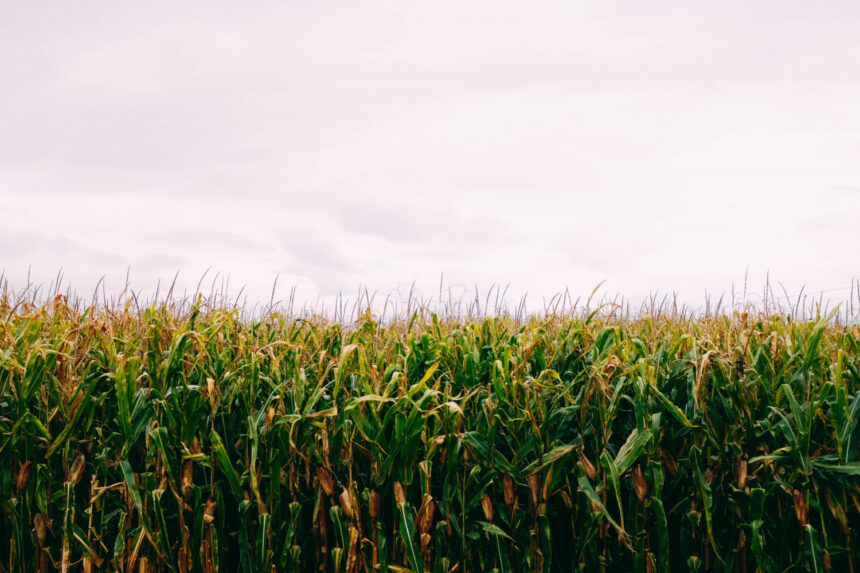
Goss’s Wilt has emerged as one of the most destructive bacterial diseases affecting maize production in South Africa, creating growing concern across the agricultural sector. The disease is caused by Clavibacter michiganensis subsp. nebraskensis and targets maize plants by damaging leaves and disrupting the plant’s ability to transport water and nutrients. This leads to severe leaf blighting and systemic wilting that can significantly reduce yields. As of April 2026, the Department of Agriculture has confirmed a rapid expansion of the disease across the country. The scale of spread has placed maize producers on high alert due to its direct impact on food production and economic stability.
The disease was first detected in only four provinces in 2024, but a comprehensive 2025 survey revealed a far wider distribution. It is now present in eight of South Africa’s nine provinces, including the Free State, North West, Gauteng, Eastern Cape, Limpopo, Mpumalanga, Northern Cape, and Western Cape. KwaZulu-Natal remains the only province without recorded detections, although experts warn that it is at risk due to its proximity to affected regions. This rapid geographic spread highlights how quickly bacterial plant diseases can move through agricultural systems. It also underscores the importance of coordinated national monitoring and response strategies.
One of the most concerning aspects of Goss’s Wilt is that it has no chemical cure once a plant is infected. Unlike fungal diseases that can often be controlled with fungicides, bacterial infections cannot be reversed after entry into the plant. This makes Goss’s Wilt particularly dangerous for maize farmers because damage becomes permanent within a single season. In severe cases, entire fields can suffer significant yield loss, reducing production capacity and profitability. This “no-cure” reality forces farmers to shift their focus entirely toward prevention rather than treatment.
Research highlights the serious economic implications of poor disease management in maize production. A Grain SA study published in March 2024 found that maize diseases such as Goss’s Wilt can cause yield losses ranging from 30 percent to 100 percent in severe outbreaks. These losses represent a major risk to both individual farmers and national food security systems. South Africa’s maize harvest, currently estimated at around 16.13 million tons, remains stable for now. However, continued spread of the disease could undermine future production levels and increase pressure on food supply chains.
Understanding how Goss’s Wilt spreads is essential for effective control. The bacteria can survive in crop residue for 10 to 15 months, allowing it to persist in fields even after harvest. Wind-driven rain and hail can create wounds on maize plants that allow infection to enter, especially in vulnerable growth stages. However, the most significant factor driving long distance spread between provinces is contaminated farming equipment. Harvesters, planters, and tillage machinery can carry infected plant material from one field to another if not properly cleaned. This makes equipment movement one of the highest risk factors in disease transmission.
As the 2026 harvest season progresses, biosecurity has become a critical concern for maize producers. Machinery that has operated in infected regions such as the Free State can easily introduce the disease to previously unaffected areas like the Western Cape if hygiene protocols are ignored. This creates a national risk where a single contaminated machine can contribute to new outbreaks across large distances. Farmers are now being urged to treat machinery sanitation as a core part of farm management. The emphasis on prevention is no longer optional but necessary for protecting long term productivity.
The recommended “Come Clean, Go Clean” approach has become a key strategy in managing the disease. The first priority is strict machine hygiene, where all equipment must be thoroughly cleaned before entering a new property. High pressure washing is used to remove soil and plant debris, followed by disinfectant treatments on tyres and contact surfaces. This reduces the risk of carrying infected material between farms. Contractors and shared equipment operators are especially encouraged to follow these protocols consistently.
Crop rotation is another important preventive measure used to reduce the survival of the bacteria in fields. Since Goss’s Wilt depends on maize as its primary host, rotating to non-host crops such as soya beans, dry beans, or small grains helps break the disease cycle. Experts recommend a minimum two year break from maize production in heavily affected fields to reduce bacterial presence in soil residues. This practice supports long term soil health while lowering infection risks in future planting seasons. It also improves overall farm resilience by diversifying production systems.
Weed management plays a supporting role in controlling the disease because certain grass weeds can act as alternative hosts. If these weeds are not controlled, they can allow the bacteria to survive between seasons and re infect maize crops. Maintaining clean fields, removing volunteer maize plants, and managing fence line vegetation are all essential steps in reducing disease reservoirs. This level of field hygiene helps limit opportunities for the bacteria to persist. It also improves overall crop management and field efficiency.
Farmers in KwaZulu-Natal are currently in a critical position as the only province without confirmed detections. However, agricultural authorities caution that vigilance remains necessary due to the disease’s proximity. In the other eight provinces, the focus has shifted to containment and protecting yields rather than elimination. Early detection and reporting of symptoms such as long wavy leaf lesions with characteristic spotting are strongly encouraged. Diagnostic support from agricultural clinics plays a key role in identifying outbreaks quickly and preventing further spread.
Goss’s Wilt represents a serious and ongoing threat to maize production in South Africa, requiring coordinated action from farmers, researchers, and government authorities. Since there is no cure, prevention remains the only effective strategy for controlling the disease. Strong biosecurity measures, equipment hygiene, crop rotation, and weed control are essential tools in limiting its spread. With the disease now present in most provinces, the focus must remain on containment and long term protection of yields. The future of maize production depends heavily on disciplined farming practices and collective responsibility across the agricultural sector.
Join 'Farmers Mag' WhatsApp Channel
Get the latest Farming news and tips delivered straight to your WhatsApp
CLICK HERE TO JOIN