

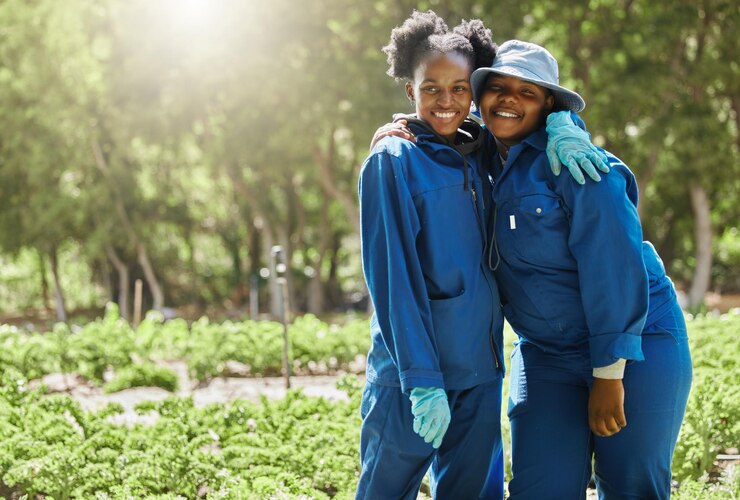
Women in South Africa are playing a growing role in agriculture, yet many opportunities remain underutilised. Agriculture contributes significantly to food security, rural employment, and economic development, making it a critical sector for inclusive growth. Women bring strong management skills, attention to detail, and resilience, which are essential for successful farming and agribusiness operations. Despite this, access to land, finance, and training still limits full participation for many women. Expanding opportunities for women in agriculture is not only a social priority but also a practical strategy to increase productivity and strengthen rural economies.
South Africa offers a wide range of entry points for women who want to participate in agriculture. Primary production includes crop farming, livestock management, and horticulture, all of which can be scaled based on available resources. High-demand crops such as vegetables, maize, and fruit provide steady market opportunities when managed correctly. Livestock farming, including poultry, goats, and cattle, allows for both small-scale and commercial operations. Women can start with limited resources and gradually expand through reinvestment and proper planning.
Agri-processing is another strong opportunity that allows women to move beyond raw production. This includes turning crops into finished or semi-finished products such as dried fruits, juices, sauces, and packaged vegetables. Value addition increases profit margins and reduces losses caused by unsold fresh produce. It also opens access to retail markets, schools, and institutional buyers. With proper certification and quality control, women can build brands that compete in formal markets.
Access to markets is critical for success in agriculture, and women are increasingly entering both informal and formal supply chains. Informal markets include street vendors, local shops, and direct sales within communities. Formal markets involve supplying supermarkets, restaurants, and government feeding schemes. Each market has different requirements, and understanding these requirements improves success rates. Women who build consistent supply and maintain quality standards can secure long-term contracts.
Government support programmes are available to help women enter and grow in agriculture. These include funding schemes, training initiatives, and extension services provided by the Department of Agriculture. Programmes often focus on skills development, business management, and technical training. Women can also access grants and loans aimed at supporting smallholder and emerging farmers. Taking advantage of these resources improves productivity and reduces the risks associated with starting or expanding a farming business.
Training and education play a key role in building sustainable agricultural enterprises. Women who invest in learning modern farming techniques often achieve better yields and improved product quality. Training covers areas such as soil management, irrigation, pest control, and financial planning. Extension officers provide practical, on-site support that helps farmers apply knowledge effectively. Continuous learning ensures that women remain competitive in a changing agricultural environment.
Technology is creating new opportunities for women in agriculture across South Africa. Mobile apps, digital platforms, and online marketplaces allow farmers to access information, track prices, and connect with buyers. Precision farming tools help improve efficiency by optimizing water use and crop management. Even basic technology, such as mobile communication, improves coordination between farmers and markets. Women who adopt technology can increase productivity and reduce operational costs.
Challenges still exist and must be addressed to unlock full potential. Access to land remains one of the biggest barriers, especially for women in rural areas. Financing is another major constraint, as many women lack collateral required for loans. Climate change also affects production through unpredictable weather patterns and increased risk of drought. Addressing these challenges requires coordinated support from government, financial institutions, and the private sector.
Networking and collaboration provide additional opportunities for women in agriculture. Joining cooperatives and farmer groups helps reduce costs and improve access to inputs and markets. These networks also create platforms for knowledge sharing and mentorship. Women benefit from learning from others who have already navigated similar challenges. Strong networks improve bargaining power and create collective growth opportunities.
Women in agriculture in South Africa have the potential to drive significant economic and social change. With the right support, training, and access to resources, they can build successful and sustainable enterprises. Expanding participation will strengthen food security, create jobs, and support rural development. Women who take advantage of available opportunities can transform agriculture into a reliable source of income and growth. The future of agriculture in South Africa will depend on inclusive participation, and women are central to that progress.
Join 'Farmers Mag' WhatsApp Channel
Get the latest Farming news and tips delivered straight to your WhatsApp
CLICK HERE TO JOIN




