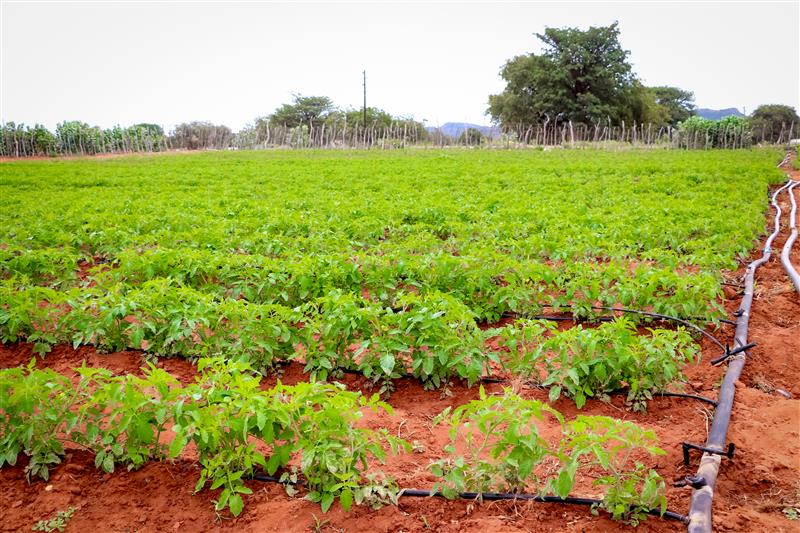
Tiger Brands’ local agriculture development programme, Hulisani, is accelerating efforts to transform emerging farming in South Africa by welcoming a second cohort of 17 farmers from Musina in Limpopo. The group includes 10 women farmers, reflecting a strong focus on inclusivity and empowerment within the agricultural sector. The programme is designed to provide practical business support and infrastructure investment that enables farmers to grow sustainably while contributing to national food production. These farmers will supply a portion of Tiger Brands’ tomato requirements, linking them directly into a structured commercial value chain. This expansion highlights the growing importance of partnerships between agribusinesses and small scale producers in strengthening food systems.
The name Hulisani, which comes from Tshivenda and means “grow” or “cultivate,” reflects the programme’s core mission of developing agricultural potential among emerging farmers. It focuses specifically on integrating women and young farmers into mainstream agricultural value chains, where access to markets and resources is often limited. By providing structured support, the programme helps reduce barriers that typically prevent small farmers from scaling their operations. It also contributes to reducing South Africa’s reliance on imported agricultural products by strengthening local supply capacity. This approach aligns with broader national goals of food security and rural economic development.
Launched in 2025, the Hulisani programme has already demonstrated strong results through its first cohort of nine farmers. That group successfully delivered nearly 3 400 tonnes of tomatoes, equivalent to about 135 400 crates, which exceeded expected yield targets. Their success also contributed to meaningful job creation, generating 156 new jobs while sustaining around 500 additional roles in surrounding communities. These outcomes show how structured agricultural support can create both economic and social impact at local level. The results also set a strong foundation for the expansion of the programme into new farming groups.
According to Tiger Brands, the programme is designed to build a resilient and efficient agricultural supply chain that benefits both farmers and consumers. Maanda Milubi, Director for Enterprise Supplier Development and Transformation at Tiger Brands, explained that the company partners with emerging farmers to strengthen local agriculture, create employment, and support communities. The programme provides reliable market access through offtake agreements, allowing farmers to scale production with confidence. At the same time, it ensures that quality standards are maintained across the supply chain. This balance between growth and consistency is central to the long term sustainability of the initiative.
The support offered to farmers begins with a detailed assessment of each farm to identify specific needs and production challenges. Based on these assessments, tailored interventions are introduced to improve productivity and build long term resilience. Farmers receive infrastructure investment that includes solar systems, irrigation equipment, fertiliser tanks, and other essential farming tools. In addition to physical resources, they also receive hands on technical guidance throughout the growing season. This combination of support ensures that farmers are equipped to manage both operational and environmental challenges effectively.
Beyond infrastructure and technical assistance, the programme also focuses on building sustainable agricultural enterprises that can operate independently in the long term. Farmers are not only supported to meet immediate production targets but are also trained to develop strong business management skills. This includes understanding cost control, crop planning, and market requirements. The aim is to ensure that participants can continue to grow their operations beyond their involvement in the programme. This long term focus helps create a pipeline of commercially viable farmers who can contribute meaningfully to the agricultural economy.
Milubi emphasised that supporting local farmers plays a critical role in strengthening South Africa’s food security system. By integrating emerging producers into formal supply chains, the programme ensures consistent access to locally produced food. This reduces dependency on external supply sources and supports more stable food availability for communities. It also reinforces the role of agriculture as a driver of economic inclusion and rural development. The expansion of programmes like Hulisani demonstrates how private sector involvement can directly contribute to national development priorities.
The 17 farmers in the new cohort have begun planting across a total of 74 hectares of land, an area comparable to 74 rugby fields. This scale of production highlights the growing capacity of emerging farmers when supported with the right resources and expertise. The harvesting period for this cohort is expected to take place between April and August, depending on growing conditions. During this period, their output will feed directly into Tiger Brands’ processing systems. This integration ensures that farm production is efficiently converted into consumer products.
Agriculture continues to play a significant role in South Africa’s economy, both as an employer and as a contributor to national food systems. Tiger Brands remains a key player in the tomato industry, sourcing approximately 100 000 tonnes of tomatoes annually from more than 100 farmers. These include both commercial and smallholder farmers in Musina, as well as a smaller group in Lutzville in the Western Cape. The company also supplies farmers with specific tomato seedlings used in its All Gold Tomato Sauce and other related products. This controlled input system helps maintain product consistency and quality across the value chain.
Once harvested, tomatoes are processed in Musina and Lutzville before being transported to the All Gold manufacturing facility in Boksburg, east of Johannesburg. This structured supply chain ensures efficiency from farm to factory and ultimately to consumers. It also highlights the importance of coordination between farmers, processors, and manufacturers in delivering consistent food products. By investing in farmer development and infrastructure, Tiger Brands is helping to strengthen every stage of this chain. The continued expansion of the Hulisani programme reflects a long term commitment to supporting inclusive agricultural growth and strengthening South Africa’s food production capacity.
Join 'Farmers Mag' WhatsApp Channel
Get the latest Farming news and tips delivered straight to your WhatsApp
CLICK HERE TO JOIN