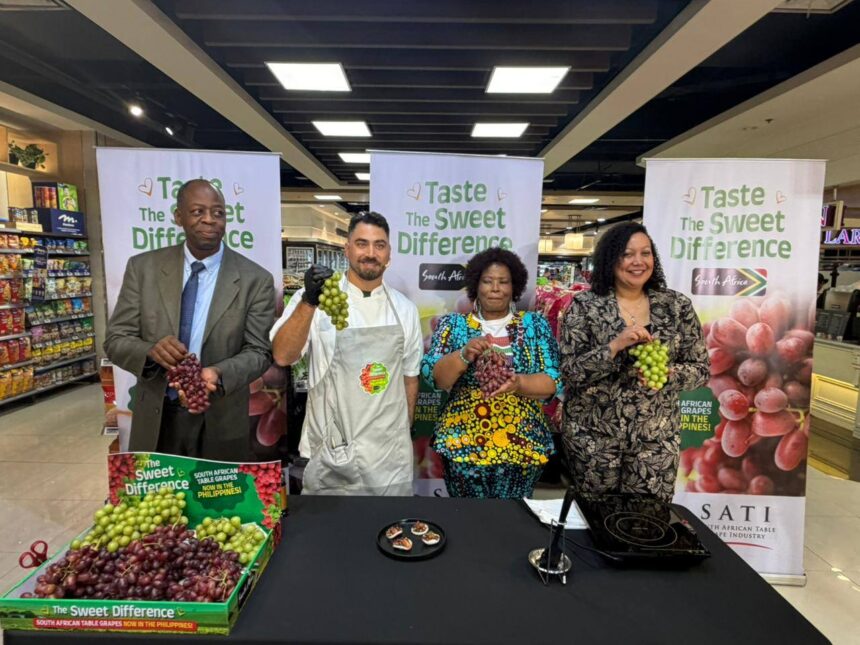
South Africa has secured a new export market with the successful arrival of its first official shipment of table grapes to the Philippines. This follows the approval of market access in 2025 after several years of negotiations. The development matters for growers because it opens a fresh demand channel at a time when global markets are shifting. Minister of Agriculture John Steenhuisen confirmed that the shipment marks the start of a new trade link between the two countries. For farmers, this is not just a policy win, it is a practical opportunity to sell more fruit into a growing market.
The process to reach this point required strict compliance with phytosanitary standards set by the Philippines. Exporters had to meet detailed requirements on pest control, fruit quality, and inspection protocols. This means farmers must maintain high production standards to access this market. Packhouses and exporters also need to follow precise handling and traceability systems. These requirements raise costs in the short term, but they also improve overall quality and competitiveness in other export markets.
The Philippine market offers clear potential. The country imported about 74,000 tonnes of table grapes in 2024, which equals around 16 million cartons. Demand continues to rise due to a population of more than 118 million people and steady urban growth. Middle income consumers are buying more fresh fruit, especially imported varieties with consistent quality. This creates space for South African grapes during the local supply gap. For growers, this means a chance to target a market that values reliability and appearance.
South Africa’s table grape sector is in a strong position to respond. Exports have already reached 76.6 million cartons in the 2025 to 2026 season so far. Production systems are well developed, and growers have experience meeting export standards in Europe, the Middle East, and Asia. The addition of the Philippines spreads risk across more markets. This reduces pressure when demand slows in traditional destinations. It also helps stabilize prices over time.
Farmers who want to benefit from this market need to focus on specific factors. Fruit quality must remain consistent, with attention to size, color, and shelf life. Timing also matters, as South Africa must supply during the window when the Philippines depends on imports. Exporters will likely prioritize varieties that travel well and meet consumer preferences. Growers should stay informed through industry bodies and exporters to understand which cultivars are in demand. Strong coordination between farms, packhouses, and logistics providers will be essential.
The government’s strategy is to expand into regions like Southeast Asia without replacing existing markets. This approach protects current trade relationships while adding new income streams. For farmers, it means more flexibility in where they sell their produce. It also reduces exposure to risks such as currency shifts or trade barriers in a single region. A broader market base supports long term farm sustainability.
Industry stakeholders played a key role in making this shipment possible. Collaboration between growers, exporters, government departments, and the South African Table Grape Industry helped align standards and finalize agreements. The South African Embassy in the Philippines also supported market access efforts. On the Philippine side, agricultural authorities ensured that import rules were clear and enforceable. This level of coordination will remain important as volumes increase.
The focus now shifts to building a stable presence in the Philippine market. Exporters plan to grow volumes over the next three to five years while introducing more varieties. Success will depend on consistent supply and strong relationships with buyers. Farmers who meet the required standards stand to gain from this expansion. The first shipment proves that the market is open, but long term success will depend on execution at farm level.
This milestone gives South African grape producers a practical path to growth. It shows that investment in quality, compliance, and coordination can unlock new markets. The Philippines offers strong demand and room for expansion. Farmers who adapt to the requirements and align with exporters can benefit directly. The opportunity is clear, and the next steps will determine how much value the industry captures.
Join 'Farmers Mag' WhatsApp Channel
Get the latest Farming news and tips delivered straight to your WhatsApp
CLICK HERE TO JOIN