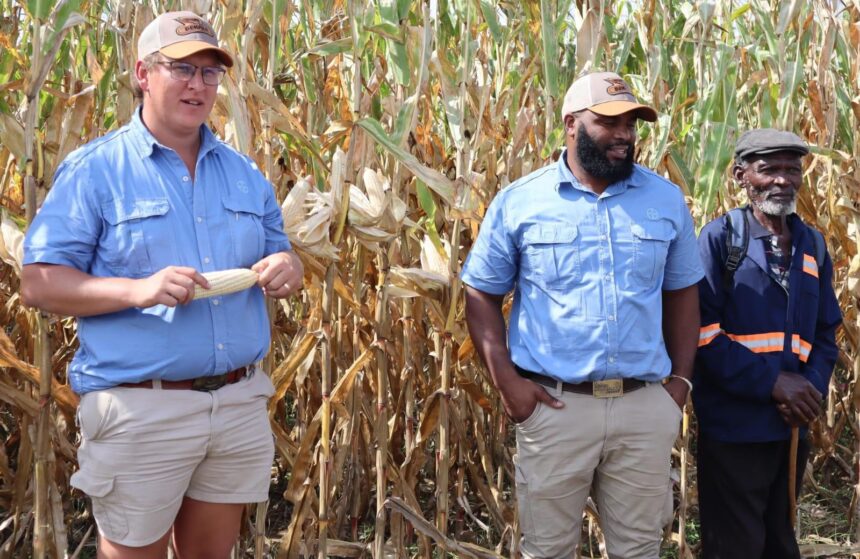
The Mpumalanga Department of Agriculture, Rural Development, Land and Environmental Affairs has joined forces with key industry and community partners to support maize farmers through a focused Grain Farmer’s Day held at the Donkerhoek Agricultural Community Project under Mkhondo Local Municipality. The event brought together Bayer, Kangra Coal, Grain SA, TWK, WWF and the Inkomati-Usuthu Catchment Management Agency to strengthen cooperation in agricultural development. The initiative targeted practical farming improvements and long-term productivity growth for rural communities involved in large-scale maize production. The Donkerhoek project includes 268 households drawn from eight Communal Property Associations operating across eight farms. These farmers collectively planted 430 hectares of maize, making the project a significant contributor to local food production and rural livelihoods.
The main purpose of the event was to recognise and strengthen the partnerships between farmers and supporting institutions while improving technical knowledge in maize production. Stakeholders highlighted the importance of collaboration in addressing farming challenges such as climate change, soil degradation and input costs. The gathering also served as a platform to acknowledge ongoing support from Kangra Coal, Bayer and the provincial department, which has played a role in sustaining production activities in the area. Farmers and partners engaged in discussions aimed at improving efficiency and ensuring that maize farming remains productive and sustainable. The focus remained on practical solutions that farmers can apply directly in their fields to improve yields and reduce risks.
A series of technical presentations formed the core of the event, focusing on key agronomic practices that directly influence maize production. Tillage practices were discussed in detail, with emphasis on how proper soil preparation helps reduce disease pressure and improve plant establishment. Crop rotation was also highlighted as a critical method for maintaining soil health and breaking pest and disease cycles. Participants were further guided on maize nutrition, which plays a major role in ensuring strong crop development and high yields. Weed control strategies were also explored, including the importance of selecting appropriate herbicides and understanding different maize varieties suited for varying field conditions.
Hybrid maize seed technology supplied by Bayer was another key topic, with emphasis on its ability to withstand changing climate conditions and provide yield stability. These seeds are designed to offer improved resistance to drought and disease, which is essential for farmers facing unpredictable weather patterns. Bayer also reinforced its stewardship programme, which promotes responsible use of grain seed technology and supports long-term sustainability in farming systems. Farmers were encouraged to combine improved seed varieties with correct agronomic practices to maximise productivity. The integration of technology and good farming practices was presented as a key pathway to improving food security in the region.
Soil health management received strong attention during the discussions, with farmers advised to regularly test their soil before planting. The Department of Agriculture provides free soil testing, analysis and recommendation reports through the Nooitgedacht Research Farm Soil Testing Laboratory. This facility has expanded its services to include irrigation water analysis and plant leaf testing to identify nutrient deficiencies. Farmers were encouraged to use these services to make informed decisions about fertiliser application and crop management. Compost use was also promoted as a practical way to improve soil structure and fertility over time.
Crop protection and chemical use were addressed with practical guidance on weed management and pest control. Farmers were advised on the use of products such as Roundup for pre-plant weed control, along with Decis Forte and Bullet for targeted crop protection needs. The discussions stressed the importance of correct application methods and timing to avoid crop damage and improve effectiveness. Proper chemical management was linked directly to higher yields and reduced production risks. TWK also presented crop insurance solutions that protect farmers against losses caused by hail, frost and other weather-related events.
The insurance coverage extends beyond weather protection to include input costs such as fertiliser, seeds and chemicals, as well as yield losses. This financial safety net was highlighted as a critical tool for reducing risk in commercial and small-scale farming operations. Farmers were encouraged to consider insurance as part of their overall production planning strategy. The integration of financial protection, technical support and agronomic knowledge was presented as a complete system for strengthening maize farming. This approach ensures that farmers are better prepared for both environmental and economic challenges.
The Grain Farmer’s Day at Donkerhoek Agricultural Community Project demonstrated the value of strong partnerships in advancing rural agriculture in Mpumalanga. The collaboration between government, private sector and conservation organisations created a platform for knowledge sharing and practical support. Farmers gained access to improved farming techniques, financial tools and scientific resources that can enhance productivity across their fields. The event also reinforced the importance of sustainable farming practices that protect soil health and support long-term food security. By combining technical expertise with community-driven farming, the initiative sets a foundation for stronger and more resilient maize production systems in the province.
Join 'Farmers Mag' WhatsApp Channel
Get the latest Farming news and tips delivered straight to your WhatsApp
CLICK HERE TO JOIN