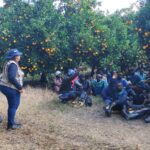
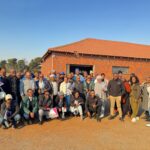
Standard Bank, in collaboration with the Department of Agriculture and Rural Development (DARD) and the University of the Free State (UFS), recently hosted the graduation ceremony for the Standard Bank Agribusiness Transformation programme at Urth Flower Gardens in Bloemfontein. The event celebrated the achievements of black commercial farmers who completed the programme, highlighting their growth in technical skills, business management, and climate-smart farming practices. The initiative is designed to provide participants with mentorship, financial access, and practical tools to build sustainable agribusinesses that can compete in both local and international markets. By supporting farmers through this structured programme, Standard Bank, UFS, and DARD aim to strengthen the commercial agriculture sector and promote inclusive growth within the Free State and beyond. The graduation ceremony served as both recognition of individual achievement and a platform to encourage networking and knowledge sharing among emerging agribusiness leaders.
Ms Thabitha Mokone, speaking at the ceremony, emphasized the programme’s five-year track record of successfully empowering farmers. She congratulated all graduates for completing the rigorous programme and welcomed the incoming candidates who will join future cohorts. Mokone encouraged participants to share insights and lessons learned with one another, highlighting the importance of collaboration and information exchange in driving business growth. She noted that access to mentorship and financial tools, combined with practical agricultural knowledge, allows emerging farmers to make informed decisions and enhance operational efficiency. Her address underscored the programme’s broader goal of creating a network of skilled, self-sufficient farmers capable of sustaining profitable and climate-resilient enterprises.
HOD Tshepo Mabilo also addressed the graduates, stressing the importance of programmes like this in equipping farmers to navigate both market and environmental challenges. He highlighted that participants now possess the technical knowledge and business acumen needed to access new markets and adapt to the impacts of climate change on agriculture. Mabilo encouraged graduates to apply the lessons learned in practical ways that enhance productivity, sustainability, and profitability. He acknowledged the role of all stakeholders in ensuring the programme’s success, from financial institutions to academic and governmental partners. His speech reinforced the message that continuous learning, innovation, and collaboration are essential for the growth of modern agribusinesses.
The Standard Bank Agribusiness Transformation programme focuses on creating long-term opportunities for black commercial farmers by providing financial literacy, mentorship, and hands-on guidance in agricultural practices. Participants gain exposure to modern farming techniques, risk management strategies, and climate-smart solutions, enabling them to optimize operations while protecting natural resources. The programme also addresses market access challenges by training farmers in business planning, marketing, and supply chain management. Graduates leave with the ability to run professional agribusinesses that meet market demands while remaining resilient to external pressures such as climate variability and fluctuating commodity prices. By combining technical training with mentorship and financial support, the programme equips farmers to transition from subsistence or small-scale operations to commercially competitive enterprises.
The graduation ceremony represents a milestone in the ongoing effort to transform South Africa’s agricultural sector and empower emerging black farmers. It celebrates not only the personal achievements of participants but also the collaborative success of Standard Bank, DARD, and UFS in creating meaningful opportunities for skill development and enterprise growth. Graduates are now positioned to contribute significantly to food security, rural economic development, and inclusive growth within the agricultural value chain. The programme demonstrates the impact of partnership-driven initiatives in strengthening agribusiness capacity and promoting sustainable, climate-smart farming practices. With continued support and mentorship, these graduates are expected to expand their operations, access new markets, and serve as role models for future cohorts of emerging farmers.
Join 'Farmers Mag' WhatsApp Channel
Get the latest Farming news and tips delivered straight to your WhatsApp
CLICK HERE TO JOIN