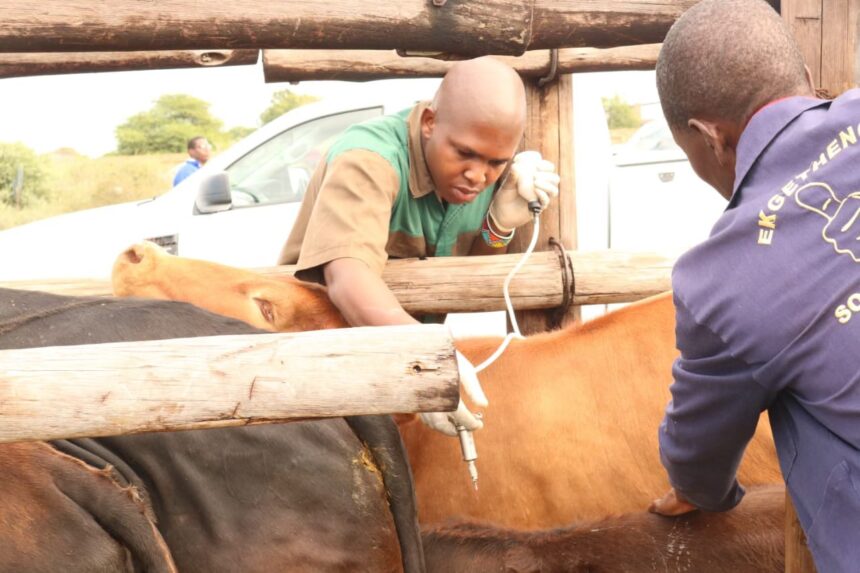
Efforts to protect South Africa’s livestock sector continue to gain momentum as vaccination campaigns are rolled out in key farming areas. In the Nkangala District, a total of 496 cattle were vaccinated against Foot and Mouth Disease during a targeted intervention aimed at reducing the risk of outbreaks. The campaign covered several areas including Almasdrift C, Klipplaatdrift, Welterveden, Palmietgat, Kameelriver, Vrieskraal, and Wolvenkraal within the Dr JS Moroka Municipality. This coordinated effort forms part of a broader strategy to safeguard animal health and support rural farming communities. Foot and Mouth Disease remains one of the most serious threats to livestock production, with the potential to disrupt both local and export markets. Proactive vaccination plays a key role in reducing these risks and maintaining stability in the agricultural sector.
The vaccination campaign was implemented as part of ongoing disease control measures led by the Department of Agriculture, Rural Development, Land and Environmental Affairs. By focusing on high-risk areas, the department aims to limit the spread of infection and protect livestock populations. Vaccinating 496 cattle is a significant step toward building herd immunity within affected communities. This approach helps reduce the likelihood of disease transmission between farms and across regions. It also provides farmers with a level of protection that supports continued production. Consistent vaccination programmes are essential in managing diseases that spread quickly among cloven-hoofed animals.
Following the vaccination campaign, strict movement control measures were introduced to further prevent the spread of Foot and Mouth Disease. Farmers in the affected areas have been advised not to move cattle, sheep, goats, or other cloven-hoofed animals without obtaining a permit from State Veterinary Services. These controls are necessary to limit contact between potentially infected and healthy animals. Movement restrictions are a standard response in disease management and play a critical role in containment strategies. By controlling animal movement, authorities can monitor and manage the situation more effectively. Compliance with these regulations is essential for protecting the wider livestock industry.
Surveillance efforts continue alongside vaccination and movement control to ensure early detection of any new cases. Monitoring livestock health allows veterinary teams to respond quickly if symptoms of Foot and Mouth Disease are identified. Early detection is one of the most effective ways to limit the impact of an outbreak. Farmers are encouraged to observe their animals closely and report any unusual signs such as lameness, blisters, or reduced productivity. Prompt reporting allows veterinary officials to take immediate action and prevent further spread. This coordinated response strengthens the overall disease control system.
The Department of Agriculture, Rural Development, Land and Environmental Affairs continues to urge all cattle owners to remain vigilant. Farmers play a critical role in disease prevention by following guidelines and maintaining good farm management practices. Reporting suspected cases to local Animal Health Technicians or veterinarians ensures that issues are addressed before they escalate. This partnership between farmers and veterinary services is essential for maintaining livestock health. Awareness and cooperation at community level significantly improve the effectiveness of control measures. It also helps build trust between authorities and farming communities.
Foot and Mouth Disease can have severe economic consequences if not properly managed. Outbreaks can lead to livestock losses, reduced productivity, and restrictions on trade. For small-scale farmers, these impacts can be especially damaging as they often rely on livestock for income and food security. Preventative measures such as vaccination and movement control help reduce these risks. They also support long-term stability in the livestock sector. Protecting animal health is directly linked to protecting livelihoods in rural areas.
The vaccination campaign in Nkangala District highlights the importance of proactive disease management in agriculture. By combining vaccination, surveillance, and strict movement controls, authorities are taking a comprehensive approach to preventing outbreaks. These efforts demonstrate a commitment to safeguarding both commercial and small-scale farming operations. Continued cooperation between farmers and veterinary services will be key to maintaining progress. The success of such campaigns depends on consistent implementation and community participation. Through vigilance and adherence to guidelines, the livestock sector can remain resilient against Foot and Mouth Disease and continue to support South Africa’s agricultural economy.
Join 'Farmers Mag' WhatsApp Channel
Get the latest Farming news and tips delivered straight to your WhatsApp
CLICK HERE TO JOIN