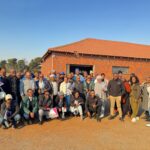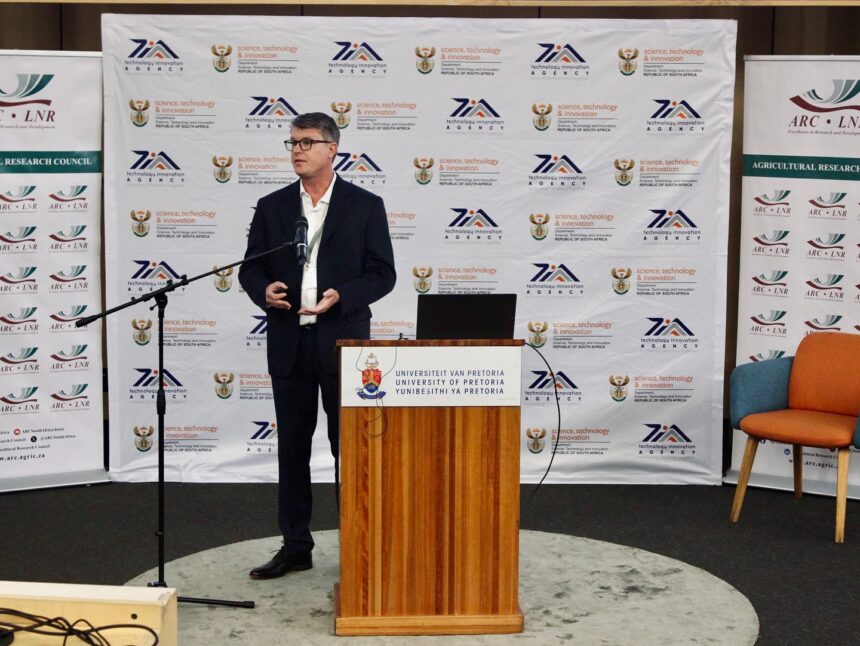
Farmers in South Africa are gaining new tools to make beef production more sustainable following the Climate-Smart Beef Genomics Workshop hosted by the Beef Genomics Programme (BGP) consortium. The consortium, including the Agricultural Research Council (ARC), Livestock Registering Federation (LRF), SA Stud Book, and the University of Pretoria (UP), partnered with the Technology Innovation Agency (TIA) and other sponsors to bring together stakeholders from across the beef sector. The two-day workshop, held from 4 to 5 March 2026 at the Future Africa Conference Centre in Pretoria, focused on practical ways to reduce greenhouse gas emissions from cattle while maintaining productivity. Farmers, breeders, researchers, and industry leaders discussed innovations in genomics, breeding, and management practices to build a climate-smart beef sector. The workshop highlighted opportunities for farmers to improve efficiency, reduce environmental impact, and access support programs designed to make livestock production more sustainable.
One of the key topics presented was the Qinisa Project, a regional initiative focused on understanding livestock greenhouse gas emissions in Southern Africa. Farmers learned how data from this project can inform breeding and feeding decisions that reduce methane output without affecting growth or meat quality. The Global Methane Genetics Initiative was also introduced, showing how selecting indigenous breeds with naturally lower emissions can benefit both farmers and the environment. Workshop sessions explained how genomics can help identify animals with desirable traits, enabling farmers to breed cattle that are more efficient, healthier, and environmentally friendly. These tools provide a practical way for farmers to contribute to climate-smart agriculture while protecting their profitability.
Research findings on livestock greenhouse gas emissions and mitigation strategies were shared to give farmers actionable insights. Presenters discussed feed management techniques, breeding strategies, and farm-level practices that can lower emissions. Practical examples included adjusting feed composition to reduce methane, using genomics to select low-emission animals, and improving herd management to maximize efficiency. The workshop also addressed how farmers can access funding and support programs for climate-smart agriculture, making it easier to implement these strategies on the farm. Understanding these practical steps helps farmers adopt measures that meet both environmental and economic goals.
The workshop emphasized collaboration and knowledge sharing between farmers, researchers, and industry partners. By connecting scientific research with on-farm practices, farmers can adopt proven strategies that reduce environmental impact while maintaining production levels. Participants discussed ways to integrate genomics tools into breeding programs and how to monitor progress over time. Farmers were encouraged to take advantage of the support networks available through the BGP consortium and government programs. Engaging with these initiatives helps ensure that livestock operations are prepared for future environmental and regulatory challenges.
The Climate-Smart Beef Genomics Workshop provided farmers with practical tools and insights to build a more sustainable and profitable beef industry. By using genomics to select low-emission cattle, adjusting feed strategies, and implementing efficient herd management practices, farmers can reduce greenhouse gas emissions while maintaining productivity. The workshop also highlighted funding opportunities and technical support to help farmers adopt these innovations. Collaboration between researchers, industry, and farmers will be key to scaling climate-smart practices across South Africa. By acting on these insights, farmers can improve efficiency, protect the environment, and contribute to a resilient and sustainable livestock sector.
Join 'Farmers Mag' WhatsApp Channel
Get the latest Farming news and tips delivered straight to your WhatsApp
CLICK HERE TO JOIN