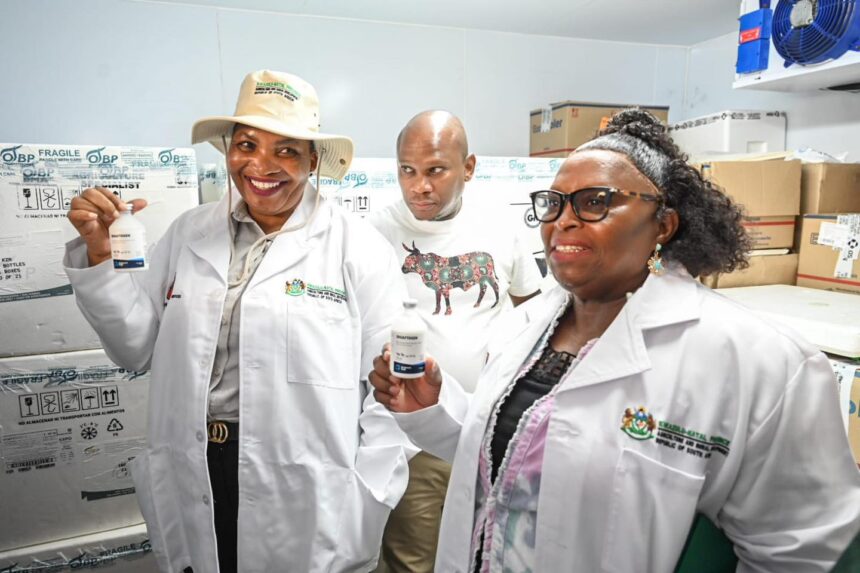
The KwaZulu-Natal MEC for Agriculture and Rural Development, Mrs Thembeni kaMadlopha-Mthethwa, has issued a stern warning to all individuals involved in the illegal movement of animals following a severe outbreak of Foot-and-Mouth Disease (FMD) in the province. Addressing the media at the Provincial Veterinary Laboratory – Allerton in Pietermaritzburg, she emphasized that the public must adhere strictly to animal control measures to prevent further spread. She highlighted that the warning applies even to traditional practices such as cattle used in ilobolo, urging that online platforms be used instead for dowry exchanges. MEC kaMadlopha-Mthethwa called on traditional leaders to actively discourage illegal animal movements within communal lands, stressing that the outbreak is a serious threat to both agriculture and community livelihoods. She made it clear that decisive measures are necessary to demonstrate the government’s seriousness in combating the disease.
The MEC also outlined the strategic rollout of vaccines to contain the outbreak, highlighting the selection of the uGu and Harry Gwala districts for the initial mass vaccination campaign. These districts were chosen because they have not reported any cases of the SAT 3 FMD virus, and the BioGenesis Bago vaccines specifically target the SAT 1 and SAT 2 strains present in the cattle population there. Vaccinating northern districts would have been ineffective due to the potential presence of the SAT 3 virus, which the current vaccine cannot neutralize. By prioritizing areas with confirmed SAT 1 and SAT 2 risk, the provincial government aims to maximize the efficiency and effectiveness of the mass vaccination drive. This targeted approach is crucial for preventing unnecessary wastage of vaccines while protecting cattle populations in vulnerable areas.
Dr Kolisa Amanda Nokoyo, Deputy Director of Veterinary Diagnostic Services in KwaZulu-Natal, provided further insight into the province’s readiness for the vaccination rollout. The Allerton Laboratory, currently used for vaccine storage, is set to be upgraded to enable testing of all blood samples, including those suspected of carrying FMD. Once fully operational, the facility will address the backlog of FMD test results and strengthen the province’s capacity for early detection and monitoring. Proper storage and testing infrastructure are key to controlling the outbreak, ensuring that vaccines remain effective and that suspicious cases are quickly identified. The laboratory’s cold rooms and backup generators provide a secure environment for maintaining vaccine potency during the campaign.
The mass vaccination campaign is scheduled to commence on 26 February 2026, with 200,000 doses from the first batch of one million received from Onderstepoort Biological Products in Pretoria. The vaccination strategy involves deploying both state and registered private veterinarians to ensure rapid coverage of the cattle population. Private veterinarians are encouraged to register with the Department of Agriculture to expand the workforce. Teams will target 2,286 dip tanks over a four to six-month period, vaccinating approximately 2.4 million communal and commercial cattle. The rollout begins in districts bordering other provinces and neighboring countries before moving inward to ensure maximum containment of the disease.
The campaign will deploy 45 teams daily, with each team vaccinating between 45,000 and 90,000 animals once fully staffed. Each team consists of three Animal Health Technicians and four data capturers, working closely with livestock associations to capture owner and animal details in the Livestock Identification and Traceability System (LITS). For commercial farms and feedlots, the department will collaborate with private veterinarians and industry organizations such as Kwanalu and the Red Meat Producers’ Organisation to oversee vaccine administration. By combining strategic deployment, skilled personnel, and robust tracking systems, the KwaZulu-Natal government aims to prevent further spread of FMD, protect livestock, and safeguard both agricultural productivity and community livelihoods.
MEC kaMadlopha-Mthethwa concluded by reiterating the seriousness of the outbreak and the need for strict adherence to control measures. She stressed that illegal cattle movement poses a major risk to the province’s livestock population and the economy at large. The coordinated vaccination campaign, supported by upgraded laboratory infrastructure and a combination of state and private veterinary resources, represents a decisive step in controlling the disease. By enforcing regulations and engaging communities, the government aims to contain the outbreak and restore confidence in livestock health management. With careful monitoring, efficient vaccination, and active community cooperation, KwaZulu-Natal can mitigate the impact of FMD and protect the livelihoods of its farmers.
Join 'Farmers Mag' WhatsApp Channel
Get the latest Farming news and tips delivered straight to your WhatsApp
CLICK HERE TO JOIN