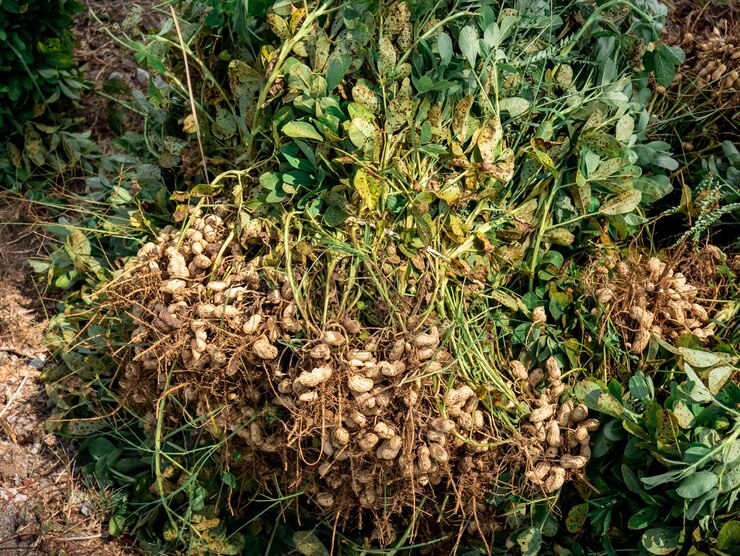
Groundnuts occupy a relatively small area in South Africa’s summer crop landscape, but their significance extends well beyond the hectares planted. The crop contributes to nutritional security, supports value-added processing, and provides important diversification for grain and oilseed producers. Average production ranges between 50 000 and 55 000 tons from roughly 40 000 hectares, highlighting a stable but limited output. Even in years with reasonable yields, domestic production is insufficient to meet total commercial demand, making imports necessary to supply edible nuts and peanut butter markets. This gap presents opportunities for producers to focus not just on increasing hectares, but on improving yield consistency, quality, and value per ton to strengthen competitiveness.
Domestic demand remains steady at around 84 000 tons annually, split roughly evenly between direct consumption and peanut butter production. About 15 percent of the local crop is exported, showing that South African groundnuts are valued in international markets, but supply limitations prevent full exploitation of domestic demand. For producers, this underscores the importance of stabilising hectares and improving production reliability. Industry-managed cultivar evaluation programmes, often run in partnership with the Agricultural Research Council (ARC) and international collaborators, provide critical data on yield potential, disease tolerance, and kernel quality. Farmers can use this information to select cultivars suited to their region, balancing productivity with market requirements, while processors benefit from more predictable quality for efficient operations.
Consumer behaviour also informs opportunities for the groundnut sector. Research by the University of Pretoria, funded through the Oil and Protein Seeds Development Trust (OPDT) and Oil Seeds Advisory Committee (OAC), confirms that peanuts and peanut butter are widely recognised as nutritious, filling, and versatile. They have been staple foods in households for generations, used as spreads, snacks, and cooking ingredients. Affordability is a key factor, especially for mid- and lower-income consumers, who may reduce consumption or switch to alternatives when prices rise. Producers can respond by offering smaller pack sizes or value-added products like roasted or flavoured peanuts, which maintain affordability while boosting margins. Demand continues to grow in informal markets like street vendors and spaza shops, as well as among younger consumers seeking healthier or functional peanut products, providing avenues for niche marketing.
Trade policy remains a critical factor for the sector’s sustainability. Imported peanut butter often competes with locally produced products at prices below production costs, threatening domestic value-adding. Industry engagement with the International Trade Administration Commission (ITAC) seeks to establish fair trade rules that support local manufacturing while maintaining consumer access. Farmers and processors should stay informed about these developments, as fair trade decisions can directly affect pricing, export opportunities, and profitability. Coupled with marketing initiatives planned for 2026, these measures aim to improve awareness, stimulate demand, and ensure the groundnut sector continues contributing to economic and food security objectives.
Production challenges persist, particularly regarding pests, disease, and regulatory restrictions on crop protection products. Nematodes are a major threat to yields, while tighter regulations limit available chemical options. Farmers can implement integrated pest management practices, such as crop rotation, resistant cultivars, and careful soil monitoring, to reduce damage while complying with regulations. Food safety, including aflatoxin management, is also critical. Farmers should prioritise proper harvesting techniques, thorough drying, and safe storage to prevent contamination, while processors can invest in certification and monitoring systems to maintain market confidence.
The future of South Africa’s groundnut sector relies on collaboration, consistent quality, and improved productivity. Continued cultivar development, adherence to best agronomic practices, and coordination across producers, processors, and marketers will strengthen the value chain. Trade policies that support local processing and fair competition remain essential, while consumer-focused marketing can reinforce groundnuts as an affordable, nutritious staple. Farmers can also explore niche markets such as flavoured peanuts, peanut snacks, or specialty peanut butter to diversify income streams. Though modest in scale, the groundnut industry is strategically important for rural economies, nutrition, and value-added production. Aligning production, processing, policy, and consumer insight will unlock sustainable growth and position the sector for long-term success.
Join 'Farmers Mag' WhatsApp Channel
Get the latest Farming news and tips delivered straight to your WhatsApp
CLICK HERE TO JOIN