In northern KwaZulu-Natal, women living in and around the iSimangaliso Wetland Park World Heritage Site are emerging as champions of climate-smart agriculture. By launching their own businesses, they are helping restore local ecosystems, improve food security, and strengthen community resilience in one of South Africa’s most climate-vulnerable regions.
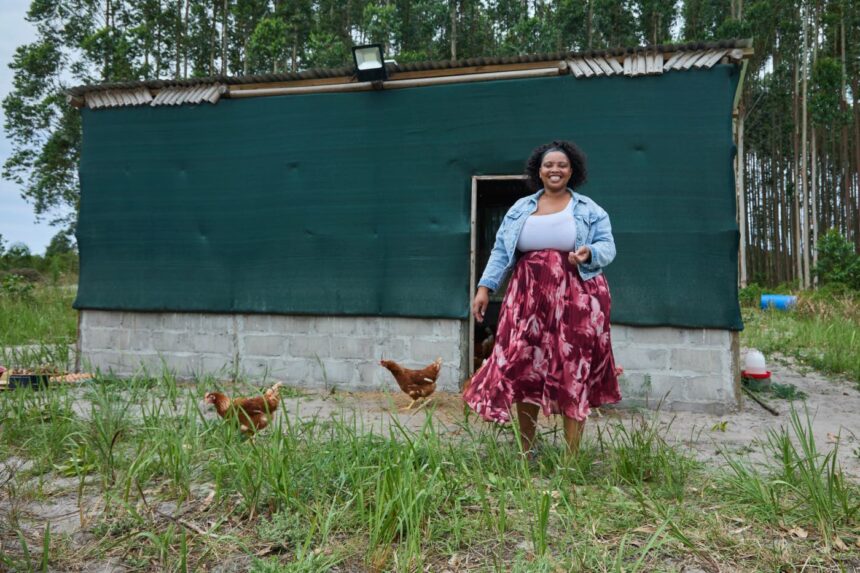
One inspiring example is 21-year-old Nokuthula Msweli, founder of Thule’s Poultry Farm in KwaDapha. Nokuthula started her broiler chicken enterprise using an Ecosystem-based Adaptation (EbA) approach, raising worms as an organic and affordable feed alternative. Her farm now supplies essential protein to the community, provides employment for two people, and supports 14 dependents.
“The programme has been transformative,” says Nokuthula. “It helped me refine my strategy, improve efficiency, and reach more customers.”
This initiative is led by WILDTRUST, a leading South African conservation organisation, in partnership with Indalo Inclusive, a non-profit promoting green, socially responsible entrepreneurship. Together, they support women from KwaDapha, Mabibi, eNkovukeni, KwaZibi, and KwaSokhulu with leadership training, business mentorship, and tailored coaching. To date, five entrepreneurs have graduated from the Indalovator programme, moving into the Indalogrow phase – 60% of these are women-led businesses.
Nozi Mbongwa, Senior Project Manager at WILDTRUST, notes:
“Women are gaining the skills, confidence, and support to build resilient, environmentally sustainable businesses rooted in their communities.”
Several local enterprises are already showing impressive results. For example, Nosihle Ngubane runs a fast-growing business sourcing, packaging, and delivering eggs to local retailers, wholesalers, and consumers in eNkovukeni.
“WILDTRUST and Indalo Inclusive helped me expand my operations and build lasting business relationships,” says Nosihle.
Meanwhile, Thobile Shange, founder of Liyana Layer Farm in KwaZibi, combines academic knowledge with innovation. Her enterprise produces organic, free-range eggs using invasive aquatic plants as feed, tackling both environmental degradation and food insecurity. Thobile, who holds a master’s in agriculture and a postgraduate diploma in project management, demonstrates how women-led enterprises can link climate adaptation with local economic growth.
“I realised that expensive feed was a big challenge, so I explored natural alternatives that also help fight climate change,” she explains.
Women’s leadership is also strengthening coastal conservation. Through the WILDTRUST Small-Scale Fishers and MPA Project, local women support sustainable fishing, co-management, and monitoring of marine resources.
Jane Mthembu (56) from KwaDapha, a widow and mother of five, has found renewed purpose as a Small-Scale Fisher (SSF) Monitor – a role she first held in the 1990s before the programme ended. The renewed initiative has given her stability, community recognition, and hope for the future.
These stories show a powerful lesson: when women are given the right skills, resources, and support, they drive tangible benefits for families, communities, and the environment.
The programme’s success is made possible through the generous backing of ICONIQ Ocean Co-Lab, Oceans 5, and the Blue Action Fund, in partnership with WILDTRUST and its collaborators – proving that empowering women is key to both climate resilience and sustainable rural development.
Join 'Farmers Mag' WhatsApp Channel
Get the latest Farming news and tips delivered straight to your WhatsApp
CLICK HERE TO JOIN