Effective water management is critical for maximizing crop yield and maintaining soil health on a one-hectare farm. Small-scale farms face unique challenges, including limited water supply, seasonal rainfall variability, and the need to optimize irrigation efficiency. Implementing proper water management practices ensures that crops receive sufficient moisture while reducing waste, lowering costs, and preserving local water resources. Understanding your farm’s soil type, crop requirements, and climate is the first step in designing an efficient irrigation system.
Assessing water sources is essential before selecting an irrigation strategy. Options include rainwater harvesting, boreholes, shallow wells, and nearby rivers or dams. Collecting and storing rainwater in tanks or small ponds can supplement irrigation during dry periods. Evaluating water quality is equally important, as high salinity or contamination can harm crops. Mapping your farm and calculating water requirements based on crop type, soil texture, and evapotranspiration rates allows you to determine the optimal volume and frequency of irrigation.
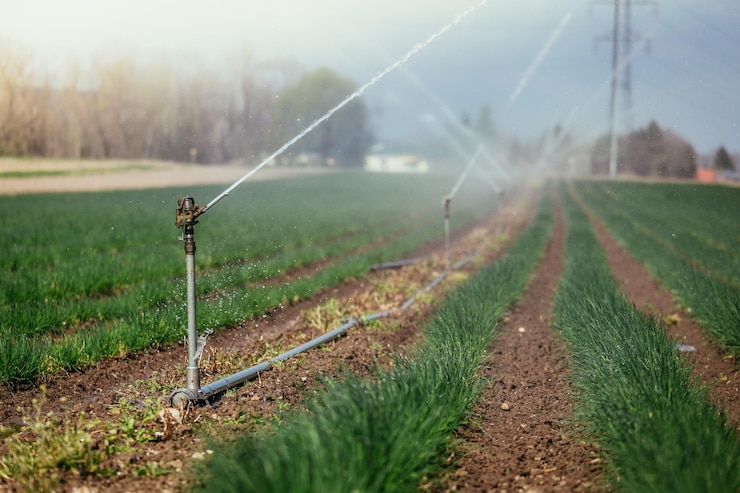
Several irrigation methods are suitable for a one-hectare farm. Drip irrigation delivers water directly to the root zone, minimizing evaporation and ensuring uniform distribution. It is highly efficient and ideal for high-value crops such as vegetables and fruits. Sprinkler systems mimic rainfall and cover larger areas but require careful management to avoid water runoff and soil erosion. Furrow or basin irrigation can work on flat or gently sloping fields but tend to be less water-efficient, requiring monitoring to prevent overwatering. Selecting the right method depends on crop type, available water, soil conditions, and budget.
Soil management enhances the effectiveness of irrigation. Mulching with organic materials such as straw or compost reduces surface evaporation, maintains soil moisture, and suppresses weeds. Conservation practices like contour planting, cover cropping, and maintaining ground cover prevent water runoff and soil erosion. Regular soil testing helps determine moisture retention capacity and informs irrigation scheduling. Integrating these practices ensures water is retained in the root zone, reduces the frequency of irrigation, and promotes healthy crop growth.
Monitoring and scheduling irrigation improves efficiency and reduces costs. Simple tools such as tensiometers, soil moisture probes, or even manual soil checks can guide when and how much to water. Scheduling irrigation during early mornings or late afternoons minimizes water loss due to evaporation. Maintaining irrigation infrastructure, including pipes, valves, and pumps, prevents leaks and ensures consistent water delivery. Implementing these strategies helps small-scale farmers achieve higher productivity while conserving water resources.
By combining careful planning, appropriate irrigation methods, and soil conservation techniques, one-hectare farms can optimize water use and improve crop yield. Efficient water management reduces operational costs, mitigates the effects of drought, and enhances long-term soil health. Investing in sustainable irrigation practices ensures that small-scale farms remain productive and resilient in changing climate conditions. With proper management, water becomes a valuable resource that supports continuous growth and profitability on a one-hectare farm.
Join 'Farmers Mag' WhatsApp Channel
Get the latest Farming news and tips delivered straight to your WhatsApp
CLICK HERE TO JOIN