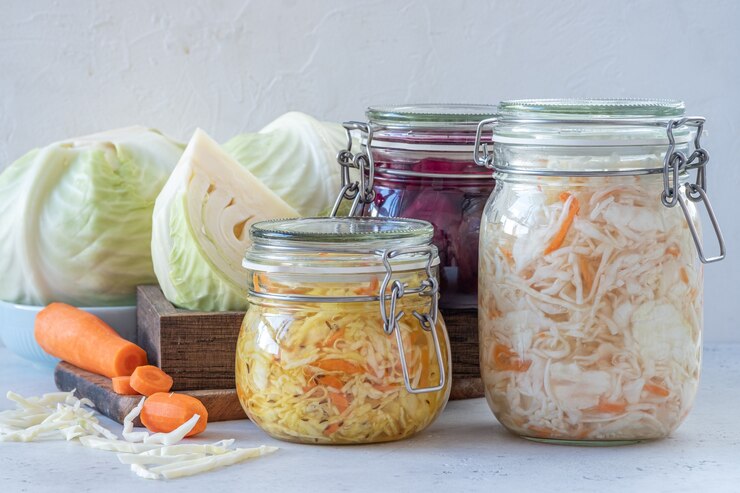
Fermented foods are gaining attention for their health benefits, long shelf life, and market potential. For small-scale farmers and homesteaders, products like sauerkraut and kombucha offer a way to diversify income using crops grown on the farm.
Producing Sauerkraut on the Farm
Sauerkraut is made from cabbage through natural fermentation. To prepare it:
- Ingredients: Fresh cabbage, non-iodized salt, and optional flavorings such as carrots or caraway seeds.
- Preparation: Shred the cabbage and mix with salt (about 2% of the cabbage weight). Massage until the cabbage releases liquid.
- Fermentation: Pack tightly into a clean jar or crock, ensuring the liquid covers the cabbage. Cover with a cloth or lid that allows gas to escape.
- Timing: Leave at room temperature for 1–4 weeks. Taste periodically to achieve the desired tang. Store in a cool place or refrigerator after fermentation.
Sauerkraut allows farmers to add value to cabbage crops and reduce post-harvest waste. It can be sold fresh or stored for months when refrigerated.
Brewing Kombucha from Farm-Grown Ingredients
Kombucha is a fermented tea made with sugar, tea, and a SCOBY (symbiotic culture of bacteria and yeast). Farmers can experiment with herbs or fruit grown on their land for unique flavors.
- Ingredients: Black or green tea, sugar, water, SCOBY, and optional farm-grown fruit or herbs.
- Brewing: Brew tea, dissolve sugar, and cool. Add the SCOBY in a sanitized jar.
- Fermentation: Cover with a breathable cloth and leave at room temperature for 7–14 days. Taste regularly for acidity.
- Second Fermentation (Optional): Bottle with fruit juice or herbs for carbonation, leave 2–5 days, then refrigerate.
Kombucha provides an opportunity for farmers to use surplus produce, herbs, or fruit in value-added products.
Selling Fermented Foods
Farmers looking to sell fermented products should focus on safety, hygiene, and compliance:
- Legal Compliance: Check local regulations for home or farm-based food production, including certifications and inspections.
- Packaging: Use airtight, clean containers. Label ingredients, production dates, and storage instructions.
- Marketing: Farmers’ markets, farm shops, and local retailers are ideal channels. Emphasize health benefits, natural ingredients, and artisanal qualities.
- Scaling Up: Offer tastings, introduce new flavors, and leverage social media to reach wider audiences. Consistency in quality is key.
Tips for Farm Success
- Use surplus crops to create fermented products, reducing waste and increasing profit.
- Maintain detailed records for each batch to ensure consistent quality.
- Educate customers about storage, serving, and health benefits.
- Start small and grow the operation as demand increases.
Fermented foods like sauerkraut and kombucha provide small-scale farmers with a practical way to diversify income and add value to farm-grown produce. With proper hygiene, careful preparation, and smart marketing, these products can become a sustainable and profitable part of a farm business.
Join 'Farmers Mag' WhatsApp Channel
Get the latest Farming news and tips delivered straight to your WhatsApp
CLICK HERE TO JOIN