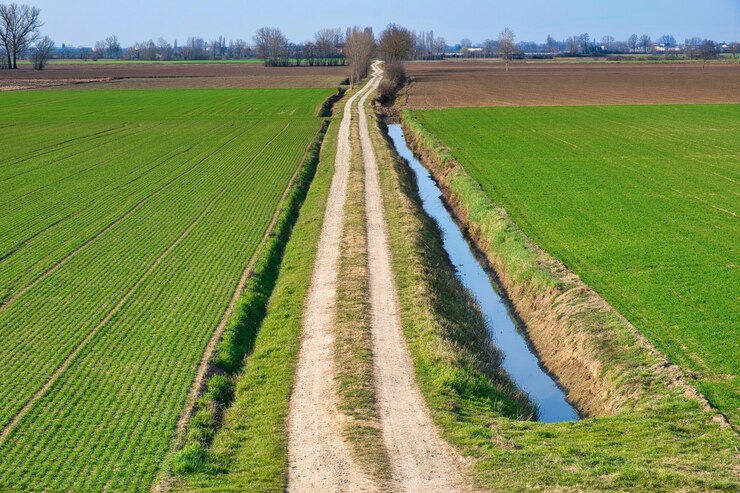
Managing water on a sloping farm is critical for soil health, crop growth, and sustainability. Swales are an effective tool for capturing and directing rainwater, reducing erosion, and improving water retention in the soil. Properly designed and implemented, swales can transform a sloped farm into a more productive and resilient landscape.
A swale is a shallow, level trench dug along the contour lines of a slope. Its primary purpose is to slow down the flow of rainwater, allowing it to infiltrate the soil rather than run off. This reduces soil erosion and provides moisture to plants downslope. Swales can be paired with berms—raised soil mounds on the downhill side—to further retain water and create microclimates for crops or trees.
To build a swale, start by mapping your slope and identifying contour lines. Use tools like an A-frame level or a laser level to ensure the trench follows the natural contour of the land. Dig the swale along these lines, keeping the trench shallow and wide enough to capture water without creating pooling or flooding. The excavated soil is usually piled on the downhill side to form a berm. Planting grass, ground cover, or trees on the berm stabilizes the soil and further improves water retention.
Once constructed, swales require regular maintenance. Remove debris, repair any eroded sections, and monitor water flow during storms. Over time, organic matter from plants and sediment will build up, improving soil fertility and water-holding capacity. Swales can also be integrated with other water management practices, such as rain gardens, cover crops, or mulched planting areas, to maximize their effectiveness.
Using swales on a sloping farm improves both environmental and agricultural outcomes. They reduce soil erosion, recharge groundwater, provide consistent moisture for crops, and can even support the growth of fruit trees or other perennial plants. By capturing and using rainwater efficiently, farmers can reduce dependence on irrigation, lower costs, and increase resilience against droughts.
Swales are a simple, low-cost, and sustainable solution for water management on sloped farmland. With careful planning, proper construction, and ongoing maintenance, they can transform runoff into a valuable resource, improve soil health, and support more productive and resilient farming systems.
Join 'Farmers Mag' WhatsApp Channel
Get the latest Farming news and tips delivered straight to your WhatsApp
CLICK HERE TO JOIN