

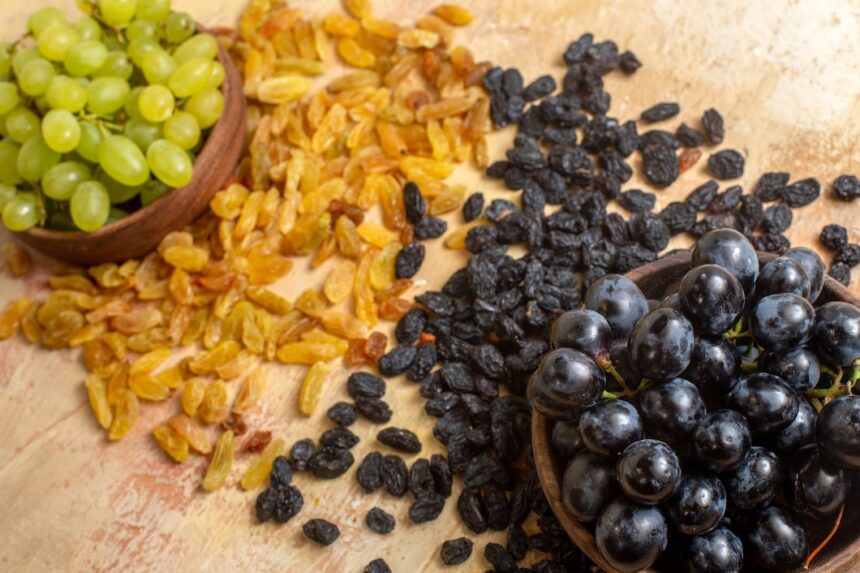
Grape production in South Africa offers farmers a strong opportunity to increase income through raisin processing. Raisins fetch higher and more stable prices than fresh grapes, especially in export markets. Processing grapes into raisins also reduces losses caused by oversupply, weather damage, or market fluctuations. The Northern Cape already accounts for over 90 percent of the country’s raisin exports, showing proven demand. You can use raisin production to extend the value of every harvest and stabilise cash flow.
The process starts with selecting the right grape varieties. Thompson Seedless, Sultana, Merbein Seedless, and Flame Seedless are preferred for raisin production. Grapes must reach optimal sugar levels, usually above 20 degrees Brix, to ensure quality raisins. Harvesting should be done carefully to avoid bruising and splitting. Clean handling at this stage improves drying efficiency and final product quality.
Drying is the most critical step in raisin production. Sun drying remains the most common method due to low cost and suitable climate conditions in key producing regions. Grapes are either dipped in an alkaline solution to speed up drying or left untreated for natural drying. Drying typically takes 10 to 21 days depending on weather conditions. Farmers must turn grapes regularly and protect them from rain, dust, and pests to prevent spoilage.
After drying, raisins must be cleaned, graded, and packaged. Stems, debris, and damaged fruit should be removed to meet market standards. Grading by size, color, and moisture content increases market value. Proper packaging in moisture-proof bags extends shelf life and preserves quality. Compliance with food safety standards is essential for access to formal retail and export markets.
You can increase profitability by joining cooperatives or supplying established processors. This reduces costs linked to equipment, storage, and certification. Government support programs and agricultural extension services offer training in raisin production and quality control. By turning grapes into high-value raisins, you strengthen farm resilience, reduce waste, and tap into a growing global demand for dried fruit.
Join 'Farmers Mag' WhatsApp Channel
Get the latest Farming news and tips delivered straight to your WhatsApp
CLICK HERE TO JOIN




