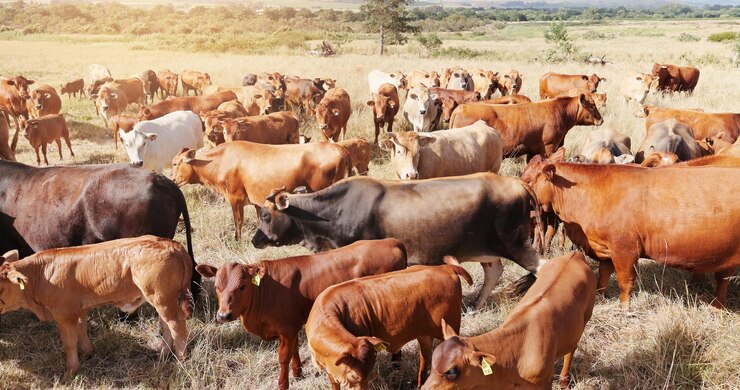
The Minister of Agriculture, John Steenhuisen, has expressed confidence in South Africa’s new national strategy to combat Foot and Mouth Disease (FMD). He highlighted that the Department of Agriculture and the Ministerial Advisory Task Team are implementing a fact-driven, technically sound roadmap aimed at restoring the country’s FMD-free status with vaccination. Minister Steenhuisen noted that achieving this milestone is crucial for stabilising the R80 billion livestock sector and rebuilding confidence in export markets. He emphasized that success will require full cooperation from the livestock industry to control the disease within a short timeframe. The plan also focuses on protecting national food security through a science-backed, phased approach.
The strategy stems from the Bosberaad convened in July 2025, which brought together over 400 stakeholders from government, academia, industry, and research institutions, facilitated by the Agricultural Research Council (ARC). The Bosberaad recommended a multidisciplinary approach combining stronger existing controls with the Progressive Control Pathway Framework. Key measures include securing reliable vaccine supplies, accelerating livestock identification, managing movement controls, expanding diagnostic capacity, and intensifying awareness campaigns. Medium- to long-term priorities include infrastructure investment, regional cooperation, and sustained funding for veterinary services and research. These steps aim to establish a robust system for ongoing FMD prevention and control.
Following the Bosberaad, Minister Steenhuisen established the Ministerial Advisory Task Team on Animal Disease Prevention and Control to implement the strategy. The team aims to reduce FMD incidents by approximately 70% in high-risk areas over the next 24 months, achieve 90% vaccination coverage in communal areas, commercial farms, and feedlots, and reach 100% coverage in dairy cows. Certified compartments and progressive vaccination zones will also be created to facilitate safe trade. Close to 950 000 animals have already been vaccinated using government-procured stock. The vaccination process will start in high-risk areas, including KwaZulu-Natal and Gauteng, before moving to Limpopo, Mpumalanga, North West, and the Eastern Cape. Protection zones will be established in FMD-free areas to prevent further spread.
Vaccine supply has been secured through the Botswana Vaccine Institute, which will provide 1 000 000 doses per month starting mid-January 2026. The ARC is also developing a mid-scale vaccine manufacturing facility, targeting 20 000 multivalent doses by the fourth quarter of 2025/26, and 150 000 to 200 000 doses by the first half of 2026/27. The Onderstepoort Veterinary Laboratory will expand its diagnostic capacity by hiring additional veterinary technologists, and the task team is exploring the use of additional laboratories to alleviate pressure. Awareness campaigns will be conducted nationwide in partnership with industry, farmer associations, and the University of Pretoria’s Biosecurity Hub.
The Department of Agriculture will work closely with law enforcement agencies, including SAPS, to monitor compliance with animal movement restrictions. Unemployed Animal Health graduates will be trained to assist with vaccination campaigns. The Livestock Identification and Traceability System (LITS), developed by the CSIR, will be implemented to track vaccinated animals using geo-location. Additionally, a Section 10 scheme under the Animal Diseases Act will be announced to regulate vaccination in dairy and feedlot industries. Emergency importation regulations, quarantine measures, and a new post-vaccination branding system are also being developed. Funding for FMD control will be prioritised, with unspent Comprehensive Agricultural Support Programme (CASP) funds redirected to biosecurity, and 5% of future CASP funding earmarked for FMD.
Currently, FMD remains active in seven provinces, with KwaZulu-Natal considered the epicentre. Recent outbreaks have occurred in Limpopo, Gauteng, Mpumalanga, North West, Free State, and the Western Cape. High-risk areas include communal farms, commercial farms, feedlots, and five game reserves affected by FMD-carrier buffalo populations. Government measures include controlled slaughter in designated abattoirs and the creation of protection zones to prevent spread to FMD-free regions. Despite progress, the disease continues to pose a systemic challenge requiring strict compliance with biosecurity protocols.
Minister Steenhuisen emphasized that achieving FMD freedom with vaccination is a long-term effort requiring sustained commitment and cooperation. He urged farmers, transporters, and all stakeholders to adhere to protocols and maintain strict biosecurity measures. The government’s phased, science-driven approach is designed to stabilise the livestock industry, protect food security, and restore international market confidence. “We stand with you, and together, we will achieve FMD freedom,” Minister Steenhuisen said, reinforcing the collaborative approach essential for success.
Join 'Farmers Mag' WhatsApp Channel
Get the latest Farming news and tips delivered straight to your WhatsApp
CLICK HERE TO JOIN