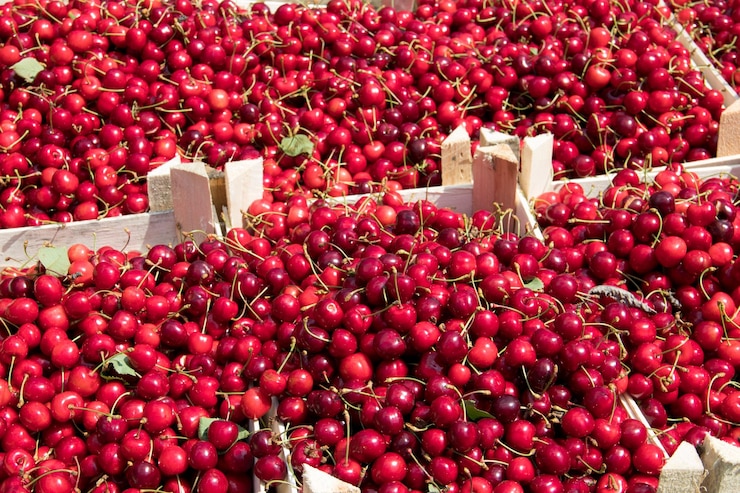
Cherries are a high value crop with strong demand, but fresh fruit sales carry risk. The shelf life is short and prices fluctuate. Value addition allows you to extend shelf life, reduce losses, and earn income beyond the harvest window. Processed cherry products also attract premium buyers willing to pay more for quality and convenience.
Turning Cherries into Juice
Cherry juice targets health conscious consumers and niche retail markets. You begin by grading and washing fruit, then removing the stones. Destoning is essential for safety and consistency. The cherries are crushed and pressed to extract juice.
You can sell pure cherry juice or blend it with apple or grape juice to balance acidity and manage costs. Pasteurisation is critical to ensure safety and extend shelf life. Bottling in glass positions the product as premium, while food grade plastic suits local markets. Proper labelling and cold storage protect quality.
Producing Cherry Jams and Preserves
Jam is one of the easiest value added products to produce at farm level. Pitted cherries are cooked with sugar and pectin until the desired consistency is reached. You control sweetness and texture to suit different market segments.
Artisanal and reduced sugar jams perform well in urban and tourism markets. Glass jars enhance shelf appeal and shelf life. Consistency in taste and colour builds trust and repeat sales through farm stalls, retailers, and online platforms.
Developing Cherry Snack Products
Dried cherries and cherry based snacks offer strong growth potential. Drying removes moisture, concentrates flavour, and extends shelf life. You can use solar dryers for small scale production or dehydrators for larger volumes.
Dried cherries can be sold as snacks or used in trail mixes, granola, and baking. Cherry fruit leather, made by drying cherry puree into thin sheets, appeals to families and school markets when produced under approved food safety conditions.
Quality Control and Food Safety
Food safety is essential. Processing facilities must follow good hygiene practices and comply with local regulations. Registration with authorities and basic traceability systems are often required, especially for retail supply.
Shelf life testing and quality checks protect your brand and reduce risk. Buyers expect consistent quality and safe products.
Branding and Market Access
Cherry products perform best when positioned as premium. Highlight the origin, production methods, and health benefits. Clear labels and strong branding help your products stand out.
Start with local markets to refine your product. As volumes and consistency improve, you can explore hospitality, speciality retail, and export opportunities.
Value addition allows you to use surplus and second grade fruit effectively. It improves profitability, creates jobs, and strengthens farm resilience. With planning, basic equipment, and market focus, cherries can support a diversified and profitable farming enterprise in South Africa.
Join 'Farmers Mag' WhatsApp Channel
Get the latest Farming news and tips delivered straight to your WhatsApp
CLICK HERE TO JOIN