

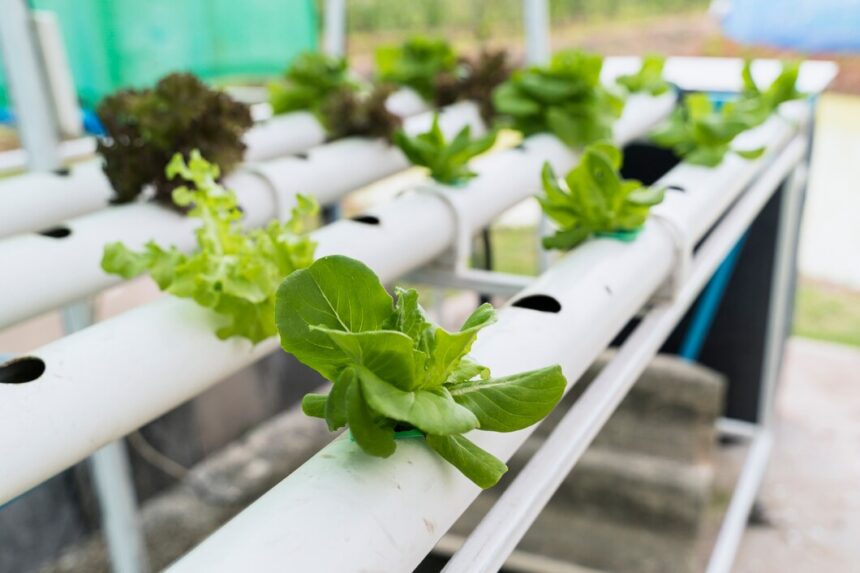
Hydroponics is a soil-free method of growing plants that uses nutrient-rich water. It allows for faster growth, higher yields, and efficient use of space and resources. Home gardeners and urban farmers are increasingly turning to hydroponics to grow fresh vegetables, herbs, and even fruits year-round. You can start without expensive equipment by building simple, affordable systems at home.
1. Deep Water Culture (DWC)
Deep Water Culture is one of the easiest hydroponic systems to build. Plants are suspended in a container filled with nutrient solution, while an air pump provides oxygen to the roots. To build a DWC system, you need a container, net pots, an air pump, and air stones. Lettuce, spinach, and herbs thrive in this setup. The system is low-maintenance and ideal for beginners.
2. Nutrient Film Technique (NFT)
NFT systems circulate a thin film of nutrient solution over the roots of plants in a sloped channel. You can build a small NFT setup using PVC pipes, a water pump, and a reservoir. This system works well for leafy greens and strawberries. It is efficient with water and nutrients, but requires careful monitoring to prevent root drying.
3. Wick System
The wick system is the simplest hydroponic method. It relies on a wick to draw nutrient solution from a reservoir to the plant roots. All you need is a container, a wick, growing medium, and a nutrient solution. It is low-cost, does not require electricity, and is ideal for small herbs like basil and mint. Growth is slower than in other systems, but it is beginner-friendly.
4. Kratky Method
The Kratky method is a passive hydroponic system that does not require pumps or electricity. Plants are placed above a nutrient solution in a container, and roots grow into the solution as it gradually depletes. This method is popular for lettuce, kale, and other leafy greens. It is affordable, simple, and highly suitable for home growers with limited space.
5. Vertical Hydroponics
Vertical systems maximize space by stacking plants vertically. You can build a vertical hydroponic tower using PVC pipes, bottles, or recycled containers. Nutrient solution is pumped to the top, trickles down, and nourishes all plants. This setup is ideal for small urban gardens and balcony farming.
Tips for Success
- Use high-quality seeds or seedlings suited to hydroponics.
- Maintain proper nutrient balance and pH levels for optimal growth.
- Provide sufficient light, either natural or with LED grow lights.
- Monitor water levels and oxygen supply regularly to prevent plant stress.
Building a hydroponic system at home does not have to be expensive. With basic materials and careful attention to plant needs, you can grow fresh, nutrient-rich crops year-round. Affordable DIY hydroponics systems offer an effective way to embrace sustainable, high-yield gardening in small spaces.
Join 'Farmers Mag' WhatsApp Channel
Get the latest Farming news and tips delivered straight to your WhatsApp
CLICK HERE TO JOIN




