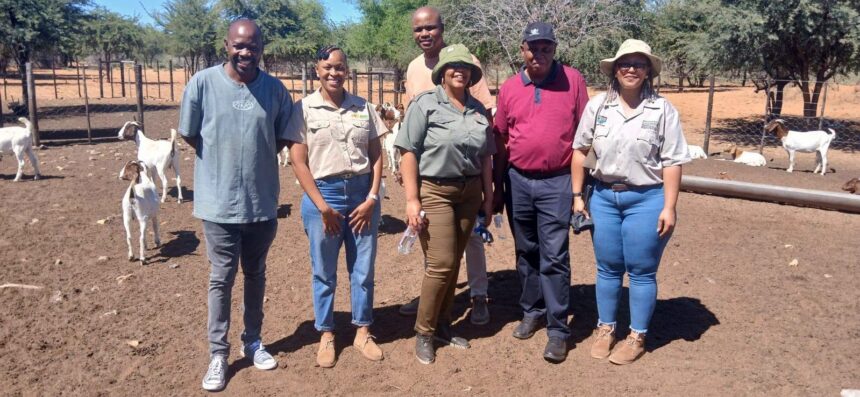
Agricultural development is about more than producing food and generating income. It also involves creating employment opportunities, strengthening rural communities and supporting farmers to build sustainable businesses. Across South Africa, agricultural projects play an important role in addressing socioeconomic challenges while contributing to food security and local economic growth. These initiatives take different forms, from large-scale commercial farming operations to community-based agricultural cooperatives that focus on improving livelihoods. The importance of these approaches was highlighted on Day 2 of the Public Sector Forum for Extension and Advisory Services (PSFEAS) meeting, which began with visits to two agricultural projects in the Northern Cape. The visits gave forum delegates an opportunity to engage directly with farmers and community organisations, understand their operations and explore how agricultural initiatives contribute to local development.
The first project visited was Agro-Queen Farming (Pty) Ltd, a 3,600-hectare agricultural enterprise situated at Rusfontein, Ward 9, in the Joe Morolong Local Municipality. Located approximately 90 kilometres outside Kuruman, the farm is owned by Tlhalefo Dithebe, a 32-year-old award-winning livestock farmer. Her agricultural enterprise demonstrates the opportunities available to young farmers who are building businesses within South Africa’s livestock industry. Operating across cattle, sheep and goat production, Agro-Queen Farming produces dairy and meat products for different market segments. The scale and diversity of its operations highlight the importance of livestock farming in supporting agricultural production, business development and rural economic activity.
Agro-Queen Farming serves a diverse customer base that includes local communities, livestock auctions, feedlots, abattoirs and fellow farmers. This market structure demonstrates how livestock enterprises can participate in different stages of the agricultural value chain. Supplying multiple markets also creates opportunities for farmers to develop business relationships and reach customers with different requirements. Livestock auctions provide a channel for selling animals, while feedlots and abattoirs form important parts of the meat production and processing industry. Supplying dairy and meat products also connects the enterprise with consumers and contributes to the availability of agricultural products in surrounding communities. Through its activities, the farm illustrates the role that commercial livestock production can play in strengthening local agricultural economies.
The ownership of Agro-Queen Farming by a young farmer also highlights the importance of supporting youth participation in agriculture. Young agricultural entrepreneurs bring opportunities for innovation, business development and the introduction of improved production practices. However, establishing and maintaining a successful farming enterprise requires more than enthusiasm. Farmers must manage land, livestock, production costs, infrastructure, animal health and access to reliable markets. They also need business management skills and the ability to respond to changing market conditions. The experiences of young farmers such as Dithebe provide valuable opportunities for knowledge sharing and discussions about the support required to strengthen youth involvement in commercial agriculture.
The second project visited was Reatlegile NPO, an agricultural cooperative based in the John Taolo Gaetsewe District. Established in 2015 under the name Reatlegile Nutritional Organisation, the initiative began with 20 founding members, consisting of 13 women and seven men. Its establishment was driven by socioeconomic challenges affecting Kagung Village, including food insecurity, unemployment, poverty, teenage pregnancy and substance abuse. Rather than focusing on agriculture as an activity separate from community development, the organisation was established in response to challenges affecting the wellbeing and livelihoods of local residents. Its history reflects how community-based agricultural initiatives can provide an opportunity for people to work together towards addressing shared socioeconomic concerns.
Reatlegile NPO represents an approach to agricultural development that places community participation at the centre of its activities. Agricultural cooperatives and community organisations can create opportunities for people to combine their skills, knowledge and available resources to pursue common goals. This approach is particularly relevant in rural areas where unemployment and limited economic opportunities can make it difficult for households to secure sustainable livelihoods. Through collective participation in agriculture, community members can explore opportunities to improve food production and strengthen local economic activities. Such initiatives can also encourage cooperation, shared responsibility and the development of practical agricultural skills. Their contribution extends beyond farming because they can help build stronger relationships and a greater sense of participation within communities.
Food security is particularly important in communities facing high levels of poverty and unemployment. When households have limited financial resources, accessing sufficient and nutritious food can become a major challenge. Community-based agricultural initiatives can help address some of these difficulties by encouraging local food production and improving access to agricultural resources. Growing food locally can also provide opportunities for households and community members to develop practical knowledge about crop production, soil management and sustainable resource use. Although agricultural projects cannot resolve every social and economic challenge on their own, they can form part of broader efforts to improve household resilience and strengthen rural livelihoods. Reatlegile NPO’s founding objectives demonstrate how agriculture can serve as a practical response to community needs.
The participation of women in the establishment of Reatlegile Nutritional Organisation is another important aspect of its history. With 13 women among the 20 founding members, women formed the majority of the organisation’s original membership. Their involvement highlights the importance of creating opportunities for women to participate in agricultural development and community-based economic initiatives. Women play significant roles across South Africa’s agricultural sector, including food production, livestock management, processing and household food security. Supporting their participation through cooperatives and agricultural organisations can help expand access to skills, knowledge and economic opportunities. Inclusive agricultural development requires that women and men have meaningful opportunities to contribute to decisions and benefit from agricultural activities.
The visits to Agro-Queen Farming and Reatlegile NPO also demonstrated the different ways agricultural projects can contribute to development. Agro-Queen Farming operates as a large livestock enterprise with established connections to several agricultural markets. Reatlegile NPO, on the other hand, emerged from a community initiative established to respond to local socioeconomic challenges. Despite their different structures and objectives, both projects demonstrate the importance of agriculture in creating opportunities and supporting local communities. One highlights the potential of commercial livestock farming and agricultural entrepreneurship, while the other illustrates the role of collective participation in community development. Together, they provide valuable examples of the diverse approaches needed to strengthen the agricultural sector.
The project visits were also relevant to the broader objectives of the Public Sector Forum for Extension and Advisory Services. Agricultural extension professionals play an important role in supporting farmers through technical advice, training, information sharing and guidance on agricultural practices. Visiting active agricultural projects allows forum delegates to engage with producers and community organisations in their actual working environments. These interactions can provide a better understanding of the opportunities and challenges experienced by farmers. They also create space for extension professionals to learn from practical experiences and consider how advisory services can respond to the needs of different agricultural enterprises. Direct engagement is important because effective agricultural support must reflect the realities of farming communities rather than rely solely on policy discussions.
The experiences shared during the visits can also help inform discussions about improving agricultural support programmes in the Northern Cape and other parts of South Africa. Farmers operating large commercial enterprises may require assistance with production efficiency, livestock health, market development and business sustainability. Community-based organisations may have different priorities, including access to agricultural inputs, technical training, infrastructure and opportunities to strengthen collective production. Extension services must therefore recognise that farmers and agricultural organisations do not all have identical requirements. Tailored support can help ensure that public sector interventions respond to specific production systems and community circumstances. Strong relationships between extension professionals and agricultural stakeholders are essential for identifying challenges and developing practical solutions.
Another important consideration is the connection between agricultural production and market access. Producing agricultural products is only one part of building a sustainable farming business. Farmers must also understand market requirements, maintain appropriate production standards and establish reliable relationships with buyers. Agro-Queen Farming’s supply network demonstrates the importance of connecting livestock producers with different participants in the agricultural value chain. Community-based initiatives can also benefit from exploring suitable markets and developing opportunities to generate income from agricultural activities. Improving market access requires business knowledge, infrastructure, coordination and information about customer needs. Strengthening these areas can help agricultural projects move towards greater financial sustainability and long-term growth.
Agricultural projects also contribute to rural development by creating opportunities for skills development and knowledge transfer. People involved in farming gain practical experience in production, resource management and agricultural business activities. These skills can support further participation in the agricultural economy and encourage future generations to consider farming as a career or business opportunity. Young farmers, women and community members can all benefit from initiatives that promote agricultural learning and participation. Government institutions and agricultural support organisations can strengthen these opportunities through training programmes, extension services and appropriate development interventions. Investing in agricultural skills is therefore an important part of building a more inclusive and productive farming sector.
The Day 2 project visits in the Northern Cape offered forum delegates an opportunity to see how agriculture can support both enterprise development and community upliftment. Agro-Queen Farming demonstrated the role of livestock production in building commercial agricultural businesses and supplying diverse markets. Reatlegile NPO highlighted how collective community action can use agriculture as part of a response to food insecurity, unemployment and other socioeconomic challenges. Both initiatives provide valuable insight into the different needs, experiences and opportunities that exist across the agricultural sector. Their inclusion in the PSFEAS programme reinforced the importance of connecting policy discussions with practical experiences from farming communities. Ultimately, sustainable agricultural development requires more than production targets. It depends on supporting farmers, strengthening community initiatives, improving access to markets and ensuring that extension and advisory services respond to real needs. By learning from projects on the ground, South Africa can continue building an agricultural sector that creates economic opportunities, supports food security and contributes to stronger rural communities.
Join 'Farmers Mag' WhatsApp Channel
Get the latest Farming news and tips delivered straight to your WhatsApp
CLICK HERE TO JOIN