Mogabagabe Projects NPC is advancing climate-smart agriculture in Mohlaletsi, also known as Ga-Matji, in the Fetakgomo-Tubatse Local Municipality of Sekhukhune District, Limpopo. The community-owned initiative operates a Climate-Smart Agriculture incubator designed to strengthen local food production while providing smallholder farmers with practical skills in modern, resource-efficient farming. At the centre of the project is a vertical growing and hybrid-hydroponic system known as the “African Grower” growing system. The system allows vegetables to grow inside movable tunnels without soil or electricity and uses about 90% less water than open-field farming. By combining food production, agricultural innovation, skills development and community participation, Mogabagabe Projects NPC is creating a practical platform for Climate-Smart Agriculture in the local community.
The Climate-Smart Agriculture incubator is based in Mohlaletsi, Ga-Matji, within the Fetakgomo-Tubatse Local Municipality in Limpopo’s Sekhukhune District. Its community-owned model places local residents at the centre of agricultural production and skills development. The project focuses on farming methods that can help smallholder farmers produce vegetables more efficiently while making better use of limited natural resources. This approach provides an alternative to conventional soil-based vegetable production and introduces farmers to technologies that can operate with significantly lower water requirements. The incubator therefore serves both as a food production facility and as a practical learning environment for people interested in climate-smart farming.
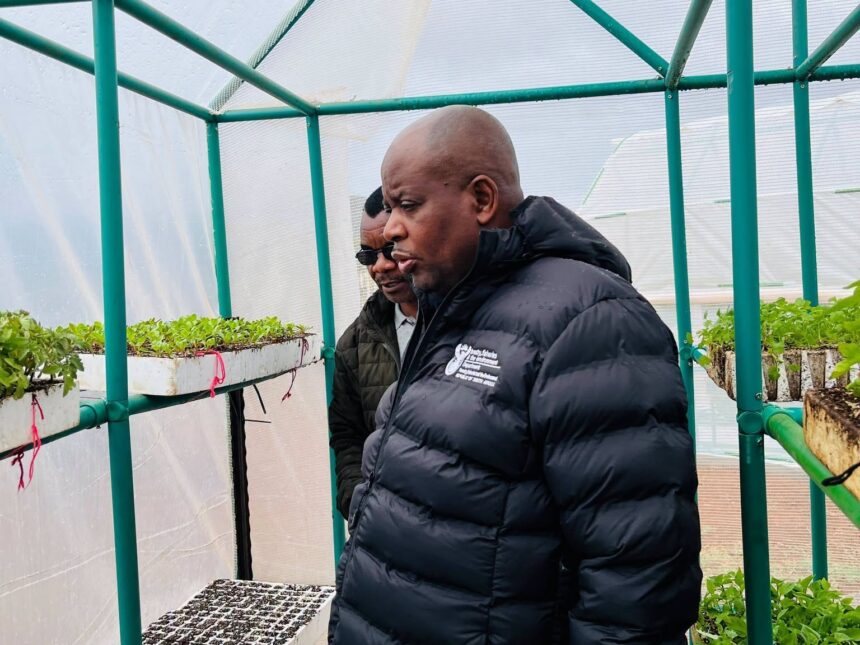
A key feature of the project is the vertical growing and hybrid-hydroponic “African Grower” system. The system produces vegetables inside tunnels without requiring soil as the growing medium. It also does not require electricity and uses about 90% less water than open-field farming. The project does not use synthetic pesticides or herbicides in its production approach, which reduces reliance on these agricultural inputs. The system therefore supports a production model that places strong emphasis on efficient resource use. For smallholder farmers, these characteristics can be particularly relevant where water, land and other farming resources are limited.
The vertical design also allows farmers to produce vegetables using a fraction of the space required by conventional open-field farming. This creates an opportunity to increase production efficiency where available agricultural land is limited. The system also has faster yield cycles, allowing growers to potentially produce crops more frequently than with some traditional farming approaches. Another important benefit is the ability to grow crops throughout the year rather than depending entirely on seasonal soil-based production. Year-round production can support more consistent access to fresh vegetables and create opportunities for growers to maintain production across different seasons. These features make the African Grower system an important part of the incubator’s Climate-Smart Agriculture approach.
The tunnels used in the project are movable, which provides additional flexibility for farmers and the community. The ability to move the tunnels means the agricultural structures do not have to remain permanently fixed in one location when circumstances change. This can be useful when farmers need to adjust the use of available land or respond to practical requirements. Movable infrastructure can also provide communities with greater flexibility when planning agricultural production. This feature adds to the adaptability of the growing system and supports the project’s community-owned model.
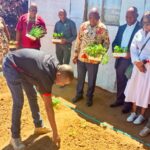
Mogabagabe Projects NPC combines vegetable production with hands-on training for local smallholder farmers. The training gives participants an opportunity to learn about Climate-Smart Agriculture through both theory and practical activities. Participants can gain direct experience with the growing methods used by the incubator while developing knowledge that can support their own agricultural activities. This combination of training and production helps connect classroom knowledge with practical farming experience. The result is an agricultural incubator that focuses not only on growing vegetables but also on developing the skills of the people who participate in the project.
The project is funded through the Global Environment Facility Small Grants Programme, known as GEF SGP. The funding supports a 12-month project that combines Climate-Smart Agriculture, vegetable production and community skills development. A total of 32 community members will benefit from Level 4 technical training during the project. The training will include both theory and practical components related to Climate-Smart Agriculture. The group consists of 21 women and 11 men, including 17 youth, nine persons with disabilities and three elderly people.
The Level 4 technical training will be facilitated through collaboration with REEDiSA Training and the Unit for Continued Education at the University of Venda. The training is designed to provide participants with technical knowledge as well as practical experience in Climate-Smart Agriculture. Participants will have an opportunity to understand the principles behind resource-efficient agricultural production and apply relevant techniques in practice. The practical component is important because it allows participants to engage directly with the agricultural systems and methods used by the project. This training approach can help strengthen local technical capacity and provide participants with knowledge that they can use beyond the incubator.
The project will also provide training to another group of vegetable growers operating from Early Development Centres. Twenty growers will participate in a week-long Level 2 Orientation training in Climate-Smart Agriculture. The orientation will include both theory and practical components to introduce participants to climate-smart farming practices. These growers represent an additional group of people who can benefit from the project’s focus on agricultural knowledge and practical skills. When the 32 community members receiving Level 4 training are combined with the 20 Early Development Centre vegetable growers receiving Level 2 orientation, the total number of people to be trained in Climate-Smart Agriculture will be 52.
The project’s focus on Climate-Smart Agriculture is particularly relevant to the need for efficient use of agricultural resources. Water-efficient production can help farmers reduce the amount of water required to grow vegetables, while vertical production can help them make better use of limited space. The ability to produce vegetables throughout the year can also reduce dependence on a single growing season. The use of movable tunnels provides additional flexibility for community-based agricultural production. Together, these features provide the foundation for an approach that combines agricultural productivity with resource efficiency.
Mogabagabe Projects NPC was founded in 2022 by Mogabagabe Winnie Phala, Magane Ashley Tladi and Lesedi Phala. The organisation has developed the Mohlaletsi Climate-Smart Agriculture incubator as a community-owned platform for food production, agricultural innovation and skills development. The project provides local farmers and community members with exposure to a growing system that differs significantly from conventional soil-based farming. Its focus on practical training also gives participants an opportunity to develop skills alongside their involvement in food production. The establishment of the organisation in 2022 provides the foundation for its current work in promoting Climate-Smart Agriculture in the Sekhukhune District.
The Mohlaletsi project brings together several elements of community agricultural development in one initiative. The African Grower system provides an alternative vegetable production method that does not require soil or electricity and uses about 90% less water than open-field farming. The system also uses limited space, supports faster yield cycles, allows crops to be grown throughout the year and uses movable tunnels. Alongside the production system, the project provides structured Climate-Smart Agriculture training to 52 people through Level 4 technical training and Level 2 orientation training. This combination of agricultural technology, practical education and community participation gives the project a clear focus on strengthening local capacity for resource-efficient vegetable production.
Mogabagabe Projects NPC’s Climate-Smart Agriculture incubator at Mohlaletsi represents a community-based approach to modern vegetable production and agricultural skills development. Through the African Grower vertical growing and hybrid-hydroponic system, the project seeks to produce vegetables while reducing water use and dependence on soil, electricity, synthetic pesticides and herbicides. Its efficient use of space, faster yield cycles, year-round production potential and movable tunnels provide additional flexibility for participating growers. The 12-month project will also provide technical and practical Climate-Smart Agriculture training to 32 community members and Level 2 orientation training to 20 Early Development Centre vegetable growers, bringing the total number of people to be trained to 52. With support from the Global Environment Facility Small Grants Programme and collaboration with REEDiSA Training and the Unit for Continued Education at the University of Venda, Mogabagabe Projects NPC is placing food production, agricultural innovation and community skills development at the centre of its work in Mohlaletsi, Sekhukhune District, Limpopo.
Join 'Farmers Mag' WhatsApp Channel
Get the latest Farming news and tips delivered straight to your WhatsApp
CLICK HERE TO JOIN