The Free State Department of Agriculture, Rural Development and Environmental Affairs has moved quickly to engage farmers affected by the depletion of grant funding linked to the Land Bank Blended Finance Scheme. The department brought affected farmers, Land Bank representatives and organised agricultural formations together to discuss the immediate pressure facing farming enterprises and to identify possible solutions. The intervention came at a critical point for Free State grain farmers, with the planting season approaching and producers needing clarity about access to production finance. Instead of allowing farmers to face the funding challenge individually, the department created a platform where producers could raise their concerns directly and engage with the institution responsible for the financing. This proactive response has placed the concerns of farmers, food production and rural livelihoods at the centre of the provincial response.
The urgency of the situation is linked to the way agricultural production finance works. Many farmers depend on funding before planting so they can purchase the inputs needed to produce a crop and generate income later in the season. Farmers using blended finance may combine grant support with loan funding as part of their progression towards commercial agriculture. When the grant component becomes unavailable, producers can face a major change in their financing position, particularly when they have existing loans that depend on income from the next harvest for repayment. The Free State Department recognised that this was not simply a financing administration issue but a challenge that could affect actual production, livelihoods and the sustainability of farming enterprises. Bringing farmers and the Land Bank together therefore created an immediate channel for understanding the problem and exploring practical interventions.
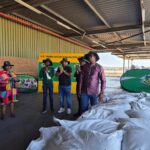
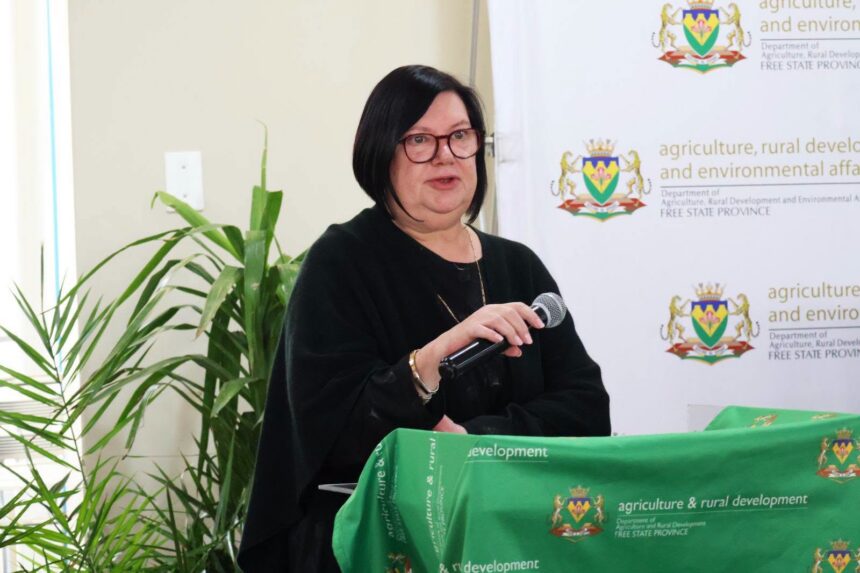
The department’s response was led by MEC for Agriculture, Rural Development and Environmental Affairs Elzabe Rockman together with Head of Department Tshepo Mabilo. The engagement was convened specifically for farmers affected by the Land Bank Blended Finance Scheme, giving producers an opportunity to explain how the funding situation was affecting their operations. Land Bank provincial representatives were also present to explain how the funding was distributed and how the available grant allocation had become depleted. This direct engagement helped bring the different parties into one discussion instead of leaving farmers to seek answers through separate channels. The approach demonstrates the department’s willingness to act quickly when an agricultural financing problem threatens producers at an important stage of the production cycle.
The department’s proactive approach was particularly important because the affected farmers operate within tight seasonal timelines. In the Free State, grain producers preparing for the new season cannot simply postpone planting without considering the potential consequences for their production plans. MEC Rockman highlighted the importance of acting quickly because the planting season was approaching and delays could worsen the position of farmers. She also raised concern about the possibility of El Niño conditions, which could add further pressure to farmers if planting is delayed. By bringing the issue into a direct engagement with farmers and the Land Bank, the department created an opportunity to examine short-term interventions before the planting window becomes more restrictive.
The scale of the funding challenge also explains why the provincial department considered an immediate response necessary. During the engagement, farmers raised concerns about the depletion of the blended finance grant component and the impact this could have on their ability to plant. More than R70 million had reportedly been disbursed between April and the end of August during the financial year, while the funding requirement presented for grain production alone was about R97.8 million. That figure did not include requirements for mechanisation or farmers seeking to purchase farms, showing that the stated need for grain production represented only part of the broader demand for agricultural finance. The figures provide context for why the department moved to convene an urgent engagement rather than treating the matter as a routine funding query.
The Blended Finance Scheme plays an important role for farmers who are working towards commercialisation and need a combination of grant and loan support. The scheme provides a pathway through which developing farmers can strengthen their businesses before relying entirely on conventional commercial finance. For farmers who have already entered this pathway, a sudden change in the availability of grant funding can affect carefully planned production cycles. The Free State Department’s intervention recognised the importance of understanding these realities from the perspective of the farmers themselves. By creating space for producers to explain their circumstances, the department was able to focus the discussion on the practical effects of the funding shortage rather than only on the administrative side of the scheme.
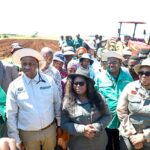
A significant feature of the Free State response was the inclusion of different farmer formations in the engagement. Farmers from structures including AFASA, YARD and WARD were welcomed to participate in the discussion, giving the meeting a broader representation of agricultural voices. Setjhaba Ramabenyane of AFASA Youth Free State acknowledged the department’s effort to bring farmers together when the funding problem emerged. He noted that the engagement provided an opportunity to discuss the issue collectively and search for assistance, even where a potential solution might not immediately benefit every farmer. The response from farmer representatives indicates that direct communication with government was valued at a time when producers needed clarity and practical engagement.
The department’s willingness to listen was central to the meeting. Farmers were given an opportunity to explain their experiences, ask questions and propose possible solutions linked to the Blended Finance Scheme. This approach is important because agricultural funding problems can affect farmers differently depending on the commodity they produce, their existing debt, the size of their operation and the stage of their production cycle. A single response may therefore not address every farmer’s circumstances. The department committed to assessing cases individually and continuing engagements with the Land Bank, creating a basis for more targeted follow-up after the initial meeting.
The role of the Land Bank in the engagement was also important because farmers needed clarity about what had happened to the available funding. Nthako Thaele, the Land Bank’s provincial head, explained how funding moves from the national level to provinces and provided an explanation of how the available allocation had become depleted. His participation meant that farmers could hear directly from the financial institution involved rather than relying only on second-hand information. Thaele also acknowledged the importance of the engagement and recognised the quick action taken by MEC Rockman to bring the parties together. The discussion therefore served both an information function and a problem-solving function.
The Free State Department has framed the engagement around short-term, medium-term and long-term interventions. This approach is important because the immediate need is to address farmers facing an urgent planting deadline, while the underlying financing challenge requires a longer-term response. MEC Rockman said the department was lobbying with the national department, industry players and commodity groups to explore short-term solutions. The department also indicated that it would retreat with the Land Bank and other partners to examine what could be done within the shortest possible period. This shows that the provincial response is not limited to one meeting but is being approached as an ongoing process involving several stakeholders.
The department’s intervention also reflects the importance of protecting food production in the Free State. The province has a major agricultural economy, and grain production depends on farmers being able to access inputs and operate within the appropriate seasonal windows. If farmers are unable to plant because expected financing is unavailable, the effects can extend beyond individual businesses. Production, employment, local economic activity and food supply can all be affected when farming enterprises experience serious financial disruptions. By responding to the concerns of affected farmers, the Free State Department is addressing an issue that has implications for both agricultural businesses and the wider rural economy.
The timing of the department’s response is particularly significant because farmers had limited room to wait for a solution. MEC Rockman indicated that the province was already close to the planting period and that there were only about ten days left of the ideal planting window at the time of the engagement. She warned that later planting could worsen the position of affected farmers and that possible climate conditions could add further risk. This made the department’s decision to convene the meeting quickly especially relevant. The emphasis on immediate engagement reflects an understanding that agricultural interventions must take place within the same seasonal timelines that farmers face.
The response also demonstrates the importance of cooperation between provincial and national institutions. The funding challenge involves a national agricultural financing mechanism, but its effects are being experienced directly by farmers in the Free State. The provincial department therefore needs to work with the Land Bank, the national Department of Agriculture, commodity organisations and other industry stakeholders to explore possible solutions. MEC Rockman indicated that these engagements were already being pursued as part of the search for short-term interventions. This cooperative approach allows the province to raise the concerns of its farmers while working with institutions that have authority over different parts of the financing system.
For the Free State Department, being proactive in this situation means more than convening a meeting. It involves creating a channel for farmers to communicate their concerns, obtaining clarity from the Land Bank, identifying the scale of the problem and pursuing possible interventions with other stakeholders. It also involves recognising that different farmers may require different responses depending on their circumstances. The department’s commitment to assess individual cases and facilitate further discussions with the Land Bank provides a framework for continued engagement. While the final outcome of these efforts will depend on what funding and financing options can be made available, the department has established a process through which the concerns can be actively pursued.
The situation also reinforces the importance of continued communication between government and farmers when agricultural programmes face funding pressures. Farmers need reliable information to make decisions about planting, borrowing, purchasing inputs and managing existing obligations. Delayed information can create uncertainty at a time when production decisions must be made quickly. The Free State Department’s decision to bring farmers and the Land Bank into the same room allowed questions to be raised and addressed directly. This type of engagement can help reduce uncertainty while creating a stronger foundation for future discussions about agricultural finance.
The Free State Department’s response is taking place against a wider national discussion about the sustainability and demand for blended agricultural finance. The Blended Finance Scheme is intended to support developing farmers as they move towards commercialisation, but demand for the programme has placed pressure on available funding. This means that provincial departments such as the Free State Department of Agriculture, Rural Development and Environmental Affairs must often respond to the local effects of national financing constraints. The department’s decision to engage directly with affected producers shows the importance of provincial leadership in identifying problems early and ensuring that farmers have a platform to raise concerns. It also highlights the value of cooperation when financial challenges extend across institutional boundaries.
For farmers in the Free State, the immediate priority remains finding practical ways to protect the upcoming production season. The department has created a platform for farmers, the Land Bank and other stakeholders to work through the challenge and identify possible interventions. The next steps will be important because farmers cannot indefinitely delay planting decisions while waiting for clarity on finance. The department’s continued engagement with the Land Bank, national government, industry players and commodity groups will therefore be critical as possible solutions are considered. Its proactive involvement has ensured that the concerns of affected farmers are being actively placed before the institutions that can contribute to the response.
The Free State Department of Agriculture, Rural Development and Environmental Affairs has demonstrated a proactive approach by responding quickly to a funding problem that emerged at a critical time for farmers. Under MEC Elzabe Rockman and Head of Department Tshepo Mabilo, the department brought affected farmers and the Land Bank together, created space for direct discussion and began exploring short-term, medium-term and long-term interventions. The department has also committed to assessing affected cases individually and continuing engagements with the Land Bank and other stakeholders. While the funding challenge remains serious and the final solutions still need to be developed, the provincial response has ensured that farmers are not left to navigate the problem alone. At a time when planting decisions are becoming urgent, the department’s willingness to listen, coordinate and pursue possible solutions provides an important foundation for protecting agricultural production and rural livelihoods in the Free State.
Join 'Farmers Mag' WhatsApp Channel
Get the latest Farming news and tips delivered straight to your WhatsApp
CLICK HERE TO JOIN