The South African pork industry has faced one of its most challenging periods in recent years as producers continue to deal with African swine fever (ASF) and foot-and-mouth disease (FMD). The scale of the animal health threats has placed significant pressure on commercial pig farms, small-scale producers and the broader pork supply chain. According to the South African Pork Producers’ Organisation (Sappo), the industry recorded 17 FMD incidents in commercial piggery units during the past year. These outbreaks created operational and financial challenges while forcing producers to reconsider how they manage disease risks on their farms. Despite the disruption, the industry has used the crisis to strengthen biosecurity, improve disease management systems and build greater resilience for the future.
The challenges facing pork producers were discussed during Sappo’s recent annual meeting at Silverlake Farm Hotel in Pretoria. The organisation said the industry has not yet fully recovered from the effects of the various disease outbreaks, highlighting the lasting impact of animal health emergencies on production and market conditions. African swine fever remains a serious concern because of its ability to cause significant losses among affected pig populations and the absence of a widely available commercial vaccine for controlling the disease. Foot-and-mouth disease has added another layer of complexity, particularly where movement restrictions and disease management areas affect the transportation of livestock. Producers have therefore had to adapt their farming practices while continuing to maintain production and protect the national pork supply.
One of the most significant developments during the crisis was the industry’s response to the 17 FMD incidents recorded in commercial piggery units. Sappo reported that approximately 20 000 FMD vaccines were issued, distributed and recorded through its World of Pork digital platform. The digital tracking system provided an important mechanism for monitoring vaccination activity and improving visibility across the sector. Accurate records are particularly important during disease outbreaks because authorities and industry organisations need reliable information to understand where animals have been vaccinated and how disease risks are changing. The experience has demonstrated that technology can play an increasingly important role in supporting disease control and improving coordination between producers and industry stakeholders.
The response to FMD also required changes to how producers manage livestock under disease pressure. Sappo pointed to revised Section 9 control measures, which were published around July of the previous year, as an important development in the industry’s approach to managing the spread of the disease. These measures created a framework for managing livestock and movement risks in affected areas while attempting to limit the wider economic consequences of disease controls. Restrictions can create serious difficulties for livestock producers because animals still need feed, water, veterinary attention and other forms of care even when normal movement is limited. Collaboration between industry organisations therefore became essential to ensure that disease management measures could be implemented without unnecessarily compromising animal welfare and farm operations.
Partnerships between agricultural organisations played a particularly important role during the crisis. Sappo said its partnership with Kwanalu and the Red Meat Producers Organisation helped settle fees associated with moving livestock in disease management areas. This support helped producers keep animals alive and manage practical challenges created by restrictions on livestock movement. Such cooperation shows how animal disease management extends beyond individual farms and requires coordinated action throughout the agricultural sector. When producers, industry organisations and other stakeholders work together, they can respond more effectively to disruptions that would be difficult for individual farmers to manage on their own.
Sappo chief executive officer Dr Marlene Louw said the organisation deliberately used the crisis as an opportunity to strengthen its systems and prepare producers for continued FMD risk. Rather than treating the outbreaks as a temporary problem, the organisation focused on adapting the sector to a farming environment where disease threats may remain a long-term reality. This shift is significant because producers cannot rely solely on eliminating outbreaks before returning to normal operations. They increasingly need systems that allow them to identify risks early, limit disease transmission and maintain production while operating under heightened biosecurity requirements. The industry’s experience over the past year has therefore reinforced the importance of preparedness rather than relying exclusively on emergency responses.
Biosecurity mentorship has also emerged as an important part of the industry’s efforts to strengthen its defences. Sappo conducted mentorship programmes aimed at supporting small-scale farmers and producers through farm visits and practical guidance. These programmes focused on improving biosecurity practices and helping farmers understand how everyday management decisions can influence disease risks. According to Sappo, the mentorship and farm visits contributed to improvements in biosecurity and helped raise the pass rate to 70%. This suggests that targeted support and practical training can help producers improve their ability to meet disease management standards, particularly when technical requirements may be difficult to implement without direct guidance.
Education and skills development formed another part of the industry’s response to the difficult operating environment. Sappo reported that its academy recorded approximately 131 completed modules, while Agri SETA business skills training and a leadership programme at Stellenbosch Business School also contributed to producer and industry development. These programmes demonstrate that resilience depends on more than vaccines and physical biosecurity measures. Farmers and industry leaders also need strong business, management and decision-making skills to navigate periods of disease, market volatility and changing regulations. Building these capabilities can help producers respond more effectively when future disruptions affect production costs, livestock movements or market access.
The disease outbreaks also had implications for pork prices and imports. Sappo indicated that the outbreaks affected pork import prices, prompting the organisation to conduct awareness campaigns. Changes in disease conditions can influence supply and demand throughout the market because restrictions may affect domestic production while consumers and processors continue to require consistent supplies. Import prices can also influence the competitiveness of locally produced pork, creating additional pressure for producers already dealing with increased disease management costs. Clear communication with consumers and other stakeholders is therefore important because maintaining confidence in locally produced pork remains a key part of supporting the domestic industry.
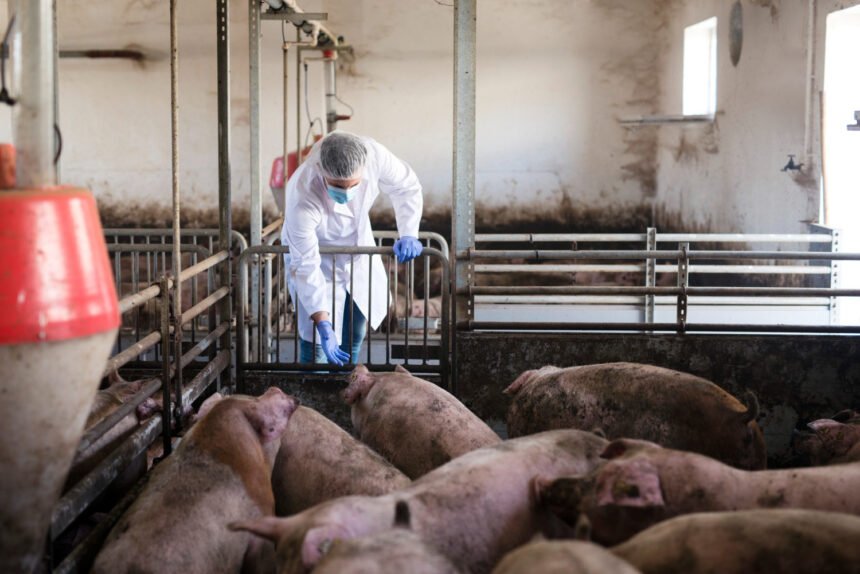
For commercial producers, the experience has reinforced the need to treat biosecurity as a central part of farm management rather than as an occasional response to an outbreak. Measures such as controlling access to piggery units, maintaining strict hygiene procedures, monitoring animal health and managing livestock movements can help reduce the likelihood of disease entering or spreading between farms. Producers also need accurate records that can support rapid decision-making when disease is detected. Small-scale farmers face many of the same risks but may have fewer resources available to implement comprehensive systems, which makes mentorship and practical support particularly important. The industry’s efforts to expand training and improve compliance could therefore have benefits that extend across different types of pork production.
The continued presence of FMD risk means the pork sector cannot assume that the end of a specific outbreak will mark the end of the challenge. Producers must prepare for a situation where disease management becomes part of normal farm planning. This requires investment in biosecurity, staff training, digital recordkeeping and communication between farms and industry organisations. It also requires producers to understand movement controls and maintain procedures that allow them to respond quickly when disease risks change. The lessons from the past year could help establish stronger systems that reduce the economic and operational impact of future outbreaks.
The South African pork industry’s response to ASF and FMD shows how a major animal health crisis can expose weaknesses while also creating opportunities to improve the sector. The 17 FMD incidents in commercial piggery units placed producers under considerable pressure, while the distribution and digital recording of about 20 000 vaccines demonstrated the value of coordinated disease management. Partnerships involving Sappo, Kwanalu and the Red Meat Producers Organisation helped address practical challenges, while mentorship programmes improved biosecurity among participating farmers. Training and digital systems have also strengthened the industry’s ability to operate with better information and greater preparedness. As disease threats continue to influence farming conditions, the long-term resilience of South Africa’s pork industry will depend on maintaining these partnerships, strengthening biosecurity and ensuring that producers have the knowledge and tools needed to manage animal health risks effectively.
Join 'Farmers Mag' WhatsApp Channel
Get the latest Farming news and tips delivered straight to your WhatsApp
CLICK HERE TO JOIN