
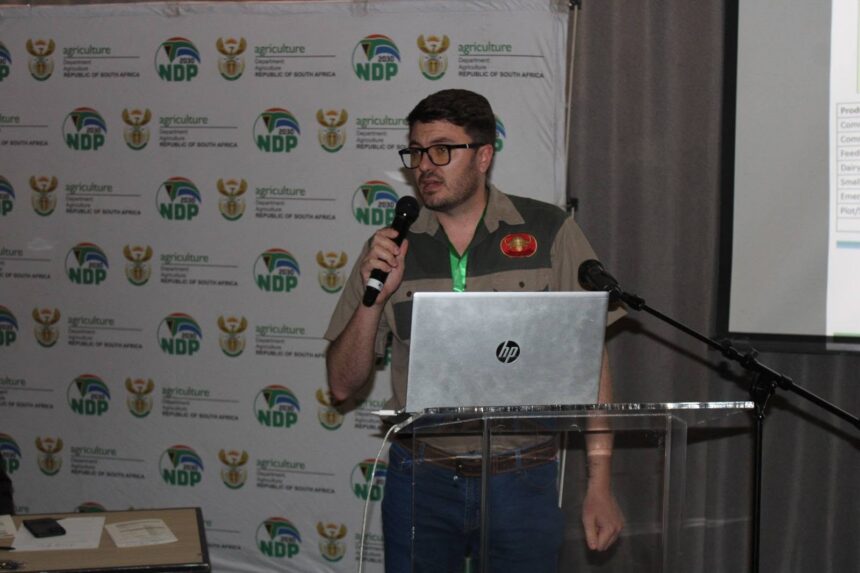
South Africa’s response to Foot and Mouth Disease (FMD) is under review as the Ministerial Task Team on Animal Disease Prevention and Control and the Min Tech Veterinary Working Group met in Boksburg to assess progress and strengthen the country’s approach to managing the disease. The strategic workshop is focused on understanding what is working, identifying gaps and determining which practical measures are needed to improve implementation on the ground. The engagement comes as the country continues efforts to protect livestock, support farmers and strengthen systems for preventing and controlling animal diseases. FMD remains a serious concern for the livestock sector because outbreaks can affect animal health, livestock movement, production and market access. The review therefore provides an opportunity for government and veterinary experts to examine the current response and identify priorities for the next phase of the national FMD programme.
The Ministerial Task Team and Min Tech Veterinary Working Group are using the workshop to assess the progress made through the measures currently being implemented across the country. This includes looking at the effectiveness of interventions, identifying areas where implementation remains challenging and considering what additional action may be required. A strong national response depends on more than one intervention because FMD control involves several connected areas of animal health management. Vaccination, surveillance, animal identification, traceability, movement control and rapid response all have an important role to play in reducing the risk of disease spread. Reviewing these measures together can help ensure that weaknesses in one part of the system do not undermine progress made in another.
The meeting also places emphasis on strengthening collaboration between the different structures involved in the FMD response. The MTT and VWG are working to align their efforts and establish clear priorities based on technical information and practical experience. Better coordination can help improve the implementation of decisions and reduce gaps between national strategies and activities taking place within farming communities. It can also help ensure that veterinary services, government departments and other stakeholders work towards the same disease control objectives. For livestock farmers, effective coordination matters because national decisions ultimately need to translate into practical measures that can be implemented on farms and in communal farming areas.
The focus on practical implementation is particularly important because disease control measures must reach livestock producers across different farming systems. South Africa has commercial, emerging and communal livestock farmers operating under different conditions and with varying levels of access to infrastructure and veterinary services. These differences can influence how quickly farmers can respond to disease threats and comply with control measures. Continued engagement with farmers can help authorities identify challenges affecting vaccination, animal movement, reporting and other aspects of disease management. It can also provide farmers with clearer information about their responsibilities and the measures being implemented to protect livestock.
Vaccination remains an important part of South Africa’s broader FMD control strategy. Protecting cattle through vaccination can reduce the risk of severe disease and form part of a wider programme aimed at reducing transmission and strengthening herd protection. However, vaccination needs to operate alongside other disease control measures if the country is to achieve sustained progress. Surveillance remains necessary to identify infections, while animal identification and traceability can help authorities understand livestock movements and respond when disease is detected. Effective movement controls and farmer cooperation are also important because the movement of infected or exposed animals can contribute to the spread of FMD.
The discussions in Boksburg are also linked to South Africa’s longer-term objective of progressing along the World Organisation for Animal Health pathway towards restoring FMD-free status. The country is working towards achieving this objective with vaccination or without vaccination, depending on the disease control approach and the requirements that must be met. Reaching FMD-free status requires sustained progress in disease prevention, surveillance and control, supported by reliable veterinary systems and effective implementation. The process also requires the country to demonstrate that its animal health measures can provide the level of control needed under the relevant international framework. The current review therefore has significance beyond the immediate management of outbreaks because it forms part of the broader effort to strengthen South Africa’s animal health position.
Progress in FMD control also has direct implications for the livestock value chain. Disease outbreaks can disrupt the movement and marketing of animals, affecting farmers and businesses that depend on livestock production. Restrictions introduced to contain disease can create additional costs and operational challenges for producers, particularly where animals cannot be moved or marketed as planned. Stronger disease control can help reduce these disruptions over time by improving protection within livestock populations and strengthening confidence in the country’s animal health systems. This makes continued investment in vaccination, surveillance, veterinary services and traceability important for both animal health and the sustainability of livestock production.
The Boksburg workshop provides an opportunity for the Ministerial Task Team and Min Tech Veterinary Working Group to assess the country’s progress while preparing for the next phase of the FMD response. Their focus on what is working, where gaps remain and what practical measures are required can help shape a more coordinated approach to disease control. Continued collaboration between government, veterinary professionals, livestock organisations and farmers will remain essential as South Africa works to strengthen its animal health systems. The country’s progress towards the FMD-free pathway will depend on consistent implementation, effective surveillance, strong traceability and cooperation across the livestock sector. By aligning technical expertise with practical action on the ground, the ongoing review can help support South Africa’s efforts to protect livestock and work towards restoring FMD-free status, with vaccination or without vaccination.
Join 'Farmers Mag' WhatsApp Channel
Get the latest Farming news and tips delivered straight to your WhatsApp
CLICK HERE TO JOIN