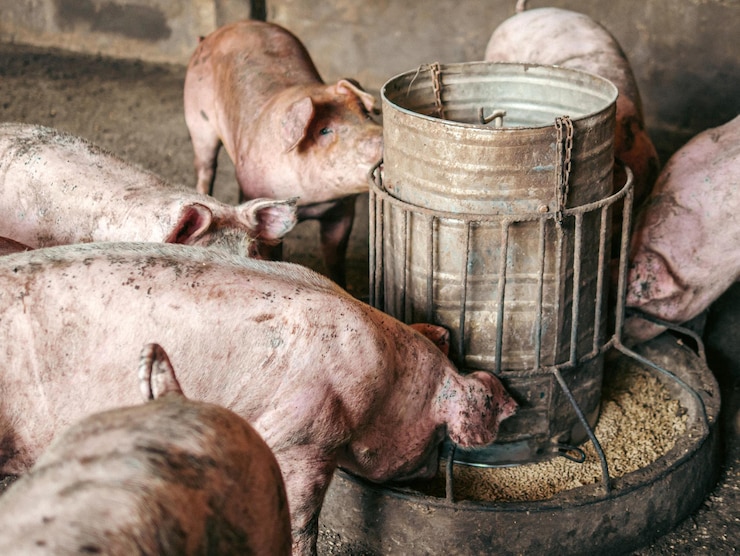
Pig farmers are being urged to never feed untreated swill or raw food waste to pigs because doing so can introduce serious animal diseases and place entire farming operations at risk. Feeding untreated food waste to pigs is illegal and can contribute to the spread of Foot and Mouth Disease (FMD) and other dangerous viruses when contaminated meat or animal products are present in the waste. A single infected ingredient can create a serious disease risk when it enters a pig herd through feeding. The consequences can extend beyond individual animals and affect other farms, livestock movements, markets and the wider agricultural sector. Farmers can reduce these risks by following safe feeding practices, maintaining strict farm biosecurity and treating kitchen waste correctly before it is considered for use as pig feed.
Swill refers to food waste or kitchen waste that is given to pigs as feed, and untreated swill can create a direct pathway for disease transmission. Food waste may contain meat or meat products that have come from infected animals without the farmer knowing that contamination is present. Pigs can become infected after consuming contaminated material, allowing disease to enter a herd that may otherwise have had strong biosecurity controls. Foot and Mouth Disease is particularly concerning because it can spread rapidly among susceptible livestock and cause significant disruption to farming operations. Preventing infected material from entering pig feed is therefore an important part of protecting animal health and limiting the spread of disease.
Farmers should never feed raw or untreated swill to pigs. This rule is particularly important for food waste that may contain meat, animal products or ingredients of unknown origin. What appears to be harmless household waste can carry pathogens that are not visible to the farmer and cannot be identified simply by looking at the food. Feeding contaminated waste can expose pigs to diseases that can subsequently spread through contact with other animals or through contaminated equipment, people and environments. Avoiding untreated swill is therefore one of the simplest and most important steps farmers can take to reduce disease risks.
Using safe commercial pig feed provides a more controlled approach to meeting the nutritional needs of a herd. Commercial feeds are formulated to provide appropriate nutrients required for growth, maintenance and production according to the needs of the animals. Relying on appropriate commercial feed can also reduce the uncertainty associated with the nutritional content and disease risks of household food waste. Farmers should select feed appropriate for the age, production stage and nutritional requirements of their pigs. Proper nutrition supports healthy animals and forms an important part of maintaining a productive and sustainable pig farming operation.
Where kitchen waste is permitted for use, it must be treated correctly before being fed to pigs. The guidance states that kitchen waste must be boiled for 60 minutes to reduce the risk of disease-causing pathogens being present in the material. Farmers should follow the required treatment process carefully rather than assuming that lightly heating or cooking food waste is sufficient. Waste should not be fed to pigs while it remains raw or untreated. Following the full treatment requirement is an important disease prevention measure and can help reduce the possibility of contaminated food waste introducing infection into a herd.
Farm biosecurity must also remain a priority because disease prevention involves more than controlling what pigs eat. Farmers should take steps to prevent potentially infected animals, people, equipment and materials from entering areas where pigs are kept. Cleaning and disinfection procedures should be followed where appropriate, while unnecessary contact between pigs and outside animals should be avoided. Farmers should also remain alert to signs of illness and seek veterinary assistance when they notice unusual symptoms or unexplained disease. A consistent approach to biosecurity can reduce opportunities for pathogens to enter and spread within a pig farming operation.
The risks associated with untreated swill can affect individual farmers as well as the wider livestock industry. If a disease such as FMD enters a pig herd, authorities may need to introduce measures to contain its spread, potentially affecting animal movements and agricultural activities in affected areas. Disease outbreaks can also create financial pressure through animal losses, increased management costs and disruptions to normal farming operations. Other farmers may be affected when disease control measures extend beyond the original infected property. Preventing disease at farm level therefore contributes to protecting the wider agricultural economy and livestock sector.
Farmers should also be cautious about where food waste comes from and what it contains. Waste that has passed through households, restaurants, food businesses or other sources may contain animal products that farmers cannot verify. Even when waste appears fresh or suitable for consumption, it may not be safe for pigs without the required treatment. Farmers should avoid taking unnecessary risks with feed because the cost of preventing disease is generally far lower than dealing with the consequences of an outbreak. When there is uncertainty about whether a food product or waste stream is safe, farmers should seek guidance from agricultural or veterinary authorities before feeding it to pigs.
Good nutrition and disease prevention should form part of the same herd management strategy. Pigs need adequate nutrition to support healthy growth and maintain their condition, but the feed source must also be managed carefully to prevent the introduction of harmful pathogens. Farmers who combine appropriate feeding practices with strong biosecurity can reduce avoidable risks while supporting healthier animals. Regular monitoring of the herd can also help farmers identify changes in appetite, behaviour or health that may require attention. A disciplined approach to feeding and animal management can protect both the welfare of pigs and the long-term viability of the farming business.
Farmers are encouraged to take the feeding rules seriously and ensure that everyone working on the farm understands them. Raw or untreated swill should never be fed to pigs, while commercial feed should be used as a safer source of nutrition. Where kitchen waste is used in accordance with applicable requirements, it must be boiled for 60 minutes before being given to pigs. Strict biosecurity should remain in place to reduce the risk of disease entering the farm through animals, people, equipment or contaminated materials. Protecting a pig herd starts with everyday decisions, and safe feeding practices are among the most important measures farmers can take to prevent disease and maintain a healthy and productive herd.
Join 'Farmers Mag' WhatsApp Channel
Get the latest Farming news and tips delivered straight to your WhatsApp
CLICK HERE TO JOIN