

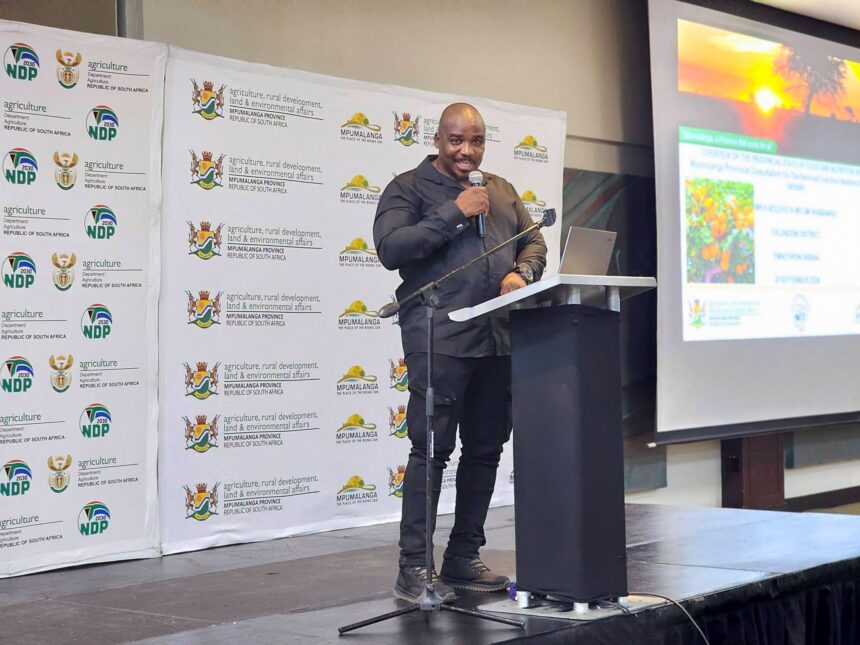
The National Food and Nutrition Security Plan (NFNSP) 2025–2033 consultation process continues in Ehlanzeni District, Mpumalanga, giving farmers and other stakeholders an opportunity to contribute to South Africa’s food and nutrition security priorities. Mpumalanga is the third province to participate in the national consultation process. The engagement comes as findings from the National Food and Nutrition Security Survey show that 71% of households in Mpumalanga experienced food insecurity, while 29% were found to be food secure. These figures highlight the scale of the food and nutrition security challenge facing households in the province. They also underline the importance of bringing the national consultation process to communities and agricultural stakeholders who understand local conditions.
The survey identifies several socio-economic challenges linked to household food and nutrition insecurity in Mpumalanga. These include limited household food production, high dependence on social grants, acute youth unemployment and declining household incomes. These challenges are closely connected to the ability of households to access food and maintain their livelihoods. Limited household food production means that some families have fewer opportunities to produce food for their own consumption. At the same time, unemployment and declining incomes can make it harder for households to secure adequate food.
For farmers, the consultation provides an opportunity to place agricultural production and local farming realities within the wider national food security discussion. The National Department of Agriculture is engaging stakeholders to understand local realities, listen to lived experiences and gather practical recommendations. These contributions can help shape the goals, priorities and interventions of the NFNSP 2025–2033. The process recognises that communities across South Africa do not experience food and nutrition insecurity in exactly the same way. Input from Mpumalanga can therefore help ensure that the province’s specific challenges and opportunities form part of the national planning process.
The consultation also provides Mpumalanga with an opportunity to highlight its agricultural potential and local solutions. Farmers and other stakeholders can bring their experiences into discussions about household food production, livelihoods, access to nutritious food and local food systems. These issues are important in a province where the survey has identified significant levels of household food insecurity. Understanding what happens at community level can help inform discussions about the measures needed to strengthen food production and food access. The consultation creates a space for these local realities to be considered alongside the broader national food and nutrition security agenda.
Household food production is one of the issues identified in the survey as being associated with food and nutrition insecurity in Mpumalanga. This makes agricultural participation an important part of the discussion taking place during the consultation. The process provides an opportunity to consider the realities faced by households involved in food production and the challenges that can limit their contribution. Farmers and stakeholders can also share local experiences and recommendations linked to food production and livelihoods. Bringing these perspectives into the NFNSP process can help ensure that the plan considers the experiences of people involved in agriculture at community level.
Youth unemployment is another major challenge identified in the information presented for Mpumalanga. The survey highlights acute youth unemployment as one of the socio-economic factors associated with household food and nutrition insecurity. This issue affects livelihoods and forms part of the broader conditions that shape household access to food. The consultation gives stakeholders an opportunity to discuss these realities and consider local experiences as part of the national planning process. The connection between employment, livelihoods and food security makes youth unemployment an important issue in discussions about the future of food and nutrition security.
Declining household incomes and high dependence on social grants also feature among the challenges identified by the survey. These conditions provide important context for understanding why food and nutrition security remains a concern for many households in the province. When household incomes decline, families can face greater challenges in meeting their food needs. The survey findings therefore point to food insecurity as an issue connected to wider household economic conditions. The NFNSP consultation can provide a platform for stakeholders to explain how these conditions are experienced in their communities and to offer practical recommendations.
The consultation process is based on the recognition that food and nutrition insecurity varies across provinces, districts and communities. A national plan needs to take these differences into account if it is to reflect conditions across the country. Mpumalanga’s participation allows stakeholders in the province to bring their own experiences, challenges and opportunities into the national discussion. Ehlanzeni District provides the setting for this engagement as the consultation continues across the provinces. The process creates an opportunity to connect evidence about food insecurity with the experiences and recommendations of people living and working in affected communities.
The emphasis on local realities is particularly relevant to farmers because agricultural production takes place within specific communities and local conditions. Farmers have direct experience of the opportunities and challenges associated with producing food and sustaining agricultural livelihoods. Their participation can help add practical perspectives to discussions about food security. The consultation also allows stakeholders to consider local solutions alongside the challenges identified through national evidence. This connection between evidence and lived experience forms an important part of the NFNSP consultation process.
The wider goal is to strengthen approaches that support household food production, livelihoods, access to nutritious food and resilient local food systems. These areas are directly relevant to the role of agriculture in food and nutrition security. The consultation provides a platform for stakeholders to discuss how local realities can inform these areas within the NFNSP 2025–2033. Mpumalanga’s agricultural potential and local solutions can therefore become part of the information considered during the national planning process. The engagement is an opportunity for the province to contribute to the development of priorities that reflect its own circumstances.
The National Food and Nutrition Security Plan 2025–2033 consultation in Ehlanzeni District represents an important opportunity for Mpumalanga’s agricultural stakeholders to contribute to South Africa’s national food security discussion. The province enters the process with clear evidence of significant household food insecurity, with 71% of households identified as food insecure and 29% classified as food secure. The survey also points to limited household food production, high dependence on social grants, acute youth unemployment and declining household incomes as associated challenges. By bringing stakeholders together, the consultation allows these realities, along with Mpumalanga’s agricultural potential and local solutions, to be considered in the development of the national plan. The process connects evidence with local experience and provides Mpumalanga with an opportunity to help shape South Africa’s food and nutrition security priorities for 2025 to 2033.
Join 'Farmers Mag' WhatsApp Channel
Get the latest Farming news and tips delivered straight to your WhatsApp
CLICK HERE TO JOIN




