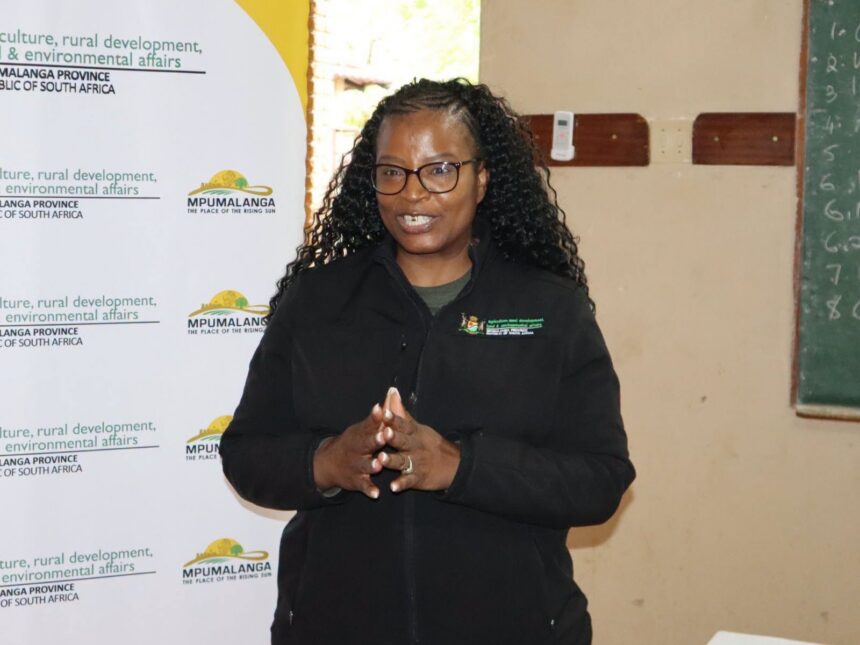
The Mpumalanga Department of Agriculture, Rural Development, Land and Environmental Affairs (DARDLEA) has partnered with the University of Mpumalanga to strengthen tomato production through a two-day Provincial Tomato Disease Mapping Workshop held at the Mzinti Training Centre. The initiative forms part of a research project focused on identifying the occurrence and distribution of tomato diseases affecting emerging farmers across the province. By bringing agricultural research and practical farmer training together, the programme aims to give producers better tools to identify, prevent and manage diseases that can affect crop health and productivity. Tomato diseases can reduce yields, damage crop quality and create financial challenges for farmers when they are not identified and managed early. The workshop therefore represents an important step towards improving disease management practices while supporting the long-term growth of tomato production in Mpumalanga.
The tomato disease mapping project is designed to provide a clearer understanding of the diseases affecting tomato farmers in different parts of the province. Mapping the occurrence and distribution of diseases can help researchers and agricultural officials identify common disease patterns and understand where particular challenges may be concentrated. This information can support more targeted agricultural advice and help shape future interventions for emerging farmers. Accurate disease information is also important because different diseases may require different management approaches, making early identification an important part of crop protection. Through collaboration between DARDLEA and the University of Mpumalanga, the project combines agricultural expertise and research capacity to generate information that can support practical solutions for tomato producers.
The two-day workshop also placed strong emphasis on ensuring that participating farmers could apply the knowledge gained directly to their farming activities. Farmers who submitted tomato disease samples were given hands-on training covering several important areas of crop protection and disease management. Practical training can help producers recognise signs of disease and take appropriate action before problems spread across larger sections of their crops. It also gives farmers an opportunity to connect research findings with the challenges they encounter in their fields. This combination of sample-based research and practical training makes the programme relevant to both agricultural research and day-to-day farming operations.
One of the key areas covered during the workshop was effective disease management strategies. Managing tomato diseases requires farmers to understand how diseases develop, how they spread and which measures can reduce their impact on crops. Farmers can benefit from learning how to monitor plants regularly, recognise early symptoms and respond before infections become widespread. Good field management practices can also help reduce conditions that encourage the development and spread of certain diseases. By improving farmers’ knowledge of disease management, the programme aims to strengthen their ability to protect crops and make informed decisions throughout the production cycle.
Prevention was another important focus of the training provided to farmers who submitted samples. Preventing disease can reduce the pressure on farmers to respond to serious outbreaks after they have already affected large areas of a crop. Farmers can support prevention by maintaining good crop hygiene, monitoring their fields and following recommended agricultural practices. Early detection also plays an important role because identifying potential problems quickly gives farmers more time to seek advice and implement appropriate control measures. Providing farmers with practical prevention knowledge can therefore help protect tomato crops while reducing avoidable production losses.
The workshop also addressed safe chemical handling, an important part of responsible crop protection. Agricultural chemicals can help farmers manage certain crop diseases and pests when used correctly, but improper handling can pose risks to farmers, consumers and the environment. Training on safe chemical use can help producers understand the importance of following product instructions, using appropriate protective equipment and applying chemicals responsibly. Farmers also need to understand the importance of correct storage, handling and disposal practices to reduce unnecessary exposure and environmental contamination. Including chemical safety in the workshop ensures that disease management training addresses not only crop protection but also the health and environmental responsibilities associated with agricultural production.
The partnership between DARDLEA and the University of Mpumalanga highlights the value of collaboration between government agricultural services, academic institutions and farming communities. Universities can contribute research expertise and scientific knowledge, while agricultural departments can provide extension support and connect research initiatives with farmers. Farmers, in turn, contribute valuable information from their own fields, including disease samples that can help researchers understand real production challenges. This type of collaboration can improve the relevance of agricultural research by ensuring that studies address problems experienced by producers. It can also help ensure that research findings are translated into practical knowledge that farmers can use.
For emerging tomato farmers, stronger disease management practices can have a direct impact on production and farm sustainability. Healthy crops are more likely to reach their expected production potential, while effective prevention and early intervention can help limit losses. Better disease knowledge can also help farmers make more informed decisions about crop monitoring, management and chemical use. Over time, improved production practices can contribute to more consistent yields and better quality produce. Supporting emerging farmers with both technical knowledge and research-based information is therefore an important part of strengthening agricultural development in the province.
The Provincial Tomato Disease Mapping Workshop also demonstrates why farmer participation is important in agricultural research. The disease samples submitted by farmers provide researchers with information that can contribute to a better understanding of tomato health challenges across Mpumalanga. When farmers participate in research projects, they can also gain access to training that helps them address the problems identified through their samples. This creates a practical connection between research activities and the needs of farming communities. Continued participation and collaboration can help build a stronger information base for future agricultural programmes and disease management interventions.
The initiative at the Mzinti Training Centre highlights a broader effort to combine research, education and practical agricultural support to improve tomato production among emerging farmers. Through disease mapping, researchers can build a clearer picture of tomato health challenges across the province, while farmer training can equip producers with practical skills to manage and prevent these problems. The focus on safe chemical handling also promotes responsible crop protection that considers both farmer safety and environmental protection. Continued cooperation between DARDLEA, the University of Mpumalanga and farming communities can help turn research findings into useful agricultural solutions. By strengthening disease management knowledge and supporting informed farming practices, the programme has the potential to contribute to healthier tomato crops, improved production and more resilient emerging farming enterprises across Mpumalanga.
Join 'Farmers Mag' WhatsApp Channel
Get the latest Farming news and tips delivered straight to your WhatsApp
CLICK HERE TO JOIN