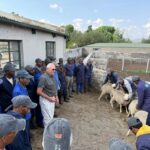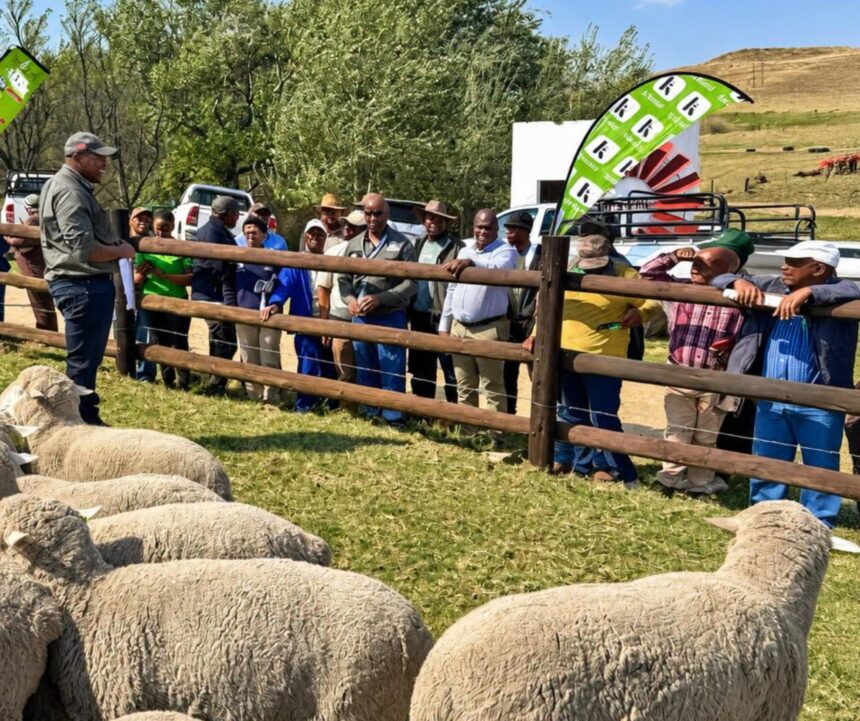
Mountain View Farm in Elliot, Eastern Cape, became a meeting point for farmers and livestock industry stakeholders on 2 September 2026, as the Mountain View Farm Livestock Information Day focused on practical knowledge, collaboration and stronger commercial farming. Hosted by Mr Qotoyi and his family, the event created an opportunity for farmers to engage with specialists and industry representatives on issues that directly affect livestock productivity and profitability. The gathering highlighted the importance of sharing knowledge in an industry where breeding decisions, animal nutrition, record keeping and financial management can have a major impact on farm performance. It also brought together different parts of the agricultural value chain, allowing farmers to learn from both fellow producers and financial and industry institutions. The overall message was clear that sustainable livestock production requires informed decision-making, careful management and a strong focus on building commercially viable enterprises.
Livestock farming remains an important source of income and economic activity for many farming communities, but producers face increasing pressure to improve productivity while managing costs and maintaining healthy animals. Events such as the Mountain View Farm Livestock Information Day provide an important platform for farmers to access practical information that can be applied directly on their farms. Instead of focusing only on theory, the programme addressed several areas that influence everyday livestock management and long-term business performance. Farmers were able to consider how breeding, nutrition, genetics and animal identification can work together to improve the quality and efficiency of their operations. The emphasis on practical knowledge also reinforced the value of continuous learning for producers who want to strengthen their businesses and compete more effectively in the agricultural market.
Breeding was one of the important areas covered during the Information Day, with attention given to Dohne Merino and Bonsmara production. Both breeds have an established role in South African livestock farming and require careful breeding and management decisions to achieve desirable production outcomes. Farmers need to consider factors such as adaptation, fertility, growth, meat or wool production and overall herd or flock performance when making breeding decisions. Understanding the characteristics and potential of different genetics can help producers build livestock enterprises that are better suited to their farming conditions and commercial objectives. The discussions therefore highlighted how informed breeding strategies can contribute to stronger livestock performance and improved returns over time.
Flock and herd management also formed an important part of the programme because effective livestock production depends on consistent attention to animals throughout the production cycle. Farmers need to monitor their animals closely, identify potential health or performance problems early and ensure that livestock receive appropriate nutrition and care. Good management practices can reduce unnecessary losses while helping producers make better use of available resources. For sheep and cattle farmers, decisions around breeding, feeding, health and selection can influence the productivity of an entire enterprise. The Information Day gave farmers an opportunity to consider how disciplined management practices can contribute to healthier animals and more predictable production results.
Animal nutrition was another key topic, recognising that livestock cannot achieve their full genetic potential without appropriate nutrition. Feed and supplementation decisions have a direct impact on animal growth, reproduction, condition and overall performance, while feed costs can also represent a significant expense for livestock producers. Farmers therefore need to understand the nutritional requirements of their animals and balance those requirements with the resources available on the farm. Good nutrition management can help producers support animal performance without unnecessarily increasing production costs. The discussion around nutrition reinforced the importance of making feeding decisions based on the needs of the livestock, the production system and the commercial goals of the farm.
The programme also placed attention on genetics and performance improvement, two areas that are increasingly important for farmers seeking to build efficient livestock enterprises. Genetics can influence characteristics such as growth, fertility, resilience and production quality, making careful selection an important part of long-term herd and flock development. Farmers who consistently record and assess performance are better positioned to identify which animals are contributing positively to the enterprise and which may need to be removed from the breeding programme. Performance improvement is therefore not simply about acquiring better animals but about making informed decisions across several generations. By sharing information about genetics and performance, the Information Day encouraged producers to take a more structured approach to building productive and commercially focused livestock herds and flocks.
Livestock identification and traceability were also included in the discussions, highlighting the growing importance of knowing where animals come from and being able to track their movement and production history. Effective identification systems can support better farm records while also strengthening traceability within the broader livestock value chain. Accurate information can become particularly valuable when farmers need to make decisions about breeding, sales, animal health or herd management. Traceability also supports confidence among buyers and other participants in the agricultural supply chain because it creates a clearer record of livestock movements and ownership. For farmers working towards more formal commercial markets, reliable identification and traceability systems can therefore form an important part of professional enterprise management.
Record keeping was another critical area because good farming decisions depend on accurate information. Farmers who keep detailed records can track breeding performance, livestock numbers, sales, expenses and other important indicators over time. These records can reveal trends that may not be obvious when decisions are based only on observation or memory. They can also help farmers understand whether particular enterprises are actually generating the expected returns and where costs may be reduced. The focus on record keeping at Mountain View Farm reinforced the idea that modern livestock farming requires producers to treat their operations as businesses as well as agricultural enterprises.
The economics of livestock production provided another important dimension to the Information Day. Producing quality livestock is only one part of running a successful farm because farmers also need to understand their costs, income, cash flow and potential returns. Decisions around breeding, feed, machinery, animal health and marketing all have financial consequences that can influence the sustainability of a farming operation. A commercially orientated producer must therefore consider not only what can be produced but whether it can be produced profitably. By bringing the economics of livestock production into the discussion, the event encouraged farmers to look at their enterprises from a broader business perspective and to make decisions that support long-term financial sustainability.
The participation of Land Bank, Absa, Khula and other industry stakeholders further strengthened the Information Day by bringing financial and agricultural perspectives into the programme. Access to appropriate financial services and business support can be important for farmers who want to expand their operations, invest in infrastructure or improve productivity. Engagement with financial institutions also gives producers an opportunity to better understand the requirements involved in developing commercially sustainable farming enterprises. Collaboration between farmers, financial institutions and agricultural organisations can help close some of the gaps that limit growth and investment in the sector. The presence of these stakeholders demonstrated that livestock development depends on cooperation across the value chain rather than the efforts of farmers alone.
The event also highlighted the value of farmers learning from one another and building relationships within the agricultural community. Farming can often be challenging when producers operate in isolation, particularly when they face similar problems but have limited opportunities to exchange practical solutions. Information days create spaces where farmers can ask questions, compare experiences and gain new perspectives on issues affecting their businesses. These relationships can contribute to stronger collaboration and greater confidence among producers who are working towards improving their operations. The Mountain View Farm gathering therefore served not only as an educational event but also as an opportunity to strengthen connections between farmers and the wider livestock industry.
The hosting of the Information Day by Mr Qotoyi and his family also reflects the importance of farmers opening their operations to knowledge sharing and collaboration. A farm can become more than a place of production when it provides an opportunity for others to observe, discuss and learn about practical farming methods. By bringing stakeholders together at Mountain View Farm, the Qotoyi family helped create an environment where agricultural knowledge could be exchanged in a meaningful way. Such gatherings can help strengthen the culture of learning that is needed to improve productivity and sustainability across the livestock sector. They also demonstrate how individual farming enterprises can contribute to the broader development of their communities and industries.
Ultimately, the Mountain View Farm Livestock Information Day demonstrated that the future of livestock farming depends on more than simply increasing animal numbers. Farmers need to focus on better genetics, sound nutrition, disciplined herd and flock management, reliable identification, accurate records and a clear understanding of their financial performance. They also need access to knowledge, mentorship, financial services and strong industry relationships that can help them respond to changing conditions. The gathering at Mountain View Farm showed how bringing these different elements together can help producers become more informed, sustainable and commercially focused. By creating a platform for practical learning and collaboration, the event contributed to the broader goal of building stronger livestock enterprises that can remain productive and profitable for generations to come.
Join 'Farmers Mag' WhatsApp Channel
Get the latest Farming news and tips delivered straight to your WhatsApp
CLICK HERE TO JOIN