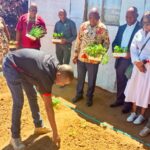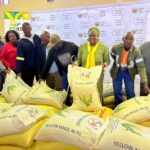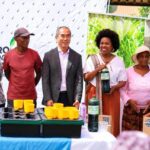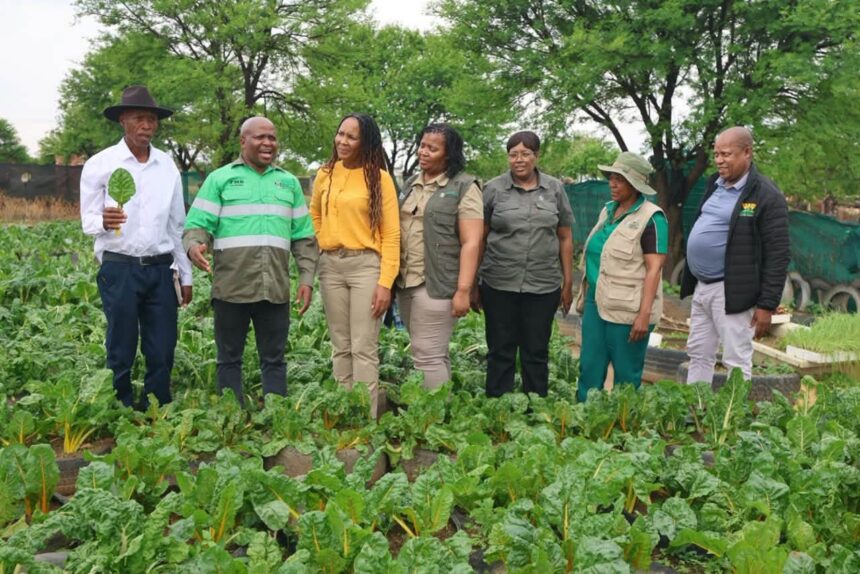
MEC Madoda Sambatha led an Indigenous Knowledge on Vegetable Planting event at Use Peu Boerdery in Matlwang Village near Potchefstroom, highlighting the important role traditional farming knowledge can play in strengthening local food production. The event brought attention to practical vegetable-growing methods that communities can use alongside modern agricultural practices. It also demonstrated how small-scale farming projects can contribute to household food security while creating opportunities for rural livelihoods. For communities with limited access to large areas of productive land, backyard and community-based vegetable production can provide a practical way to increase access to fresh food. The initiative placed indigenous knowledge at the centre of agricultural learning while reinforcing the value of combining local experience with appropriate farming resources and modern techniques.
Use Peu Boerdery was established by Paul Olehile Mothibedi and has developed into an example of how a small agricultural project can contribute to food production at community level. The project produces a range of vegetables, including spinach, okra, strawberries, mustard spinach and chomolia. This variety shows how growers can diversify production instead of depending on a single crop for household consumption or potential income. Different vegetables can also provide households with access to a broader range of nutrients while creating opportunities to supply local consumers. The experience of projects such as Use Peu Boerdery can therefore provide useful lessons for other rural households interested in developing productive gardens using the resources available to them.
The focus on indigenous knowledge is particularly relevant because many farming communities have developed practical methods for working with local soils, weather conditions, available water and seasonal planting patterns over generations. Bringing this knowledge into agricultural training can help ensure that traditional practices remain useful while farmers also gain access to modern production techniques. The combination can support more informed decisions around planting, soil preparation, crop care, water use and harvesting. It can also give farmers an opportunity to share knowledge that may not always be captured through conventional agricultural training. By creating space for both traditional knowledge and modern approaches, initiatives like this can make agricultural education more relevant to the realities faced by rural producers.
Government support has also played a role in the development of Use Peu Boerdery. The project previously received departmental assistance in 2019, including a 2 400-litre JoJo tank, knapsack sprayer, garden tools, vegetable seed packs, a composting kit and fertiliser. These inputs address several practical requirements that small-scale vegetable producers face when establishing and maintaining productive gardens. Reliable water storage can help growers manage irrigation more effectively, while tools and spraying equipment can assist with routine crop management. Seeds, composting resources and fertiliser can also help producers establish crops and improve soil management when used appropriately. Such support demonstrates that agricultural development involves more than providing inputs, as farmers also need knowledge and practical skills to use those resources effectively.
The event also highlighted the potential of backyard gardening as a tool for improving household food production. A productive garden does not necessarily require a large commercial farming operation, particularly when growers select suitable crops and manage available resources carefully. Vegetables such as spinach, okra, mustard spinach and chomolia can provide regular harvests when planted and managed according to appropriate growing conditions. Crops can serve household needs first, with surplus production potentially providing an additional source of income through local sales. For rural households, this approach can link food security with small-scale entrepreneurship while making better use of available land.
The practical value of initiatives such as the Indigenous Knowledge on Vegetable Planting event extends beyond the individual project. Farmers and households can benefit when agricultural knowledge is shared within communities because successful practices can be adapted to local conditions and passed between growers. This can strengthen community-level food production and encourage more people to consider vegetable farming as a viable agricultural activity. Continued access to extension support, suitable inputs and practical training can further help producers turn small gardens into more consistent sources of food and income. The approach also supports the broader need to develop agricultural skills within rural communities rather than relying only on large commercial farming operations to drive food production.
The Use Peu Boerdery event reflects a broader approach to agricultural development in which community knowledge, practical training and government support can work together. MEC Madoda Sambatha’s involvement placed attention on the importance of indigenous knowledge while the experience of Paul Olehile Mothibedi’s project showed how a supported small-scale farm can produce a diverse range of vegetables. The previous provision of water storage, equipment, seeds, composting resources and fertiliser also shows how targeted support can address some of the practical barriers faced by community growers. For North West households, strengthening backyard and small-scale vegetable production can contribute to improved food availability, skills development and rural livelihoods. By continuing to connect farmers with knowledge, resources and appropriate agricultural support, initiatives of this kind can help communities build more productive and sustainable food systems.
Join 'Farmers Mag' WhatsApp Channel
Get the latest Farming news and tips delivered straight to your WhatsApp
CLICK HERE TO JOIN