

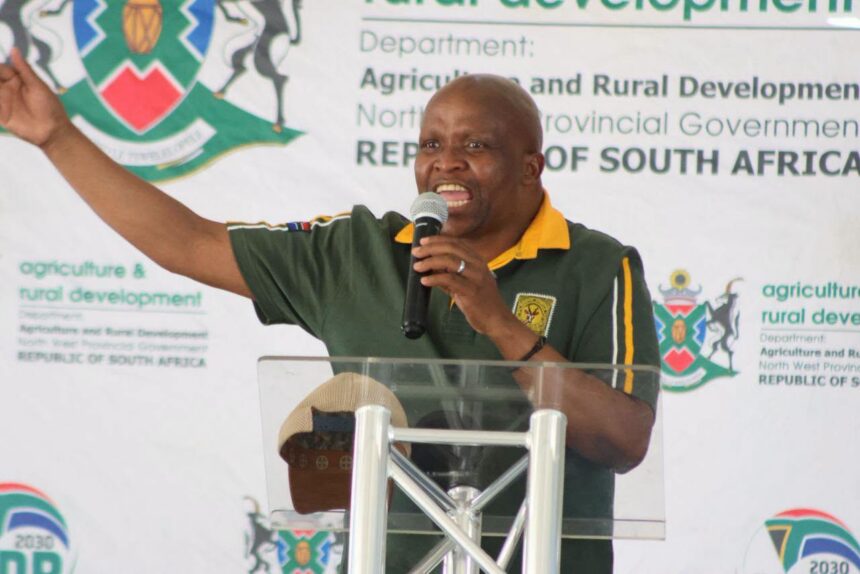
The future of agriculture depends on creating opportunities for farmers to participate fully in the sector, and women continue to play an important role in strengthening food production and rural economies. On 31 August 2026, MEC for the North West Department of Agriculture and Rural Development, Madoda Sambatha, led the Provincial Women Farmers Dialogue in Klerksdorp. The engagement brought together women farmers and key stakeholders to discuss the challenges that continue to affect the growth, development and advancement of women in agriculture. The dialogue created an opportunity for farmers to raise concerns directly and contribute to discussions about practical solutions. It also highlighted the importance of ensuring that women have the resources, support and opportunities needed to build sustainable agricultural enterprises.
Access to land was among the important issues placed on the agenda during the dialogue, reflecting the central role that land plays in agricultural development. Women who want to establish or expand farming businesses need secure and productive land on which they can invest and plan for the future. However, access to land alone does not guarantee success, as farmers also require financial resources, infrastructure, equipment, skills and reliable markets. Barriers to land access can prevent women from moving beyond small-scale production and developing commercially sustainable enterprises. Addressing these challenges requires coordinated interventions that consider the different stages of agricultural development and the specific circumstances faced by women farmers.
Finance remains another critical factor in determining whether agricultural enterprises can grow and become sustainable. Farmers require funding for seeds, livestock, machinery, irrigation systems, fencing, storage facilities, transport and other operational needs. Limited access to affordable finance can make it difficult for women farmers to invest in productivity or respond to changing market conditions. Financial institutions, government programmes and other stakeholders therefore have an important role to play in developing funding mechanisms that are accessible to women in agriculture. The discussions in Klerksdorp provided an opportunity to consider how financial barriers can be reduced so that more women can move from subsistence and emerging farming activities into stronger and commercially viable businesses.
The availability of farming inputs and infrastructure also has a direct impact on agricultural productivity. Farmers need timely access to quality inputs such as seed, fertiliser, animal health products and appropriate equipment to maintain production. Infrastructure such as roads, irrigation systems, electricity, storage facilities and water supply can determine how efficiently agricultural products move from farms to markets. Where these resources are inadequate, farmers can face higher production costs, post-harvest losses and difficulties meeting the requirements of buyers. Strengthening agricultural infrastructure and improving access to essential inputs can therefore help women farmers increase production while creating better conditions for long-term business growth.
Technology and innovation were also relevant to the broader discussion about advancing women in agriculture. Modern farming technologies can help producers improve productivity, manage resources more efficiently and respond to environmental and market pressures. Digital tools can also provide farmers with access to information about weather conditions, prices, farming techniques and potential markets. However, technology only delivers meaningful benefits when farmers have the skills, connectivity, equipment and training required to use it effectively. Supporting women farmers with practical technology training can help close skills gaps while enabling them to adopt more efficient and commercially focused approaches to agricultural production.
Market access is another challenge that can determine whether a farming enterprise remains small or develops into a sustainable business. Producing quality agricultural products is only part of the process, as farmers also need reliable buyers and fair opportunities to sell their produce. Women farmers can face difficulties entering established value chains, securing contracts and meeting the volume, quality and logistical requirements of larger markets. Improving market linkages can help farmers increase their income while encouraging greater investment in production. Stronger connections between women farmers, retailers, processors, government programmes and other buyers can therefore contribute to the development of more resilient agricultural enterprises in the North West.
Skills development also remains essential for women seeking to build successful businesses in agriculture. Farming requires knowledge that extends beyond planting crops or raising livestock, particularly for producers who want to operate commercially. Business planning, financial management, marketing, record keeping, technology adoption and understanding market requirements can all influence the performance of an agricultural enterprise. Training programmes that combine technical farming knowledge with business and entrepreneurship skills can give women farmers greater confidence and improve their ability to make informed decisions. Continued investment in skills development can also help younger women and emerging farmers see agriculture as a viable business opportunity rather than only a means of household food production.
The Provincial Women Farmers Dialogue also demonstrated the value of bringing farmers and stakeholders together in the same space. Direct engagement gives farmers an opportunity to explain the obstacles they experience in their day-to-day operations and to identify areas where government support could become more effective. Stakeholders can use these discussions to better understand gaps in existing programmes and explore ways to coordinate resources. Such dialogue can also help ensure that agricultural policies and initiatives respond to the practical realities faced by women on farms. Continued engagement is important because the challenges facing farmers can change as economic conditions, climate patterns, technology and market requirements evolve.
The commitment from the North West Department of Agriculture and Rural Development to work with women farmers and stakeholders reflects the need for sustained action beyond a single dialogue. Removing barriers to agricultural participation requires practical programmes, effective implementation and regular engagement with the people who depend on those programmes. Women farmers need access to opportunities that allow them to increase production, create jobs and build enterprises that can survive over the long term. Strong partnerships between government, financial institutions, agricultural organisations, private businesses and farming communities can help turn identified challenges into workable solutions. Supporting women in agriculture can also contribute to broader rural development by strengthening household incomes, local economies and food production.
The 31 August 2026 dialogue in Klerksdorp placed the experiences and priorities of women farmers at the centre of discussions about agricultural development in the North West. Access to land, finance, inputs, infrastructure, technology, markets and skills remain interconnected challenges that require coordinated attention. Addressing these barriers can create opportunities for women to expand their farming activities and develop sustainable agricultural enterprises. The continued involvement of MEC Madoda Sambatha and the North West Department of Agriculture and Rural Development signals the importance of maintaining an open channel between government and women farmers. By listening to farmers, building stronger partnerships and focusing on practical support, the province can create better conditions for women to participate, grow and succeed in agriculture.
Join 'Farmers Mag' WhatsApp Channel
Get the latest Farming news and tips delivered straight to your WhatsApp
CLICK HERE TO JOIN




