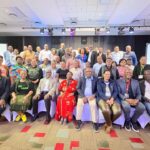
The livestock industry is entering a new phase in its response to Foot-and-Mouth Disease (FMD), with producers and industry stakeholders recognising that the disease must now be managed as an ongoing challenge rather than treated as a temporary crisis. This was a key message from a thought-provoking panel discussion held yesterday at NAMPO Cape. RMIS CEO Dewald Olivier joined Niel Venter of Sparta Beef, Johann Kotze of AgriSA and Hendri Truter of Deli Co Meat Wholesalers for a discussion facilitated by Annie Hattingh. The panel examined how the livestock sector is adapting to changing disease management realities while working to protect production, trade and market access. The discussion highlighted the need for the industry to build long-term systems that allow farmers and businesses to remain productive even when disease risks continue to affect livestock production.
The panellists reflected on the lessons learned through the industry’s experience with FMD and the challenges that have emerged during efforts to manage its impact. The disease has affected livestock movement, trade and market confidence, creating pressure across different parts of the value chain. Farmers, processors, traders and other businesses have had to adapt to changing conditions while continuing to protect animal health and maintain commercial operations. The experience has also demonstrated the importance of communication between producers, government agencies and private sector organisations. These lessons can help shape more effective approaches to disease management as the industry prepares for a future where FMD remains a risk that requires consistent attention.
A major theme of the discussion was the importance of moving away from short-term responses and developing systems that support long-term resilience. Treating every outbreak as an isolated emergency can make it difficult for businesses to plan and for producers to build consistent strategies around animal health. The panel instead highlighted the need for practical systems that allow farmers and other industry participants to manage disease risks as part of normal livestock operations. This includes stronger planning, better information, effective partnerships and continued investment in disease management capabilities. A proactive approach can help the industry respond more effectively while reducing the disruption that disease risks can cause to production and trade.
The panel also reflected on the partnerships that have developed across the livestock industry as stakeholders have worked to respond to FMD. Collaboration has become increasingly important because no single organisation can address all the challenges associated with animal disease, livestock movement and market access. Producers need reliable information and practical support, while processors, traders and other businesses need systems that provide greater certainty around livestock supply and movement. Industry organisations can also play an important role in representing producers and coordinating efforts around common challenges. Stronger partnerships can therefore help build a more connected livestock sector that is better equipped to respond to future disease pressures.
For producers, resilience starts with effective management at farm level. Farmers need to remain alert to animal health risks, follow appropriate biosecurity measures and maintain accurate records that support livestock traceability. Good farm-level practices can help reduce the risk of disease spreading between herds and can also support faster responses when health concerns arise. Producers also need to understand how disease control measures can affect livestock movement and access to markets. By incorporating disease preparedness into everyday farm management, farmers can strengthen their businesses and reduce their exposure to unexpected disruptions.
The discussion also placed market access at the centre of the industry’s future. Disease control is closely linked to the ability of producers and businesses to trade livestock and livestock products. Restrictions introduced during disease outbreaks can have consequences throughout the value chain, affecting farmers, feed suppliers, transporters, abattoirs, wholesalers and retailers. Expanding and protecting market opportunities therefore requires stakeholders to demonstrate that effective animal health systems are in place. A stronger approach to disease management can help create greater confidence among domestic and international trading partners while supporting the long-term growth of the livestock sector.
Another important consideration is the need for industry-driven solutions that reflect the realities faced by farmers and businesses. Producers operate under different conditions and face varying levels of disease risk, infrastructure constraints and market pressure. Solutions need to be practical enough to work at farm level while supporting broader national animal health objectives. Industry stakeholders can contribute by sharing knowledge, identifying gaps and developing systems that address challenges before they become major disruptions. This approach can help create stronger links between policy, veterinary services and the daily realities of livestock production.
The panel’s discussion also demonstrated the importance of leadership in navigating the changing livestock environment. Proactive leadership can help the industry anticipate risks rather than waiting for problems to become crises. It can also encourage stakeholders to invest in systems that may not produce immediate results but provide greater protection over time. Strong leadership requires farmers, industry organisations, government and businesses to communicate openly about challenges and work towards practical solutions. The experience of FMD has shown that coordinated action is essential when disease risks affect an entire value chain.
Technology and innovation are also expected to play an increasingly important role in livestock disease management. Better information systems can improve traceability and provide stakeholders with clearer information about animal movements and disease risks. Improved data can support more informed decision-making by farmers, veterinary authorities and industry organisations. Innovation can also help businesses identify new market opportunities and adapt their operations as trading conditions change. The livestock sector’s ability to combine practical farming knowledge with improved systems and technology will be important in building a more resilient industry.
The discussion at NAMPO Cape also reinforced the idea that responsibility for livestock health extends across the entire value chain. Farmers have an important responsibility to manage their animals and follow appropriate disease control measures. Industry organisations and businesses have a role in supporting producers, maintaining market relationships and developing practical solutions. Government and veterinary authorities remain central to national disease control, surveillance and regulatory systems. When these responsibilities are coordinated effectively, the sector can respond to disease risks while continuing to pursue opportunities for growth and trade.
The message emerging from the panel was clear. Foot-and-Mouth Disease cannot simply be treated as a temporary disruption that will disappear once an immediate crisis has passed. The livestock industry needs to develop systems, partnerships and practices that allow it to operate responsibly while managing the continuing risk posed by the disease. This requires proactive leadership, collaboration, innovation and shared responsibility across the entire livestock value chain. The experience gained through recent challenges provides an important foundation for strengthening the sector’s future response. By working together and investing in practical long-term solutions, South Africa’s livestock industry can improve resilience, protect market access and create better conditions for producers to continue growing their businesses.
Join 'Farmers Mag' WhatsApp Channel
Get the latest Farming news and tips delivered straight to your WhatsApp
CLICK HERE TO JOIN