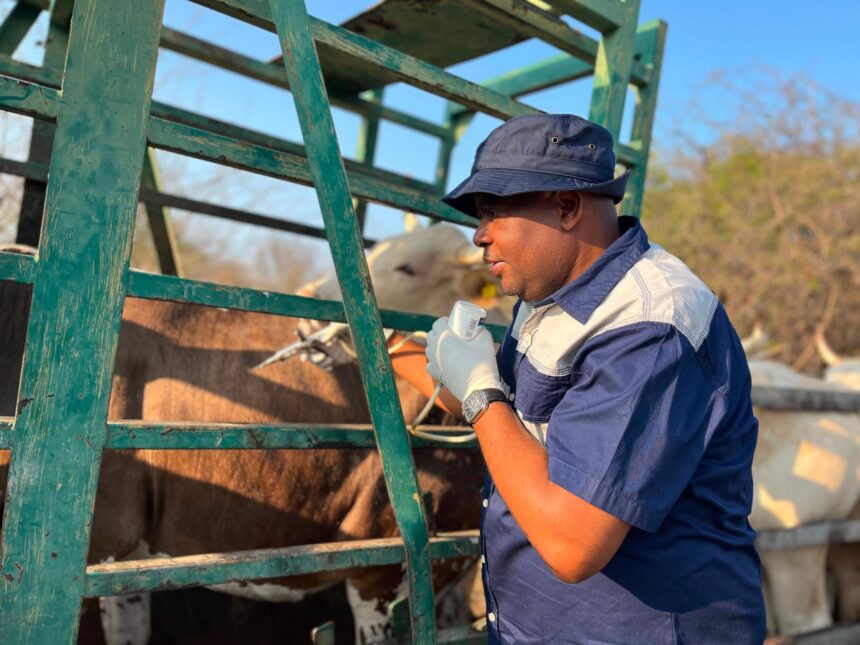
Limpopo is stepping up efforts to contain Foot and Mouth Disease (FMD) as government works with farmers and local agricultural stakeholders to protect livestock and strengthen rural economic activity. Limpopo MEC for Agriculture and Rural Development Basikopo Makamu visited Zebediela Citrus to join the vaccination and dipping of 700 cattle belonging to members of the Bjatladi CPA. The campaign comes as the province continues to respond to the threat posed by FMD and its potential impact on livestock farmers, agricultural production and rural livelihoods. The intervention also forms part of broader efforts to support the revitalisation of the historic Zebediela Citrus Estate. By combining animal health measures with agricultural development initiatives, the provincial government is seeking to protect livestock while creating conditions for sustainable economic growth.
MEC Makamu used the visit to reaffirm the provincial government’s commitment to working directly with farmers and investors. Addressing those involved in the campaign, he said, “I am here to come and work with you,” signalling the importance of cooperation in tackling the challenges facing the agricultural sector. FMD control requires coordinated action because livestock movements, farming practices and disease prevention measures can affect entire communities and production areas. Vaccinating and dipping cattle can form part of broader disease management efforts aimed at reducing the risks associated with livestock health threats. Government involvement also gives farmers an opportunity to work alongside agricultural authorities as they implement measures intended to protect their herds and livelihoods.
The vaccination of 700 cattle belonging to Bjatladi CPA members is particularly important for livestock owners who depend on their animals for income and agricultural production. Cattle represent a valuable asset for rural households and farming organisations, making animal health a key consideration in protecting their economic wellbeing. FMD can disrupt livestock movements and trade, creating challenges for farmers who need to sell animals or move them between production areas. Disease outbreaks can also create additional costs as producers implement stronger biosecurity measures and comply with veterinary requirements. By supporting vaccination and dipping activities, the authorities are helping farmers take practical steps as part of the wider response to FMD.
The campaign is taking place within the wider revitalisation programme at Zebediela Citrus, one of Limpopo’s historically important agricultural estates. The estate is being revitalised through a partnership between government and WhipHold Group Investors, with new agricultural production already taking place on the property. Current developments include 26 hectares of tomatoes under production, demonstrating that agricultural activity is returning to the estate. A further 6.8 hectares of naartjies have been planted and are currently flowering, creating another area of developing production. These developments indicate that the revitalisation programme is moving beyond planning and beginning to restore productive agricultural activity at the estate.
The work to restore the citrus orchards is another important component of the development programme. Efforts are underway to revitalise citrus blocks that include lemon, orange and naartjie orchards. Citrus production requires long-term investment because establishing and maintaining productive orchards involves careful planning, water management, pest control and ongoing farm management. The progress at Zebediela therefore has the potential to support agricultural activity well beyond a single production season. If the revitalisation continues successfully, the estate could contribute to increased production, employment and economic opportunities in the surrounding rural communities.
The connection between livestock health and agricultural development is important in understanding the significance of the FMD campaign at Zebediela. Agricultural estates and surrounding farming communities depend on healthy production systems to generate sustainable economic activity. A serious livestock disease can affect farmers directly while also disrupting businesses involved in transport, livestock trading, processing and other agricultural services. Preventing and managing disease therefore supports more than animal welfare because it also helps protect economic activity throughout the agricultural value chain. The vaccination and dipping campaign forms part of this broader effort to maintain productive farming communities while the Zebediela estate undergoes revitalisation.
The involvement of Bjatladi CPA members also highlights the role of communal and organised farmers in Limpopo’s agricultural economy. Communal Property Associations can provide a structure through which communities participate in agricultural development and manage shared land and productive assets. Supporting these farmers with animal health interventions can help protect the agricultural resources that contribute to rural livelihoods. Strong cooperation between government and farming organisations can also improve communication around disease control requirements and encourage greater participation in prevention programmes. The Zebediela campaign demonstrates how government programmes can connect animal health interventions with broader rural development objectives.
For farmers, FMD prevention requires continued attention beyond a single vaccination campaign. Producers need to remain alert to signs of disease and follow veterinary guidance regarding livestock movements, biosecurity and other control measures. Limiting unnecessary livestock movements can reduce opportunities for disease transmission, while maintaining good farm hygiene can support wider biosecurity efforts. Farmers also need reliable information so that they can respond quickly when authorities introduce new control measures or identify disease risks in their areas. Continued collaboration between farmers, veterinary authorities and government will remain important as Limpopo works to manage FMD over the longer term.
The revitalisation of Zebediela Citrus could also create opportunities for local economic development if agricultural production continues to expand. Increased crop production can generate demand for farm workers, agricultural inputs, transport services, maintenance and other support activities. Citrus orchards can provide longer-term production potential, while crops such as tomatoes can contribute to agricultural output over shorter production cycles. The combination of different agricultural activities can help create a more diverse production base at the estate. However, sustained investment, effective management and continued attention to infrastructure and agricultural health will be necessary to ensure that the progress achieved at Zebediela continues.
Government’s partnership with WhipHold Group Investors provides another important element in the estate’s recovery. Agricultural revitalisation often requires investment in infrastructure, production systems, equipment and operational capacity. Partnerships between government and private investors can help combine public-sector development objectives with private-sector resources and expertise. At Zebediela, the partnership is already associated with new crop production and work to restore citrus blocks. Continued cooperation between the provincial government, investors and local farmers could help ensure that the benefits of the revitalisation programme extend beyond the estate itself and reach surrounding communities.
The FMD vaccination campaign at Zebediela therefore represents more than a livestock health intervention. It is part of a wider effort to protect agricultural assets while creating a stable environment for the revival of productive farming. The vaccination and dipping of 700 cattle provides direct support to Bjatladi CPA members, while the revitalisation of tomato and citrus production points to broader economic opportunities. MEC Basikopo Makamu’s emphasis on working alongside farmers also highlights the importance of cooperation in achieving sustainable agricultural development. As Limpopo continues its fight against FMD, protecting livestock and rebuilding productive agricultural infrastructure will remain closely connected to the province’s efforts to strengthen rural livelihoods and economic growth.
The developments at Zebediela Citrus provide a clear example of how animal health and agricultural development can work together. Protecting cattle from disease helps safeguard farmers’ assets, while restoring orchards and expanding crop production can strengthen the wider agricultural economy. The 700 cattle vaccination and dipping campaign is an important intervention for Bjatladi CPA members, but continued disease management will be needed to maintain progress. At the same time, the 26 hectares of tomatoes, 6.8 hectares of flowering naartjies and ongoing citrus revitalisation offer tangible signs of renewed agricultural activity at the estate. With continued cooperation between government, farmers and investors, Zebediela Citrus can play an important role in supporting Limpopo’s agricultural ambitions and creating sustainable opportunities for rural communities.
Join 'Farmers Mag' WhatsApp Channel
Get the latest Farming news and tips delivered straight to your WhatsApp
CLICK HERE TO JOIN