

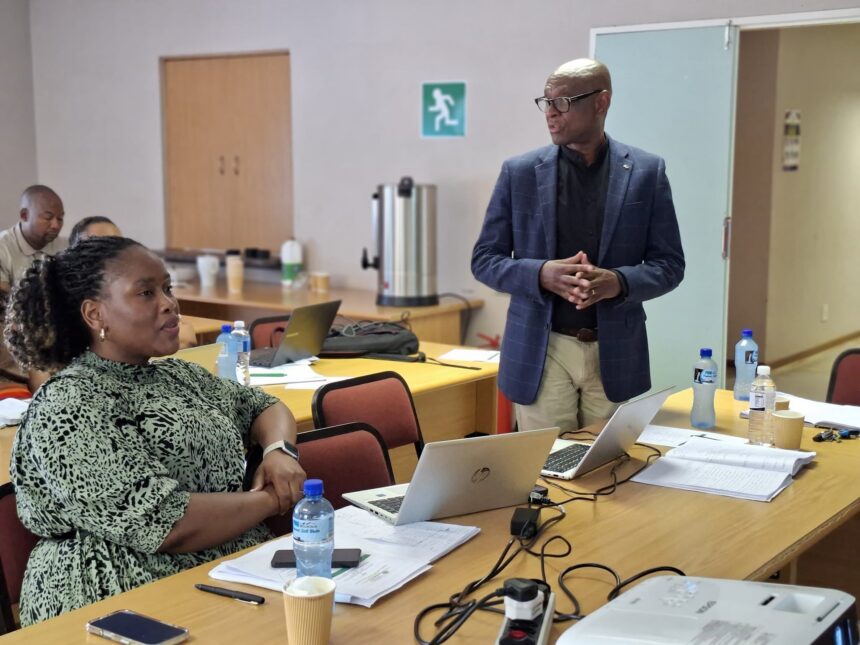
The Limpopo Provincial Extension Coordinating Forum (PECF) brought agricultural stakeholders together at the Mokopane State Veterinary Office in the Waterberg District to strengthen collaboration, innovation and farmer-centred support across the province. The forum provided an important platform for stakeholders to examine how Extension and Advisory Services can become more effective, coordinated and responsive to the needs of farmers. Its discussions focused on improving cooperation between agricultural programmes while encouraging the sharing of knowledge, practical experience and innovative approaches. The gathering also highlighted the importance of ensuring that farmers receive support that addresses both production challenges and the wider business realities of modern agriculture. By bringing different stakeholders together, the forum reinforced the need for a coordinated agricultural support system that can contribute to sustainable farming and rural development in Limpopo.
A key focus of the PECF was identifying innovative and effective ways to improve Extension and Advisory Services throughout Limpopo. Extension officers play an important role in connecting farmers with technical knowledge, government programmes, agricultural technologies and practical solutions to challenges encountered on farms. Effective advisory services can help farmers improve production methods, manage risks and make better decisions about markets and business development. However, these services become more valuable when different programmes and stakeholders work together rather than operating in isolation. The forum therefore created an opportunity to examine how existing resources and expertise can be combined to provide more consistent and meaningful support to farmers.
The Waterberg District’s agricultural services were among the issues presented during the forum, with District Director Mr. Levi Mashiane providing an overview of services in the area. Understanding the conditions and services available at district level is important because farmers operate under different environmental, economic and production circumstances. Waterberg includes a diverse agricultural landscape, creating demand for extension services that can respond to different farming activities and local challenges. District-level information can also help stakeholders identify gaps in support and determine where greater collaboration is required. Sharing this information at a provincial forum allows participants to build a broader understanding of agricultural needs and consider solutions that can be adapted across different areas.
The mandate of the South African Forum for Agriculture Extension and Advisory Services (SAFAEAS) was also presented by Dr Ndou, adding an important perspective on the role of coordinated extension and advisory support. Agricultural extension is not limited to providing farmers with technical instructions, as it can also facilitate learning, innovation, problem-solving and connections between farmers and other agricultural stakeholders. Strong advisory systems can help farmers access knowledge that improves productivity while supporting their ability to respond to changing market and production conditions. Platforms that promote cooperation among extension professionals can also encourage the exchange of successful approaches and lessons learned from different farming communities. The discussion around SAFAEAS therefore contributed to the broader objective of strengthening agricultural advisory services and improving their impact on farmers.
Another important part of the forum focused on the Smallholder Horticulture Empowerment and Promotion (SHEP) approach, which seeks to strengthen the connection between agricultural production and markets. Mr. Lesetja Nkuna provided updates on the implementation of SHEP as well as plans for Farmer Field Schools. The approach places emphasis on helping farmers understand market opportunities and make production decisions that are informed by what consumers and buyers require. This type of market-oriented thinking can help smallholder farmers move beyond simply producing crops and instead consider issues such as demand, quality, timing and profitability. Farmer Field Schools can complement this process by creating practical learning environments where farmers can share knowledge, test ideas and develop solutions based on real farming conditions.
Acting Chief Director for Extension and Advisory Services, Mr. Masaka Mabilo, stressed the importance of departmental programmes working in synergy to maximise the benefits available to farmers. His message highlighted the limitations that can arise when agricultural initiatives operate separately despite serving similar communities and pursuing related objectives. Greater coordination can help reduce duplication, improve the use of resources and ensure that farmers receive more comprehensive support. Mabilo also encouraged colleagues to “think SHEP out of the box”, emphasising that the principles behind the approach should not be restricted to crop production. Applying market-focused thinking across different farming disciplines could encourage producers in livestock and other agricultural activities to consider market demand, profitability and business sustainability more closely.
The call to apply SHEP principles beyond horticulture reflects the broader need for agricultural programmes to remain flexible and relevant to different types of farmers. Farmers do not all face the same challenges, and a support model that works for one agricultural discipline may need to be adapted for another. Market participation remains important across farming sectors because producers need viable routes to sell their products and generate sustainable income. Encouraging farmers to understand their markets before making production decisions can support better planning and reduce the risks associated with producing without a clear buyer or demand. Extending these principles across farming disciplines could therefore help strengthen the commercial outlook of a wider range of agricultural enterprises in Limpopo.
The planned Farmer Field Schools also represent an opportunity to strengthen practical and participatory learning among farmers. Traditional agricultural training can provide valuable technical information, but farmers often benefit from learning approaches that allow them to observe, test and discuss practices in real production environments. Farmer Field Schools can encourage farmers to learn from one another while working with extension professionals and other technical experts. This approach can also promote local problem-solving because farmers can discuss challenges that are specific to their production conditions and develop responses based on shared experience. When supported effectively, these learning platforms can contribute to greater farmer confidence, improved knowledge and stronger adoption of useful agricultural practices.
The discussions at the PECF pointed to the importance of moving away from fragmented efforts towards coordinated action across Limpopo’s agricultural support system. Fragmentation can make it difficult for farmers to understand which services are available, where to access them and how different programmes can support their businesses. Better coordination allows stakeholders to share information and expertise while creating clearer pathways for farmers seeking assistance. Partnerships can also help identify emerging agricultural challenges more quickly and enable stakeholders to develop responses that draw on multiple areas of expertise. A coordinated extension system can therefore provide farmers with support that is more connected to their actual needs and long-term development goals.
The Limpopo Provincial Extension Coordinating Forum demonstrates why collaboration remains essential to the future of agricultural development in the province. Initiatives such as SHEP and Farmer Field Schools can strengthen learning, innovation, market participation and sustainable agricultural practices when they operate as part of a coordinated support system. The involvement of district officials, extension professionals and agricultural stakeholders creates opportunities to share knowledge and improve the way services reach farmers. Keeping farmers at the centre of these efforts is critical because agricultural programmes ultimately need to produce practical benefits for the people working on the land. Through stronger partnerships, innovative thinking and better coordination, Limpopo can continue developing an extension and advisory system that helps farmers build productive, resilient and sustainable agricultural enterprises.
Join 'Farmers Mag' WhatsApp Channel
Get the latest Farming news and tips delivered straight to your WhatsApp
CLICK HERE TO JOIN




