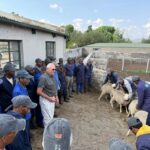
The Gauteng Department of Agriculture and Rural Development Veterinary Services has brought red meat producers, abattoir operators and industry leaders together for an intensive session focused on protecting the province’s livestock sector. The discussions placed biosecurity, Foot and Mouth Disease control and access to domestic and international markets at the centre of attention. The session comes as livestock producers and meat businesses continue to face the need for stronger disease prevention measures and reliable supply chains. Effective disease control remains essential not only for animal health but also for protecting jobs, farm incomes and the wider agricultural economy. By bringing government officials and industry stakeholders together, GDARD created an opportunity to address operational challenges and strengthen cooperation across the red meat value chain.
A major focus of the session was the current Foot and Mouth Disease control status in Gauteng. GDARD leadership provided an update on provincial containment protocols, monitoring activities and the corridors where livestock movement requires close attention. Foot and Mouth Disease can have serious consequences for livestock producers because outbreaks can restrict animal movement, disrupt trade and affect access to important markets. Strong monitoring therefore plays an important role in identifying risks and limiting the spread of the disease between farms, facilities and regions. Maintaining supply chain continuity while applying strict disease control measures requires close coordination between government veterinary services, farmers, transport operators and meat processing businesses.
Abattoir biosecurity was another key area addressed during the information session. Dr Rachelle Lategan and Dr Alan Kalake highlighted the importance of maintaining strict sanitation standards in lairage areas, where livestock can come into close contact before slaughter. They also discussed ante-mortem screening, which allows animals to be assessed before entering the slaughter process and helps identify potential health concerns. Updated regulatory gazettes were also addressed as part of efforts to ensure that abattoir operators understand and comply with current requirements. These measures are important because weaknesses in sanitation, animal screening or movement controls can create opportunities for disease transmission within facilities and across the wider meat supply chain.
Farm-level biosecurity was also placed under the spotlight, with State Veterinarian Dr Marianne Semmelink stressing the importance of controlling access to livestock properties. Farm gates and entry points represent an important first line of defence because people, vehicles and equipment can potentially introduce or spread disease. Producers were encouraged to maintain effective access controls, apply vehicle decontamination procedures and ensure that visitors and service providers follow appropriate biosecurity protocols. Livestock identification and traceability were also highlighted under the Animal Identification Act, reinforcing the importance of knowing where animals come from and where they move. Accurate identification records can help veterinary authorities respond more quickly when disease risks emerge and can support more effective containment measures.
Traceability remains particularly important in a livestock industry where animals can move between farms, auctions, transport facilities and abattoirs. Reliable identification systems allow authorities and industry stakeholders to establish movement histories and identify potential points of exposure when disease is detected. Farmers therefore have an important responsibility to maintain accurate records and comply with identification requirements. Strong traceability also gives businesses greater confidence in the integrity of the red meat supply chain. When combined with effective biosecurity, animal identification can help reduce risks and improve the ability of authorities to respond to outbreaks.
The session also examined opportunities to expand Gauteng’s red meat exports. Dr Lulama Nsele provided updates on export frameworks, regulatory compliance and potential international market opportunities for abattoirs in the province. Export growth can create additional opportunities for producers and meat businesses, but access to international markets depends on meeting strict animal health, food safety and regulatory requirements. Abattoirs seeking to participate in export markets must therefore maintain high standards throughout their operations. Strong disease control and traceability can support these efforts by demonstrating that livestock and meat products meet the requirements of destination markets.
For Gauteng’s red meat industry, market access and disease control are closely connected. An outbreak of Foot and Mouth Disease can affect the movement and marketing of livestock while also creating challenges for export arrangements. Effective prevention measures can help protect the reputation of the province’s livestock and meat industries and reduce disruptions when disease threats emerge. Producers and abattoirs therefore have a shared interest in maintaining strong standards, even when those measures require additional time, investment and operational discipline. Protecting access to markets requires the entire value chain to take responsibility for biosecurity rather than relying solely on government veterinary services.
The stakeholder engagement also provided an opportunity for industry representatives to raise operational concerns directly with government officials. These discussions can help identify practical bottlenecks that may not always be apparent from policy or regulatory documents. Direct communication between producers, abattoir operators and veterinary authorities can make it easier to clarify requirements and address problems before they affect disease control or market access. Public-private partnerships are particularly important during periods when the livestock sector faces complex animal health risks. Cooperation allows government and industry to combine regulatory oversight with the practical experience of people working directly within farms, transport operations and abattoirs.
The focus on compliance also highlights the responsibility shared by every participant in the red meat value chain. Farmers need to maintain appropriate farm biosecurity and livestock identification practices, while transporters must follow movement and sanitation requirements. Abattoirs must maintain proper hygiene, screening and disease prevention procedures, while industry organisations can help communicate regulatory developments and support best practices among their members. Veterinary authorities, meanwhile, play a critical role in surveillance, disease control, technical guidance and enforcement. When each part of the system performs its role effectively, Gauteng is better positioned to protect its livestock population and maintain stable meat production.
Safeguarding Gauteng’s agricultural economy will require continued vigilance, strict compliance and regular communication between government and industry. Foot and Mouth Disease remains a significant concern for livestock producers because its effects can extend beyond individual farms to transport networks, abattoirs, markets and export opportunities. The GDARD Veterinary Services information session demonstrated the importance of keeping stakeholders informed while creating opportunities to address practical challenges together. Strong farm biosecurity, effective abattoir controls, reliable livestock identification and sound export compliance will remain central to protecting the red meat sector. Continued collaboration between government officials and industry stakeholders will be essential for strengthening Gauteng’s agricultural economy, protecting livelihoods and supporting a more resilient red meat industry.
Join 'Farmers Mag' WhatsApp Channel
Get the latest Farming news and tips delivered straight to your WhatsApp
CLICK HERE TO JOIN