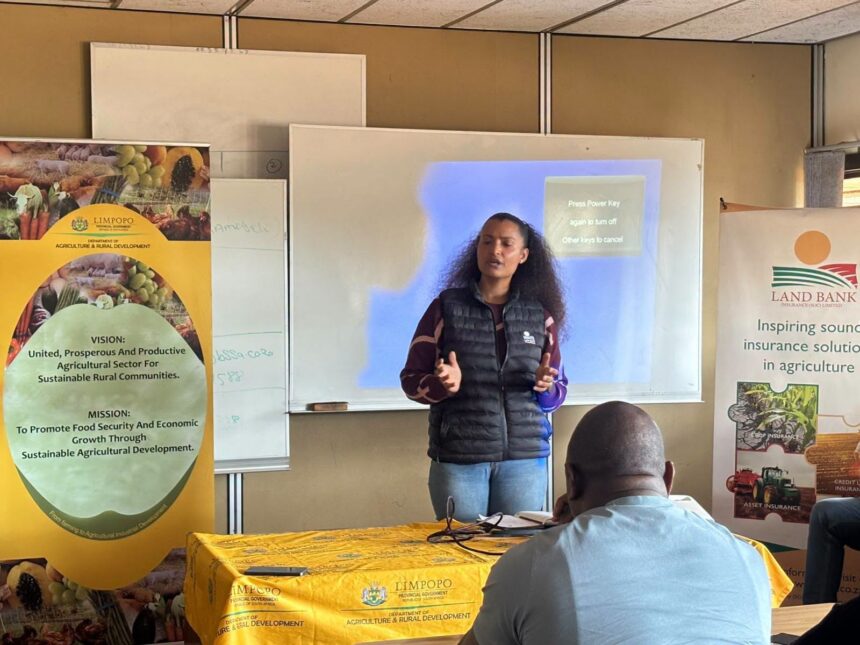
Farmers in Mopani District have been encouraged to explore available financing, market access and risk management opportunities as they work to build stronger and more sustainable agricultural businesses. The Department of Agriculture and Rural Development in Mopani District hosted a finance and market access workshop aimed at addressing some of the challenges that continue to affect farmers. The initiative brought together important stakeholders from the agricultural finance, marketing and risk management sectors. These included Land Bank, Phiphidi Market and TMT Risk Management Solutions. By bringing farmers and service providers together, the workshop created an opportunity for direct engagement around some of the practical barriers affecting agricultural growth.
The workshop focused on challenges that can prevent farmers from expanding production and turning their agricultural activities into sustainable businesses. Access to finance remains an important concern for many farmers, particularly those who need capital to purchase inputs, expand production, acquire equipment or improve their farming infrastructure. Farmers can also struggle to meet documentation requirements or identify suitable financial products for their specific business needs. At the same time, producing crops is only one part of running a successful agricultural enterprise, as farmers also need reliable markets where they can sell their products. The workshop therefore provided a platform for farmers to learn more about how finance, market access and risk management can work together to strengthen their businesses.
Acting Mopani District Director Mhani Makhanani Nkuna welcomed the information and expertise that stakeholders brought to the workshop. She highlighted the value of sharing practical information with farmers while also noting that the knowledge gained could support government’s broader efforts to assist the agricultural sector. Nkuna acknowledged that government resources are limited and that financial assistance from the public sector cannot always meet the needs of every farmer. This makes partnerships between government, financial institutions and private sector organisations increasingly important. She encouraged farmers to use the opportunities created through these partnerships rather than relying only on government assistance.
Nkuna urged farmers in Mopani District to take the information presented during the workshop seriously and apply it to their farming operations. Understanding how financing works can help farmers make better decisions when seeking capital for production and business expansion. Better knowledge of market requirements can also help farmers improve the quality, consistency and volume of their produce to meet buyer expectations. Farmers who understand their risks can take steps to protect their businesses against losses that could undermine their progress. The workshop therefore offered farmers practical information that could help them improve production, strengthen their businesses and gain better access to markets and funding.
Land Bank Partnership Development Manager Sinenhlanhla Ndhove said the bank understands the financial challenges faced by farmers and aims to help address some of these barriers. Farmers may have viable agricultural ideas but still struggle to secure funding because of insufficient documentation, limited financial knowledge or challenges in demonstrating the commercial potential of their businesses. Ndhove explained that access to funding and exposure to viable markets remain among the issues confronting farmers. She said Land Bank was committed to working with farmers to address these challenges and support them in pursuing their agricultural ambitions. This engagement is important because appropriate financing can provide farmers with the resources they need to invest in production and build commercially sustainable enterprises.
The workshop also gave farmers the opportunity to engage directly with representatives from the participating organisations. Direct interaction can help farmers understand what financial products and services are available and what requirements they need to meet when applying for assistance. It can also help farmers identify gaps in their business documentation and financial planning before they approach potential funders. For emerging farmers in particular, understanding the commercial side of agriculture can be as important as technical knowledge about production. The discussions therefore encouraged farmers to view their farming activities as businesses that require planning, financial management, reliable markets and appropriate risk protection.
Market access formed another important part of the workshop, with Phiphidi Market providing farmers with information about opportunities to participate in agricultural markets. Director of Phiphidi Market Herman Netshisumbewa, who has more than a decade of experience working closely with farmers, encouraged farmers to make use of opportunities available through Phiphidi Market Company. He stressed that farmers have a role to play in accessing available markets and making use of the opportunities created for agricultural producers. His message placed responsibility on farmers to understand market requirements and position their businesses to supply buyers effectively. Improved market participation can give farmers greater opportunities to generate income and reinvest in their agricultural operations.
For farmers, market access involves more than simply finding somewhere to sell produce. Buyers often require consistent supply, acceptable quality, proper packaging, reliable delivery and the ability to meet agreed quantities. Farmers who understand these expectations can make better production and business decisions throughout the farming cycle. Phiphidi Market Company’s engagement with farmers therefore provides an opportunity for emerging commercial farmers to learn more about participating in formal agricultural markets. The workshop served as another platform for farmers in Mopani District to explore ways of strengthening their businesses and improving their ability to compete in the agricultural sector.
The importance of risk management was highlighted by Itumeleng Mabote of TMT Risk and Management Solutions, who provided farmers with an overview of agricultural insurance. Farming involves numerous risks that can affect income, production and valuable business assets. Mabote discussed different forms of insurance, including crop insurance, asset insurance and credit life insurance. He explained that appropriate insurance cover can help farmers manage financial losses arising from unexpected events. This type of protection can be particularly important for farmers who have invested significant amounts of money into crops, equipment, vehicles and other productive assets.
Mabote also highlighted risks that farmers can face while transporting their crops to market. Agricultural products can be exposed to various risks after leaving the farm, making appropriate protection an important consideration for producers who depend on transporting their produce to buyers. Farm assets such as tractors and bakkies can also represent significant investments, meaning damage or loss can have serious financial consequences for a farming business. Insurance can help farmers manage some of these risks and reduce the financial impact of unexpected incidents. Understanding the available forms of cover can therefore help farmers make more informed decisions about protecting their agricultural investments.
Liability risks were another issue discussed during the workshop. Farm businesses have responsibilities towards workers and other people who may be affected by their operations. Mabote explained that injuries sustained by farm workers while performing their duties can create significant financial and legal challenges for farmers. Appropriate insurance can provide financial protection against certain liabilities and help farmers manage the costs associated with unexpected incidents. This reinforces the need for farmers to consider risk management as part of their broader business planning rather than treating insurance as an optional expense.
Mabote also warned farmers about the potential impact of drought associated with expected El Niño conditions in South Africa in the coming months. Weather conditions can have a direct effect on crop production, livestock operations, water availability and farm income. Drought can increase production costs while reducing yields and placing additional pressure on already limited resources. Farmers therefore need to assess the risks that weather conditions could pose to their particular operations and consider suitable measures to protect their businesses. Insurance can form part of that strategy, alongside responsible water management, production planning and other measures suited to local farming conditions.
The finance and market access workshop demonstrated the value of bringing different agricultural stakeholders together to address challenges faced by farmers. Access to finance, reliable markets and effective risk management are closely connected to the long-term sustainability of agricultural businesses. A farmer may have strong production capacity but still struggle to grow without sufficient capital or access to buyers. Similarly, a business can face serious setbacks if a drought, accident, damaged equipment or other unexpected event causes major financial losses. Providing farmers with information and direct access to organisations that can assist with these areas can help them make better-informed business decisions.
For farmers in Mopani District, the workshop also highlighted the importance of taking an active role in building commercially viable agricultural enterprises. Government support remains important, but limited public resources mean farmers also need to explore opportunities available through financial institutions, markets and private sector partnerships. Farmers who understand funding requirements, develop proper business documentation, build relationships with buyers and assess their risks are better positioned to pursue sustainable growth. The information shared by Land Bank, Phiphidi Market and TMT Risk Management Solutions gives farmers practical areas to consider as they develop their enterprises. Continued collaboration between government and private sector stakeholders can further expand the opportunities available to farmers across the district.
The workshop provided more than information about funding and markets. It gave farmers an opportunity to engage with organisations that can play a role in helping them overcome some of the barriers to agricultural growth. By improving their financial knowledge, strengthening their market readiness and taking steps to manage production and business risks, farmers can create stronger foundations for their enterprises. The involvement of organisations such as Land Bank, Phiphidi Market and TMT Risk Management Solutions also shows the importance of coordinated support across different areas of agriculture. For Mopani farmers, making use of these opportunities could help improve production, protect investments, expand market participation and build more sustainable agricultural businesses over time.
Join 'Farmers Mag' WhatsApp Channel
Get the latest Farming news and tips delivered straight to your WhatsApp
CLICK HERE TO JOIN