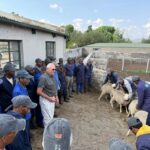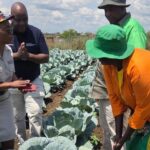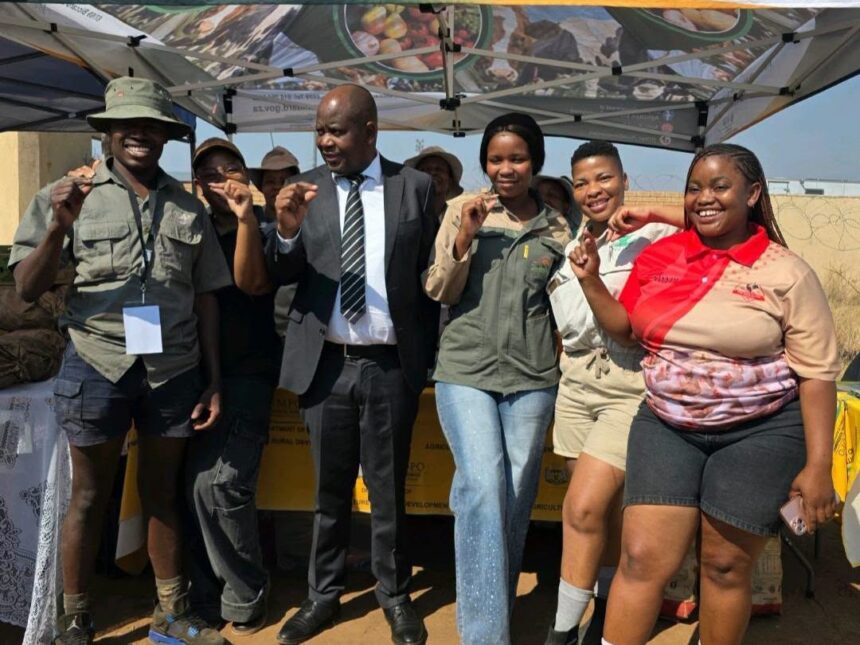
Acting Premier and MEC for Agriculture and Rural Development, Mr Basikopo Makamu, has reaffirmed the Limpopo Department of Agriculture and Rural Development’s commitment to placing farmers at the centre of agricultural development in the province. Following his keynote address at the Taking Legislature to the People programme in Blouberg, Makamu visited the LDARD exhibition stall to engage with farmers and departmental officials. The visit provided an opportunity for the Acting Premier and MEC to see first-hand the agricultural products being produced in the Senwabarwana area. Fresh commodities displayed at the exhibition offered a practical demonstration of the work being carried out by farmers across Capricorn District. The engagement also placed a spotlight on young farmers who are building agricultural enterprises despite the many challenges facing the sector.
The LDARD exhibition stall brought together farmers from across the Senwabarwana area, giving them a platform to showcase their produce and share their experiences. The variety of fresh agricultural commodities on display reflected the productivity and potential of rural farming communities in Capricorn District. For many farmers, such platforms provide an important opportunity to demonstrate that rural agriculture can support livelihoods, create employment and contribute to local economic development. The exhibition also allowed government representatives to gain a better understanding of the activities taking place at farm level. By interacting directly with producers, agricultural leaders can identify both the progress being made and the practical challenges that require continued attention.
During his visit, Makamu engaged directly with LDARD officials and farmers who had brought their products to the exhibition. He listened to their stories and gained insight into the resilience required to establish and maintain agricultural enterprises in rural communities. Farmers shared experiences that highlighted their determination to grow their businesses while working within the realities of their respective farming environments. The discussions also demonstrated the importance of ongoing engagement between government departments and agricultural producers. Direct interaction gives policymakers an opportunity to understand farmers’ needs beyond statistics and reports, particularly when it comes to the practical realities of production, markets, infrastructure and business growth.
Young farmers were among those who attracted particular attention during the visit. Their participation demonstrated the important role that younger generations can play in strengthening the future of agriculture and rural economies. Makamu met Mashoto Ramafalo of Shadtonez Farming, Sannah Kwakwa of New Dawn Poultry Farm, Matome Mokgobu of Mosibudi Farming Project, Wendy Moshakga of Serage Farms and Thoriso Nakeng of Van Der Nakeng Farming. Each farmer presented an individual story of enterprise, perseverance and commitment to agricultural production. Their businesses also provide examples of how young people can pursue agriculture not simply as a means of subsistence, but as a potential foundation for sustainable agribusinesses.
The presence of these young agricultural entrepreneurs is significant at a time when the sector needs continued investment in skills, innovation and business development. Agriculture requires farmers to manage production, finances, markets, labour and changing environmental conditions at the same time. Young farmers who successfully navigate these demands can contribute to stronger rural economies while creating opportunities for other members of their communities. Their experiences can also encourage more young people to consider farming as a viable career and business opportunity. Supporting this generation of farmers therefore has implications that extend beyond individual farms, as successful agricultural enterprises can contribute to food production, employment and local economic activity.
The exhibition walkabout also demonstrated the value of creating spaces where farmers can communicate directly with government leadership. Agricultural development depends not only on policies and programmes, but also on understanding how those interventions affect farmers in their daily operations. Farmers need practical support that responds to the realities of production, access to markets, infrastructure, finance, technology and skills development. Engagements such as the one in Blouberg can help strengthen communication between agricultural communities and government institutions. They can also ensure that the experiences of farmers remain part of conversations about the future direction of agriculture and rural development in Limpopo.
For the farmers involved, the visit provided an opportunity to have their work recognised and their experiences heard at a senior level. Their agricultural commodities represented more than products on display, as they reflected the time, resources and effort invested in their respective enterprises. Meeting with Makamu allowed them to discuss their journeys and demonstrate the potential that exists within farming communities across the Capricorn District. Their participation also highlighted the diversity of agricultural activities being pursued in the area, including crop production and poultry farming. Such diversity can contribute to more resilient rural economies when farmers have the support and market opportunities needed to develop their enterprises.
Makamu’s interaction with the farmers comes as he takes on his new responsibilities as MEC for Agriculture and Rural Development. His message that farmers remain at the centre of the department’s work signals an intention to maintain a strong focus on agricultural producers and rural communities. The commitment to hit the ground running also points to the importance of continuity in programmes aimed at strengthening agricultural production and rural development. For farmers, effective implementation matters because government support must ultimately translate into practical improvements on the ground. Continued engagement with producers will therefore remain important as the department works to understand needs, address challenges and identify opportunities for growth.
The visit to the LDARD exhibition stall also reinforced the broader connection between agriculture and rural development. Farming communities require more than access to agricultural inputs if they are to build sustainable businesses and improve local livelihoods. They also need functioning infrastructure, reliable markets, relevant skills, business support and opportunities to add value to their products. When these elements work together, farmers can move beyond primary production and develop enterprises capable of generating wider economic benefits. The experiences shared by the Senwabarwana farmers illustrate why agricultural development needs to remain closely connected to the realities of rural communities.
The stories of Ramafalo, Kwakwa, Mokgobu, Moshakga and Nakeng provide a positive example of the role that determination and enterprise can play in rural agriculture. Their participation at the exhibition placed young farmers at the centre of a conversation about the future of the sector. Their businesses show that agricultural entrepreneurship can take different forms and that rural producers can pursue commercial opportunities while contributing to local food production. Their experiences also underline the need for young farmers to receive appropriate support as they develop their enterprises. Continued investment in the agricultural sector can help create an environment where more young people can enter farming, expand existing businesses and build sustainable livelihoods.
Makamu’s engagement in Blouberg ultimately highlighted the importance of keeping farmers at the heart of agricultural policy and implementation. The fresh produce displayed at the LDARD stall offered a visible representation of the productive capacity within the Senwabarwana area and the wider Capricorn District. The stories shared by farmers provided valuable insight into both the challenges and opportunities that exist within Limpopo’s agricultural sector. As the new MEC for Agriculture and Rural Development, Makamu has indicated that the department will continue working with farmers to advance agriculture and rural development across the province. The commitment to listen, engage and support producers will be critical as Limpopo works to strengthen its agricultural economy and create sustainable opportunities in rural communities.
Join 'Farmers Mag' WhatsApp Channel
Get the latest Farming news and tips delivered straight to your WhatsApp
CLICK HERE TO JOIN