

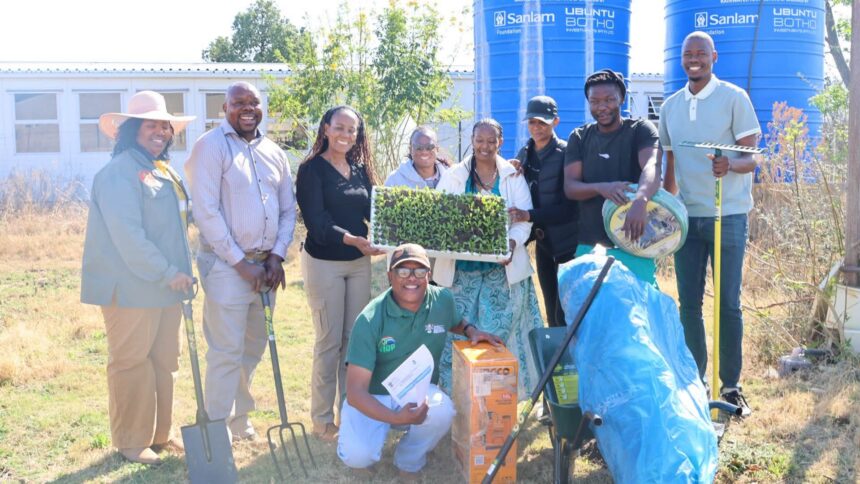
Community agriculture received a practical boost in Ward 09, Matsatseng and Lonely Park through Phase 6 of the Thuntsha Lerole initiative, with the distribution of garden tools to the local community garden. The Department, headed by HOD Ms Lebo Diale, provided equipment to help local gardeners strengthen food production and improve the day-to-day management of their growing areas. For community farmers, access to appropriate tools can make important tasks such as soil preparation, planting, weeding and harvesting more efficient. The intervention highlights the value of investing in basic agricultural resources that can improve productivity at grassroots level. It also demonstrates how targeted support can help community gardens contribute to household food security and sustainable livelihoods.
For farmers and gardeners, having the right equipment is an important part of maintaining a productive operation. Basic garden tools allow producers to prepare planting beds, manage weeds, maintain crops and keep cultivated areas in good condition. When equipment is limited, farmers may have to rely on labour-intensive methods that can slow down production and restrict the area they are able to cultivate. The distribution of tools can therefore help local gardeners improve their efficiency and make better use of available growing space. With consistent use and proper maintenance, these resources can support production across multiple planting seasons.
Community gardens can make an important contribution to local food security by increasing the availability of fresh produce. Vegetables grown within the community can supply participating households while creating opportunities to sell surplus produce to neighbours, local markets and other potential buyers. For small-scale farmers, this type of production can provide an entry point into agricultural entrepreneurship without requiring large-scale commercial infrastructure. It can also help producers gain practical experience in crop planning, production and harvesting. When managed as productive agricultural enterprises, community gardens can provide both food and potential income opportunities.
The focus on sustainable livelihoods is particularly relevant for smallholder and community farmers. Sustainable farming requires producers to think about how their activities can remain productive and financially viable over time. This includes maintaining soil fertility, managing water carefully, selecting suitable crops and keeping production costs under control. Gardeners can also strengthen their operations by keeping basic records of planting dates, inputs, harvest volumes and sales. These practices can help producers understand what is working on their plots and make better decisions during future production cycles.
The support provided through Thuntsha Lerole also highlights the importance of combining agricultural resources with practical knowledge. Tools alone cannot guarantee a successful harvest, as farmers also need appropriate production techniques and an understanding of local growing conditions. Gardeners can use their collective experience to identify crops that perform well in the area and develop better approaches to managing common production challenges. Continued engagement with agricultural officials and extension services can provide additional opportunities for farmers to access technical information. Combining equipment, knowledge and good management can help community gardens improve their productivity and sustainability.
Water management should remain a priority as the community garden develops. Efficient use of available water can help farmers maintain crop production while reducing unnecessary losses. Gardeners can improve water efficiency through practices such as watering crops at appropriate times, maintaining irrigation equipment where available and using mulch to help conserve soil moisture. Crop selection should also take local water availability and seasonal conditions into account. Good water management can help protect production during periods of limited rainfall and support more reliable harvests.
Soil health is another important consideration for the gardeners of Ward 09. Productive soil provides crops with the nutrients and growing conditions they need to develop properly. Farmers can support soil health by incorporating suitable organic matter, avoiding unnecessary soil disturbance and rotating crops where practical. Maintaining healthy soil can improve water retention and contribute to stronger crop growth over time. Community gardeners can also share their experiences and learn from agricultural specialists about soil management practices that suit their local conditions.
Crop planning can help the community garden make better use of available space and resources. Farmers can plan planting schedules around seasonal conditions and consider growing crops with different maturity periods to spread harvests over time. Producing a variety of vegetables can also reduce reliance on a single crop and provide households and potential customers with a broader selection of fresh produce. Gardeners should consider local demand when deciding which crops to grow, particularly if they intend to sell surplus harvests. A production plan can help farmers coordinate planting, input use, labour requirements and harvesting activities more effectively.
The initiative also creates an opportunity to strengthen cooperation among community farmers. Working collectively can make it easier to share knowledge, coordinate activities and identify common challenges affecting production. Farmers can learn from one another about successful planting methods, pest management, crop selection and marketing opportunities. Collective action can also create opportunities for bulk purchasing of inputs or coordinated marketing when production volumes allow. Strong cooperation can help turn a community garden into a more organised and productive agricultural operation.
For emerging farmers, projects such as the community garden in Matsatseng and Lonely Park can provide valuable practical experience. Participants can develop skills that may later be applied to household gardens, small farms or larger agricultural enterprises. The experience of managing crops from land preparation through to harvesting can help new farmers understand the demands of agricultural production. It can also introduce them to important business principles such as budgeting, record keeping, market research and planning. These skills can provide a foundation for farmers who want to grow their agricultural activities in the future.
The distribution of garden tools through Phase 6 of Thuntsha Lerole is therefore a practical investment in community agriculture and local food production. The resources can help farmers improve their daily operations while creating a stronger foundation for productive and sustainable gardening. The next step is for community members to use the equipment effectively, maintain it properly and combine it with sound farming practices. With careful planning, good soil and water management, appropriate crop selection and strong cooperation, the garden can contribute to food security while creating opportunities for income and skills development. For the farmers of Ward 09, Matsatseng and Lonely Park, the support provides a useful opportunity to strengthen community farming and build a more productive local agricultural enterprise.
Join 'Farmers Mag' WhatsApp Channel
Get the latest Farming news and tips delivered straight to your WhatsApp
CLICK HERE TO JOIN




