

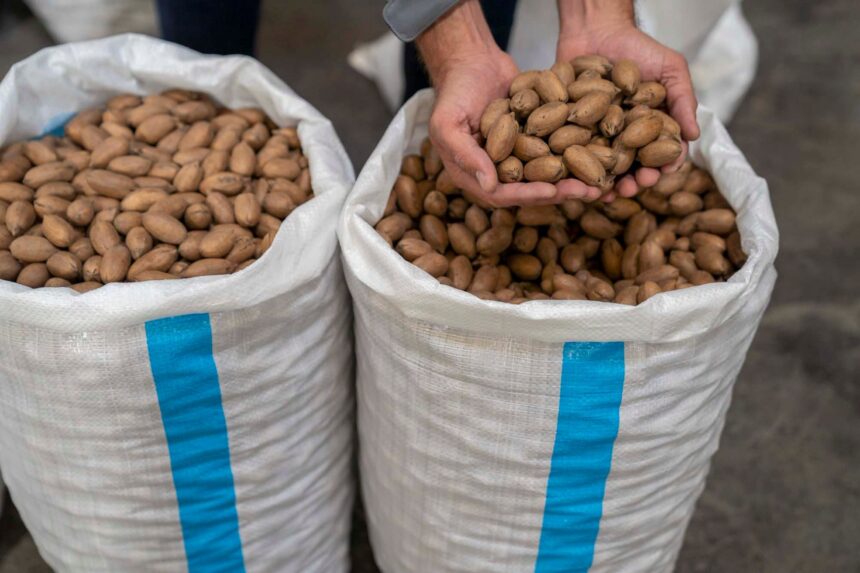
South Africa’s pecan industry is reporting encouraging results during the 2026 harvest season, with several production areas delivering excellent yields and good-quality pecans. According to Wessel Cloete, Managing Director of The Pecan People, the strong performance in key production areas is being matched by healthy international demand for South African pecans. The combination of good orchard performance and a firm export market is creating positive opportunities for local pecan producers. Data from the South African Pecan Producers Association Harvest Tracker shows that the 2026 harvest has already exceeded 48 000 tons. The season is currently on track to reach approximately 56 000 tons, highlighting the continued growth and potential of South Africa’s pecan sector.
The latest harvest figures provide an important indication of the scale of pecan production in South Africa this year. More than 48 000 tons have already been recorded, placing the industry on course for a total harvest of around 56 000 tons. This performance reflects the contribution of producers across several growing regions where orchards have delivered strong yields and good-quality nuts. Harvest volumes can vary between production areas due to factors such as weather, orchard maturity, water availability and farming practices. The overall 2026 figures nevertheless point to a productive season and reinforce the importance of pecans within South Africa’s agricultural economy.
Wessel Cloete of The Pecan People says several production areas have achieved excellent harvests while maintaining good quality during the 2026 season. Good-quality nuts are particularly important in a competitive international market because buyers assess products according to factors such as size, appearance, kernel quality and overall consistency. Producers therefore need to maintain strong orchard management practices throughout the production cycle to protect both yields and quality. The current results suggest that many farmers have been able to achieve a positive balance between production and quality. This provides a strong foundation for South African pecans as producers continue supplying both domestic and international markets.
International demand remains another positive factor for the South African pecan industry. Pecans are traded in global markets where demand can be influenced by consumer preferences, food manufacturing trends, supply levels and prices. Healthy international demand creates opportunities for South African producers to sell their harvest into markets beyond the local economy. Strong export performance can also contribute to income generation throughout the agricultural value chain, including farming, processing, packaging, logistics and related services. For producers, continued access to international buyers makes maintaining reliable quality and consistent supply increasingly important.
The progress of the 2026 harvest also highlights the role played by organisations such as the South African Pecan Producers Association in monitoring production across the sector. The SAPPA Harvest Tracker provides an indication of how the season is progressing and gives producers and industry stakeholders useful information about national harvest volumes. Reliable production data can help the industry understand seasonal trends and assess performance against expectations. It can also provide useful context for market planning and discussions about the future development of pecan production in South Africa. As the industry expands, accurate information becomes increasingly important for making informed decisions.
While harvesting and processing remain key activities during the season, orchard management does not stop when pecans leave the trees. August is identified as an important period for orchard sanitation, pruning, mulching and general maintenance. These activities help producers prepare orchards for the next production cycle and maintain conditions that support healthy tree development. Removing unwanted material and managing orchard areas can also contribute to better hygiene and reduce potential risks associated with pests and diseases. Attention to these tasks can help producers protect the long-term productivity of their orchards rather than focusing only on the current harvest.
Irrigation maintenance is also an important part of orchard management during this period. Pecan trees require reliable access to water and irrigation systems need regular inspection to ensure that they operate efficiently. Leaks, blocked components, damaged equipment or uneven water distribution can affect orchard performance if they remain unresolved. Producers can use the quieter period around processing to inspect and maintain irrigation infrastructure before the next demanding production stages begin. Effective irrigation management can support tree health while helping farmers use water more efficiently.
Pest monitoring remains equally important as producers move through the seasonal cycle. Regular monitoring can help farmers identify potential pest problems before they become difficult or expensive to control. Early detection allows producers to assess the situation and consider appropriate management measures based on the specific threat and orchard conditions. Integrated pest management can help reduce unnecessary chemical applications while protecting trees and maintaining nut quality. Consistent monitoring therefore remains an important part of responsible pecan orchard management.
The processing stage also plays a significant role in ensuring that the quality achieved in the orchard is maintained through to the final product. Once harvested pecans reach processing facilities such as The Pecan People, careful handling and processing become essential to preserving their market value. Processing involves activities that prepare the nuts for sale while supporting the quality standards expected by buyers. Maintaining quality throughout harvesting, handling, processing and packaging is especially important when products are destined for international markets. The strong demand for South African pecans creates an incentive for the industry to maintain high standards across the entire value chain.
The 2026 season also demonstrates the importance of long-term planning for South African pecan producers. Establishing and maintaining a productive pecan orchard requires significant investment, careful management and patience because trees take time to reach productive maturity. Producers must consider irrigation, soil management, pest control, pruning, orchard sanitation and market access as part of their overall business planning. Strong harvest results can provide encouragement, but sustainable growth requires farmers to continue investing in orchard health beyond individual seasons. The combination of sound agricultural practices and access to strong markets can help position the industry for continued development.
South Africa’s pecan industry enters the latter stages of the 2026 harvest with several positive indicators. More than 48 000 tons have already been recorded, with the national harvest expected to reach approximately 56 000 tons, while producers in several areas have reported excellent yields and good quality. International demand remains healthy, giving local farmers opportunities to participate in global markets and strengthen the value of their agricultural businesses. At the same time, August provides an important opportunity to focus on orchard sanitation, pruning, mulching, irrigation maintenance and pest monitoring while harvested pecans continue through processing. The current season shows that strong production, careful orchard management and international market demand can work together to support the continued growth and competitiveness of South Africa’s pecan industry.
Join 'Farmers Mag' WhatsApp Channel
Get the latest Farming news and tips delivered straight to your WhatsApp
CLICK HERE TO JOIN




