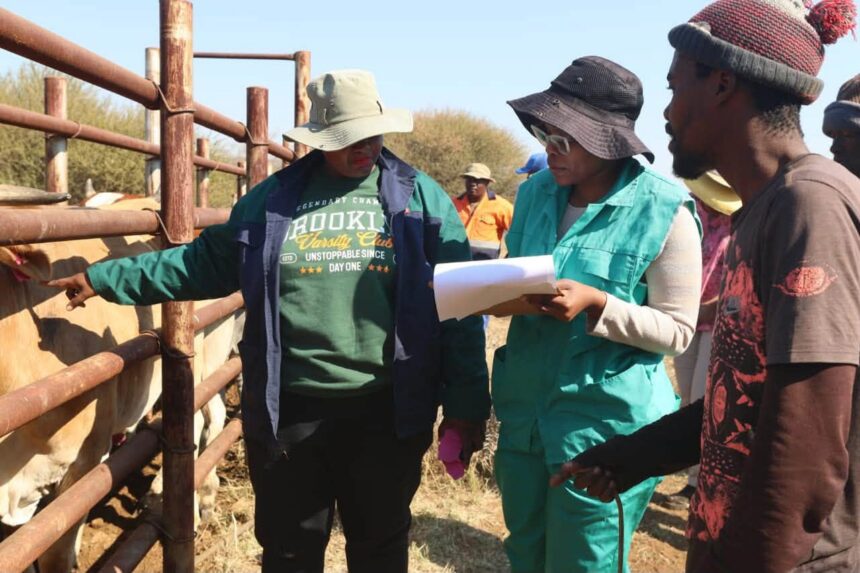
The North West Provincial Legislature has stepped up oversight of the province’s response to Foot and Mouth Disease (FMD) through a field visit to Los Mei Cherri in Welgevaal Village, within the Moses Kotane Local Municipality in the Bojanala District. The visit formed part of the Portfolio Committee on Agriculture and Rural Development’s ongoing Oversight Week programme. Legislators used the visit to assess the implementation of animal health measures directly within a farming community affected by the need for stronger disease prevention and surveillance. The programme comes as authorities continue working to protect livestock, support farmers and reduce the economic risks associated with animal diseases. The visit also highlighted the importance of cooperation between government officials, veterinary services and farming communities in managing FMD effectively.
The oversight focused on the Department of Agriculture and Rural Development’s continued response to Foot and Mouth Disease, with livestock at Los Mei Cherri receiving FMD vaccinations and ear tagging. These interventions play an important role in strengthening disease surveillance and improving the traceability of animals within the livestock sector. Vaccination forms part of broader efforts to reduce the impact and spread of FMD, while ear tagging provides authorities with a reliable way to identify and monitor individual animals. Accurate animal identification becomes particularly important when veterinary authorities need to trace livestock movements or respond to suspected disease outbreaks. By monitoring these interventions on the ground, the Legislature can gain a clearer understanding of how provincial animal health programmes are being implemented and where additional support may be required.
Foot and Mouth Disease remains a serious concern for livestock farmers because outbreaks can disrupt animal movements, affect market access and create significant financial pressure across the agricultural value chain. The disease affects cloven-hoofed animals such as cattle, sheep, goats and pigs, making effective surveillance essential in areas where livestock farming supports household incomes and local economic activity. Farmers depend on healthy animals for production, breeding and sales, while government has a responsibility to maintain systems that can detect and manage animal health threats. Vaccination and identification measures therefore form part of a wider animal health strategy rather than operating as isolated interventions. Continued cooperation between farmers and veterinary officials can help ensure that disease control measures reach livestock owners and that authorities receive timely information when health concerns arise.
The visit was led by the Chairperson of the Portfolio Committee, Mr Sipho Dial, who was accompanied by the Chairperson of Chairpersons, Mme Tebogo Modise, and Members of the North West Provincial Legislature. Their presence allowed the oversight delegation to engage directly with officials responsible for delivering animal health services in the area. The Department of Agriculture and Rural Development delegation was led by Head of Department Ms Lebo Diale, together with Chief Director Mme Arlene Dikolomela, the Bojanala District Director and officials from Veterinary Services. The participation of senior departmental officials provided an opportunity for Members of the Legislature to receive information about the progress of the FMD response and the practical challenges faced during implementation. Direct engagement between legislators, government officials and farming communities also strengthens accountability around provincial agricultural programmes.
The oversight programme is particularly important because the effectiveness of disease control depends on what happens at farm and community level. Policies and response plans must translate into practical actions, including vaccination, animal identification, surveillance and communication with livestock owners. Visits such as the one to Los Mei Cherri allow Members of the Legislature to observe these activities first-hand rather than relying only on reports and administrative updates. They can also identify challenges that may affect service delivery, including access to veterinary services, farmer awareness, animal movement controls and the availability of resources. This ground-level approach gives the Legislature a stronger basis for evaluating whether departmental interventions are reaching communities as intended.
For farmers in the Bojanala District, effective FMD management has implications that extend beyond animal health. Livestock contributes to household livelihoods, food security and economic activity in many rural communities, while livestock markets connect farmers to traders, consumers and other parts of the agricultural value chain. Disease outbreaks can place pressure on these relationships by restricting movement and creating uncertainty for farmers who depend on livestock sales. Strengthening traceability through ear tagging can help authorities understand where animals are located and where they have moved, which can support faster responses when disease risks emerge. Vaccination, combined with surveillance and responsible livestock management, can therefore contribute to protecting both individual farming operations and the broader agricultural economy.
The involvement of Veterinary Services is also central to the success of the provincial response. Veterinary officials provide technical expertise in animal health, vaccination, disease surveillance and other measures required to manage livestock diseases. Their engagement with farming communities can help ensure that farmers understand the purpose of vaccination and animal identification while also creating channels for reporting suspected disease cases. Effective communication matters because farmers need clear information about what they should do when animals become sick or when they need to move livestock. Strong relationships between veterinary officials and farming communities can improve compliance with animal health measures and support faster action when potential outbreaks are identified.
The Legislature’s oversight also demonstrates the importance of accountability in managing public agricultural programmes. Portfolio committees have a responsibility to monitor government departments, assess whether programmes are being implemented effectively and engage with communities affected by government policies and services. The visit to Los Mei Cherri gave Members an opportunity to assess progress on the ground while engaging with both officials and farming communities. This allows concerns raised by farmers to be considered alongside departmental information and operational realities. Regular oversight can help identify gaps early and encourage government institutions to address challenges before they have a greater impact on livestock producers and rural communities.
The FMD response in the North West will require continued attention because protecting the livestock sector depends on sustained disease surveillance and cooperation. A single vaccination exercise or tagging campaign cannot replace an ongoing animal health system that monitors livestock and responds quickly to emerging risks. Farmers also have an important role to play by following veterinary guidance, keeping accurate livestock records and reporting suspected cases through the appropriate channels. Government, meanwhile, must continue providing veterinary support, maintaining effective monitoring systems and ensuring that rural communities receive relevant information. These combined efforts can strengthen the province’s ability to manage FMD risks while protecting farmers whose livelihoods depend on healthy livestock.
The North West Provincial Legislature’s visit to Los Mei Cherri therefore provided more than an opportunity to observe FMD vaccinations and ear tagging. It offered Members a direct view of how the Department of Agriculture and Rural Development is implementing critical animal health interventions within a rural farming community. The engagement with departmental officials, Veterinary Services and farmers can help inform future oversight and strengthen accountability for programmes designed to protect the province’s livestock sector. As Foot and Mouth Disease continues to pose challenges for livestock production and agricultural markets, effective vaccination, traceability, surveillance and community cooperation will remain essential. The Oversight Week programme reinforces the need for practical action on the ground and sustained government support to safeguard livestock, protect rural livelihoods and strengthen the North West agricultural economy.
Join 'Farmers Mag' WhatsApp Channel
Get the latest Farming news and tips delivered straight to your WhatsApp
CLICK HERE TO JOIN