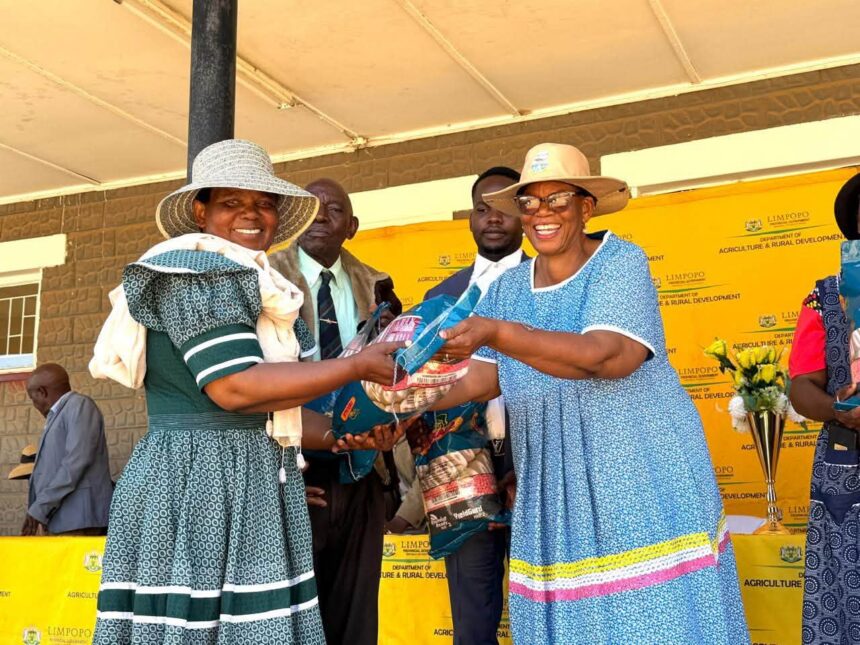
The Limpopo Provincial Government has strengthened its commitment to rural development and agricultural growth by distributing critical agricultural production inputs to local farmers at Ga-Riba Mošate in the Fetakgomo-Tubatse Local Municipality. The initiative was led by MEC for the Limpopo Department of Agriculture and Rural Development, Ms Nakedi Grace Kekana, as part of the District Development Model (DDM) Service Delivery Week. The handover forms part of broader efforts to bring government services directly to rural communities and address practical challenges faced by farmers. Agricultural inputs can provide producers with important resources to increase production, improve household food security and develop more sustainable farming operations. The intervention also reflects the important role of agriculture in supporting local economic activity and creating opportunities for rural communities. Through direct support to farmers, the provincial government is seeking to strengthen agricultural capacity while contributing to the long-term development of Fetakgomo-Tubatse.
The distribution of agricultural production inputs is significant because access to essential resources remains an important factor in determining whether farmers can maintain or expand their operations. Farmers need appropriate inputs to support crop and livestock production, particularly when operating with limited financial resources. Providing these resources can help producers overcome some of the costs associated with agricultural production and allow them to focus on increasing their output. Improved access to inputs can also contribute to more consistent production and help farmers respond to local food demand. When producers have the resources needed to cultivate their land effectively, the benefits can extend beyond individual farms and contribute to wider community food security. The Ga-Riba Mošate handover therefore represents an investment in both farmers and the local agricultural economy.
The initiative was implemented under the District Development Model Service Delivery Week, which provides an important platform for government departments to take services directly to communities. The DDM approach focuses on improving coordination between different spheres of government and responding to specific needs within local communities. Agriculture is an important part of this approach in rural municipalities because farming contributes to food production, employment and household income. Bringing agricultural services closer to farmers can also improve communication between government officials and producers. Farmers have an opportunity to receive support while raising concerns and identifying challenges that may require further intervention. The service delivery week therefore provides a practical way of connecting government programmes with the everyday realities of rural communities.
The agricultural input handover at Ga-Riba Mošate also has important implications for food security in Fetakgomo-Tubatse. Local food production can help communities increase access to fresh agricultural products while reducing dependence on food brought in from other areas. Farmers who receive appropriate production inputs can use them to increase the quantity and quality of food produced within their communities. Increased production can support household consumption while creating opportunities for farmers to sell surplus produce through local markets. Stronger local agricultural activity can also contribute to more resilient food systems that are better able to respond to economic and environmental pressures. Supporting farmers at production level is therefore an important part of broader efforts to strengthen food security in rural Limpopo.
The intervention can also help build agricultural capacity among local producers by giving them resources that can support the development of their farming enterprises. Agricultural capacity involves more than simply having access to land, as farmers also need productive inputs, technical knowledge, equipment and reliable markets. Government support can help address some of these requirements while creating a foundation for farmers to improve their production practices. As farmers increase their output, they can gain practical experience in managing production, controlling costs and responding to market demand. Over time, stronger farming operations can become more commercially sustainable and contribute to local economic activity. The Ga-Riba Mošate initiative is therefore part of a wider process of strengthening the productive capacity of rural farmers.
The economic benefits of supporting farmers can extend beyond agricultural production itself. When farming enterprises grow, they can create demand for services such as transport, agricultural supplies, processing, packaging and marketing. Increased production can also create opportunities for employment, particularly where farms require additional workers during planting, harvesting and other stages of production. Farmers who generate income from their operations can spend within their communities, supporting other local businesses and contributing to the circulation of money within the local economy. Agricultural development can therefore have a multiplier effect that reaches households and businesses beyond the individual farms receiving government support. Strengthening local agriculture can help create a more active rural economy while supporting livelihoods.
The community’s appreciation of the handover reflects the practical importance of agricultural support to local farmers. For many producers, receiving inputs can make a meaningful difference to their ability to continue farming and plan for future production. The direct delivery of resources also demonstrates a visible connection between government programmes and the people they are intended to support. Community engagement can help build trust and encourage farmers to participate actively in agricultural development initiatives. It also creates an opportunity for government officials to understand the challenges faced by producers and consider how future programmes can respond to those needs. Continued engagement will be important to ensure that the benefits of the intervention extend beyond the day of the handover.
The success of agricultural support programmes will depend on how effectively farmers use the resources provided. Production inputs can create opportunities, but farmers also need to apply sound management practices to achieve sustainable results. Proper planning, responsible use of resources and attention to agricultural best practices can help producers maximise the value of the support they receive. Farmers may also require continued technical assistance to address challenges relating to production, pests, livestock health, water availability or market access. Ongoing engagement between agricultural officials and producers can help ensure that farmers receive appropriate guidance as their projects develop. Combining resources with knowledge and continued support can strengthen the long-term impact of government agricultural interventions.
The DDM Service Delivery Week also highlights the importance of addressing rural development through coordinated interventions rather than isolated projects. Agriculture is connected to many other aspects of community development, including food security, employment, infrastructure and household incomes. When government services respond to these areas in a coordinated manner, communities can benefit from interventions that support broader development objectives. The agricultural input distribution at Ga-Riba Mošate contributes to this approach by strengthening the productive capacity of farmers while supporting local economic activity. Similar initiatives can help identify gaps in agricultural support and create opportunities for additional interventions. A coordinated approach can make government service delivery more responsive to the needs of rural municipalities.
Young people can also benefit from stronger agricultural opportunities as the sector develops in rural communities. Modern agriculture offers opportunities across farming, food processing, logistics, technology, marketing and agricultural services. Supporting productive farmers can demonstrate that agriculture can provide viable economic opportunities for people who are willing to develop commercial farming skills. Increased agricultural activity can also create space for young entrepreneurs to participate in related businesses that supply goods and services to farmers. Creating stronger local agricultural economies can therefore contribute to broader efforts to reduce economic exclusion and expand opportunities in rural areas. Government investment in farmers can play a role in creating an environment where agriculture becomes an increasingly attractive part of local economic development.
The distribution of agricultural production inputs at Ga-Riba Mošate represents an important milestone in the Limpopo Provincial Government’s ongoing efforts to strengthen rural agriculture. Led by MEC Nakedi Grace Kekana under the District Development Model Service Delivery Week, the initiative provides local farmers with resources that can support increased production and stronger farming enterprises. The benefits of the intervention have the potential to extend beyond individual producers by improving food security, supporting local markets and contributing to economic activity across Fetakgomo-Tubatse. Continued technical assistance, responsible resource management and strong engagement with farmers will be important to ensure that the support produces lasting results. The community’s positive response demonstrates the value of bringing practical government services directly to rural producers. Through sustained investment in agriculture and coordinated service delivery, Limpopo can continue strengthening rural livelihoods and building more resilient local economies.
Join 'Farmers Mag' WhatsApp Channel
Get the latest Farming news and tips delivered straight to your WhatsApp
CLICK HERE TO JOIN