

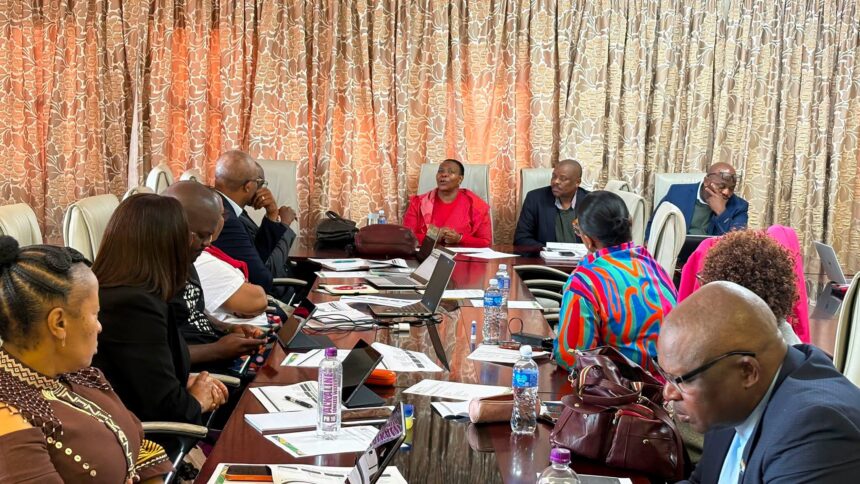
The Eastern Cape Department of Agriculture is engaging with the Eastern Cape Rural Development Agency (ECRDA) on several strategic issues that could influence agricultural support and rural development across the province. MEC for the Eastern Cape Department of Agriculture, Nonceba Kontsiwe, met with the ECRDA board and Executive Management yesterday to discuss governance and strategic matters affecting the agency. The discussions covered the ECRDA Shareholder Compact, recruitment affordability and the agency’s funding shortfall, the ECRDA Bill and processes linked to Ncera Macadamia. While these may appear to be administrative matters, they can have a direct bearing on how effectively agricultural and rural development programmes reach farmers and rural communities. Strong institutions are important for ensuring that farmers receive the services, programmes and support needed to grow their businesses and contribute to local economies. The engagement therefore comes at an important time as the province works to strengthen agricultural development and improve rural economic opportunities.
One of the key issues discussed was the ECRDA Shareholder Compact, which provides an important framework for setting expectations between the provincial government and the agency. For farmers, the importance of such an agreement lies in its ability to help align the agency’s work with broader provincial agricultural and rural development priorities. Clear strategic objectives can help ensure that programmes are focused on practical outcomes that benefit farming communities. These outcomes can include stronger agricultural enterprises, improved rural infrastructure, support for emerging farmers and greater participation in agricultural value chains. A well-defined framework can also make it easier to assess whether the agency is meeting its responsibilities and delivering meaningful results. For farmers and rural communities, effective governance should ultimately translate into better coordinated and more responsive support.
Recruitment affordability and the ECRDA’s funding shortfall were also important matters on the agenda. The availability of skilled employees can have a significant impact on the ability of an agricultural development agency to implement projects and provide support to farmers. Rural development programmes often require people with expertise in agriculture, project management, finance, administration and other specialised areas. When funding constraints affect recruitment, an organisation may struggle to fill important positions or maintain the capacity required to deliver its programmes effectively. At the same time, recruitment needs to be carefully managed so that staffing costs remain sustainable over the long term. Addressing these challenges can help ECRDA build the capacity it needs while ensuring that available public resources are directed towards programmes that provide value to farming communities.
Funding remains an important consideration for agricultural development because farmers need practical support that can help them increase production and build sustainable businesses. Public agencies such as ECRDA require adequate resources to implement projects, support rural enterprises and maintain programmes over time. A funding shortfall can make it more difficult to expand services or respond to emerging needs among farmers. It can also affect the pace at which development projects are implemented, particularly where projects require technical expertise, infrastructure or ongoing operational support. Discussions around ECRDA’s financial position are therefore relevant to farmers because the agency’s resources influence its ability to deliver against its mandate. Finding sustainable solutions to funding challenges can help create a stronger foundation for agricultural programmes across the Eastern Cape.
The recruitment discussion is equally important because farmers often depend on agricultural institutions for technical and administrative support. Skilled staff can help coordinate development projects, provide specialist knowledge and ensure that programmes are implemented properly. Adequate staffing can also improve communication between government agencies and the farmers they serve. When agricultural institutions have the right people in place, they are better positioned to understand challenges at community level and respond with appropriate interventions. Recruitment must therefore be viewed alongside the agency’s overall strategy and available funding. A balance between affordability and the need for sufficient capacity will be important if ECRDA is to maintain effective support for farmers and rural communities.
The ECRDA Bill was another key matter discussed during the engagement. Legislation can shape how a public entity operates, defines its responsibilities and works with government and other stakeholders. For farmers, the importance of a clear legislative framework is linked to the stability and effectiveness of the institutions responsible for rural development. A well-defined mandate can help reduce uncertainty and ensure that the agency remains focused on the areas where it can make the greatest contribution. Legislative processes also provide an opportunity to consider whether existing structures and responsibilities remain suitable for current agricultural and rural development needs. The discussions around the ECRDA Bill are therefore part of a wider effort to strengthen the institutional environment supporting agriculture in the Eastern Cape.
Ncera Macadamia processes were also included in the discussions, bringing attention to an agricultural enterprise with potential implications for the province’s farming economy. Macadamia production has become an important part of South Africa’s agricultural sector and can create opportunities across farming, processing, logistics and marketing. The development of macadamia enterprises can also support employment and contribute to economic activity in rural areas. Effective management of these enterprises requires sound governance, clear processes and strategic planning. The attention given to Ncera Macadamia during the meeting highlights the importance of ensuring that agricultural assets and initiatives are managed effectively. Strong processes can help create a more stable environment for agricultural investment and support the development of value chains that benefit rural communities.
The focus on Ncera Macadamia also shows how agricultural development extends beyond primary production. Farmers need access to markets, processing facilities, infrastructure, finance and other services if they are to build commercially sustainable enterprises. Developing agricultural value chains can create additional opportunities for farmers to participate in activities beyond growing or producing raw agricultural products. Macadamia production, for example, can support businesses involved in processing, transport, packaging and marketing. Stronger value chains can create opportunities for small and emerging producers while contributing to employment in rural communities. Strategic attention to enterprises such as Ncera Macadamia can therefore have implications that reach beyond the individual operation.
Governance is another important part of ensuring that agricultural development institutions remain focused on delivering results. The ECRDA board and Executive Management have different responsibilities, but both need to work towards the effective implementation of the agency’s mandate. Regular engagement with the provincial department can help ensure that strategic priorities remain aligned with government objectives. It can also provide an opportunity to identify financial, operational and governance challenges before they affect service delivery. For farmers, the benefit of stronger governance should ultimately be seen through better planning, more efficient programmes and improved communication. Public institutions need to remain accountable because the effectiveness of their work can directly affect the communities and producers they are expected to support.
The discussions are particularly relevant to the Eastern Cape because agriculture remains an important source of livelihoods and economic activity in many rural communities. Farmers across the province face different challenges, including access to finance, markets, infrastructure, agricultural inputs, technical assistance and reliable services. No single intervention can address all of these challenges, which makes effective coordination between government departments and development agencies important. ECRDA’s role within rural development means that its strategic direction can influence how different programmes are planned and implemented. Strengthening the agency’s governance and operational capacity can therefore contribute to more effective support for farmers. The success of these efforts will depend on how well strategic decisions are eventually translated into practical services on the ground.
The meeting between MEC Nonceba Kontsiwe, the ECRDA board and Executive Management provides an opportunity to address issues that could shape the agency’s ability to support agriculture and rural development in the years ahead. The Shareholder Compact, funding shortfall, recruitment affordability, ECRDA Bill and Ncera Macadamia processes each have different implications, but they are connected by the need for an effective and sustainable rural development institution. For farmers, the most important outcome will be whether these discussions lead to stronger programmes, improved service delivery and greater opportunities to participate in the agricultural economy. Addressing financial and staffing challenges can help ECRDA build the capacity required to implement its mandate, while clear governance and legislation can provide greater direction and accountability. Continued engagement between the department and ECRDA will be important as the province works to strengthen its agricultural institutions. If these strategic efforts result in better support for farmers, stronger agricultural enterprises and more effective rural development programmes, they could make a meaningful contribution to the future of farming in the Eastern Cape.
Join 'Farmers Mag' WhatsApp Channel
Get the latest Farming news and tips delivered straight to your WhatsApp
CLICK HERE TO JOIN




